书单
布莱恩·史蒂文森
- 生卒
- 1959 –
- 国籍
- 美国
- 外文名
- Bryan Stevenson
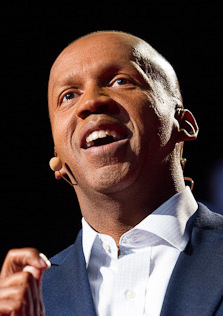
照片:James Duncan Davidson,CC BY-SA 3.0,来自维基共享资源「Bryan Stevenson in 2012 (cropped).jpg」(经缩小)。
生平与创作
布莱恩·史蒂文森(英语:Bryan Stevenson,1959年11月14日—),美国非裔律师、社会公义运动家、纽约大学法学院教授,亦是非谋利组织平等正义倡议(Equal Justice Initiative)的发起人及执行董事。他成功倡议美国最高法院改变政策,停止对18岁以下的罪犯判处死刑或终身监禁,亦为数以十计的冤案成功翻案,将被判死刑的囚犯拯救出来。他的事绩于2019年拍成电影《不完美的正义》。
以上文字摘自维基百科「布萊恩·史蒂文森」(去掉了参考文献等尾部小节),按 CC BY-SA 4.0 使用,作者为维基百科的各位编者。
中文维基百科的条目比较短,下面附上英文维基百科的内容(英文原文):
Bryan Allen Stevenson (born November 14, 1959) is an American lawyer, social justice activist, and law professor at New York University School of Law. He is also the founder and executive director of the Equal Justice Initiative. Based in Montgomery, Alabama, he has challenged bias against the poor and minorities in the criminal justice system, especially children. He has helped achieve United States Supreme Court decisions that prohibit sentencing juvenile offenders to death or to mandatory life terms without parole.
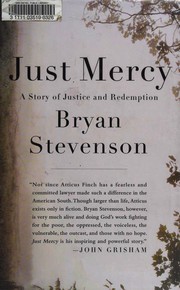
Stevenson was depicted in the 2019 legal drama film Just Mercy, based on his 2014 memoir Just Mercy: A Story of Justice and Redemption. In the memoir, he recounts his work defending Walter McMillian, who had been unjustly convicted and sentenced to death.
Stevenson initiated the National Memorial for Peace and Justice in Montgomery, which honors the names of more than 4,000 African Americans lynched in the twelve states of the South from 1877 to 1950. He argues that the history of slavery and lynchings has influenced the subsequent high rate of death sentences in the South, where it has been disproportionately applied to minorities. A related museum, The Legacy Museum: From Enslavement to Mass Incarceration, offers interpretations to show the connection between the post-Reconstruction period of lynchings and the high rate of incarceration and executions of people of color in the United States.
Early life
Bryan A. Stevenson was born on November 14, 1959, in Milton, a small town in southern Delaware. His father, Howard Carlton Stevenson Sr., had grown up in Milton, and his mother, Alice Gertrude (Golden) Stevenson, was born and grew up in Philadelphia. Her family had moved to the city from Virginia in the Great Migration of the early 20th century. Stevenson has two siblings: an older brother, Howard Jr. and a sister, Christy.
Both parents commuted to the northern part of the state for work, with Howard Sr., working at a General Foods processing plant as a laboratory technician and Alice as an equal opportunity officer at Dover Air Force Base. She particularly emphasized the importance of education to her children.
Stevenson's family attended the Prospect African Methodist Episcopal Church, where as a child, Stevenson played piano and sang in the choir. His later views were influenced by the strong faith of the African Methodist Episcopal Church, where churchgoers were celebrated for "standing up after having fallen down". These experiences informed his belief that "each person in our society is more than the worst thing they've ever done."
When Stevenson was 16, his maternal grandfather, Clarence L. Golden, was stabbed to death in his Philadelphia home during a robbery. The killers received life sentences, an outcome Stevenson thought fair. Stevenson said of the murder: "Because my grandfather was older, his murder seemed particularly cruel. But I came from a world where we valued redemption over revenge."
As a child, Stevenson dealt with segregation and its legacy. He spent his first classroom years at a "colored" elementary school. By the time he entered the second grade, his school was formally desegregated, but the old rules from segregation still applied. Black kids played separately from white kids, and at the doctor's or dentist's office, black kids and their parents continued to use the back door, while whites entered through the front. Pools and other community facilities were informally segregated. Stevenson's father, having grown up in the area, took the ingrained racism in his stride, but his mother openly opposed the de facto segregation. In an interview in 2017, Stevenson recalled how his mother protested the day the black children from town lined up at the back door of the polio vaccination station to receive their shots, waiting hours while the white children went in first.
以上文字摘自英文维基百科「Bryan Stevenson」(有删节,去掉了参考文献等尾部小节),按 CC BY-SA 4.0 使用,作者为维基百科的各位编者。
资料卡
- 出生
- 1959 年 11 月 14 日
- 出生地
- 米尔顿
- 职业
- 律师
- 使用语言
- 英语
- 就读学校
- 约翰·F·肯尼迪政府学院、哈佛法学院、东方大学、Cape Henlopen High School
- 领域
- 法律、社会正义
- 所属团体
- 美国文理科学院
- 代表作
- Just Mercy
- 获奖
- 麦克阿瑟天才奖(1995)、奥洛夫·帕尔梅奖(2000)、哈佛大学名誉博士(2015)、瑞典正确生活方式奖(2020)、美国国家人文奖章(2021);另有 7 项只有外文名
资料卡来自 Wikidata Q2698978(CC0),众包数据,个别字段可能不全。