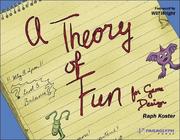
书单

威尔·赖特
- 生卒
- 1960 –
- 国籍
- 美国
- 外文名
- Will Wright
照片:Official GDC,CC BY 2.0,来自维基共享资源「Will Wright - Game Developers Conference 2010 (2).jpg」(经缩小)。
生平与创作
威尔·赖特(英语:Will Wright,1960年1月20日—)是一位美国电脑游戏设计师和电脑游戏公司Maxis的创办人,他是几款革命性电脑游戏的始祖:模拟城市(SimCity)、模拟人生(The Sims)和Spore。
生平
早年生活
威廉·拉尔夫·赖特在1960年出生于美国乔治亚州亚特兰大,他的父母是老威尔·赖特(Will Wright, Sr.)和贝芙丽·赖特·爱德华兹(Beverlye Wright Edwards)。老威尔·赖特毕业于佐治亚理工学院,他亦是一位塑胶成人制品厂的企业家。在1960年代初,老威尔·赖特创办了一间成功有名的公司,好让赖特家能够在亚特兰大中住得舒服。而贝芙丽则是一位业余音乐家和演员。小赖特于当地的一间蒙特梭利学校(Montessori school)接受教育,他很欣赏学校所提倡的创造力、问题解难和自我激励这三个教学理念。赖特承认《模拟城市》的创作灵感是源于他在学校所获得的经验。
蒙特梭利教懂我发现事物的乐趣……这表示你可以对一些复杂的理论产生学习的兴趣,例如你可以透过玩积木来学习毕达哥拉斯定理。这一切都是培养你的自学能力,好过只懂要老师为你解释所有的概念。《模拟城市》就是源于蒙特梭利的教学理念 — 如果你教导别人应用这个模范于建造城市当中,他们便能提取出城市设计的重要原理了。
当小赖特9岁时,他的父亲因白血病而逝世。他的母亲举家移居到她的家乡路易斯安那州巴顿鲁治。
游戏作品
Raid on Bungeling Bay
模拟城市系列:模拟城市、模拟城市2000、模拟城市3000(赖特并不属模拟城市4和模拟城市 梦想之都的设计小组)
模拟地球(Sim Earth)
模拟生命(Sim Life)
模拟直升机(Sim Copter)
模拟蚂蚁(Sim Ant)
模拟人生(赖特并无参与模拟人生2、模拟人生3和模拟人生4的设计)
Spore
以上文字摘自维基百科「威爾·萊特」(去掉了参考文献等尾部小节),按 CC BY-SA 4.0 使用,作者为维基百科的各位编者。
中文维基百科的条目比较短,下面附上英文维基百科的内容(英文原文):
William Ralph Wright (born January 20, 1960) is an American video game designer and co-founder of the game development company Maxis, which later became part of Electronic Arts. In April 2009, he left EA to run Stupid Fun Club Camp, an entertainment think tank in which Wright and EA are principal shareholders.
The first computer game Wright designed was Raid on Bungeling Bay in 1984, but it was SimCity that brought him to prominence. The game was published by Maxis, which Wright co-formed with Jeff Braun. Wright continued to innovate on the game's central theme of simulation with numerous other titles including SimEarth and SimAnt.
Wright has earned many awards for his work in game design. He is best known for being the original designer of The Sims series, of which Maxis developed the first entry in 2000. The game spawned multiple sequels, including The Sims 2, The Sims 3, The Sims 4 and their expansion packs. His latest work, Spore, released in September 2008 and features gameplay based upon the model of evolution and scientific advancement. The game sold 406,000 copies within three weeks of its release.
In 2007, he became the first game designer to receive the BAFTA Fellowship, which had previously only been presented to those in the film and television industries.
Early life and education
The son of a plastics engineer and an actress, Wright was born on January 20, 1960, in Atlanta, Georgia. He attended a Montessori school until the age of nine. When his father died of leukemia the same year, Wright moved to Baton Rouge, Louisiana with his mother and his younger sister. He graduated from the Baton Rouge Episcopal High School at the age of 16.
Wright's interest in game design began in childhood with the Chinese strategy board game Go. In his own words, the game has a "simple set of rules" yet "the strategies in it are so complex" and he was "fascinated with the idea that complexity can come out of such simplicity." As a teenager, Wright enjoyed playing board wargames such as PanzerBlitz.
After graduating high school, Wright studied architecture at Louisiana State University for two years. He then transferred to Louisiana Tech where he switched to mechanical engineering, with a particular interest in robotics, space exploration, military history, and language arts. Two years later, in the fall of 1980, he transferred again to The New School in New York City. During this time, he lived in an apartment in Greenwich Village, and spent his free time "searching for spare parts in local electronics surplus stores."
While living in New York City, he purchased an Apple II+ and taught himself Applesoft BASIC, Pascal, and assembly language in order to implement Conway's Game of Life. After one year at the New School, Wright concluded five years of collegiate study without a degree and returned to Baton Rouge.
Career
While other game designers such as Bill Budge and Nasir Gebelli were producing Apple video games, Wright decided to develop for the newer Commodore 64. His first game was the helicopter action game Raid on Bungeling Bay (1984). The gameplay involves the player flying over islands while dropping bombs.
Wright found that he had more fun creating the islands with his level editor for Raid on Bungeling Bay than he had actually playing the game. He created a new game based on this idea that would later evolve into SimCity, but he had trouble finding a publisher. The structuralist dynamics of the game were in part inspired by the work of two architectural and urban theorists, Christopher Alexander and Jay Forrester.
In an interview with The Times, Wright expressed his belief that computers extend the imagination, and posits the emergence of the "metabrain", stating:
以上文字摘自英文维基百科「Will Wright (game designer)」(有删节,去掉了参考文献等尾部小节),按 CC BY-SA 4.0 使用,作者为维基百科的各位编者。
资料卡
- 母语名
- Will Wright
- 本名
- William Ralph Wright
- 出生
- 1960 年 1 月 20 日
- 出生地
- 亚特兰大
- 职业
- 计算机科学家、配音员、游戏设计师、电子游戏开发者、设计师、新媒体艺术家
- 使用语言
- 英语
- 就读学校
- 路易斯安那州立大学、路易斯安那理工大学、Episcopal High School、新学院
- 代表作
- 救难直升机、模拟人生系列
- 获奖
- 英国电影学院奖终身成就奖(2007);另有 1 项只有外文名
资料卡来自 Wikidata Q309493(CC0),众包数据,个别字段可能不全。