书单
拉塞尔·米恩斯
- 生卒
- 1939 – 2012
- 国籍
- 美国
- 外文名
- Russell Means
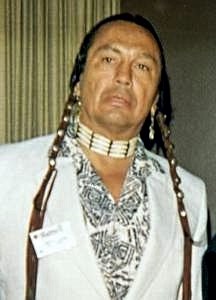
照片:Carolmooredc,CC BY-SA 3.0,来自维基共享资源「RussellMeans1987.jpg」(经缩小)。
生平与创作
这个词条暂时没有中文维基百科条目,下面是英文维基百科的内容(英文原文):
Russell Charles Means (Lakota: Waŋblí Ohítika; November 10, 1939 – October 22, 2012) was an Oglala Lakota activist for the rights of Native Americans, libertarian political activist, actor, musician and writer. He became a prominent member of the American Indian Movement (AIM) after joining the organization in December 1969 and helped organize events that attracted national and international media coverage.
Means was active in international issues of indigenous peoples, including working with groups in Central and South America and with the United Nations for recognition of their rights. He was active in politics at his native Pine Ridge Indian Reservation and at the state and national level.
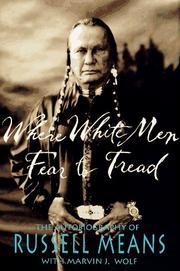
Beginning an acting career in 1992, he appeared on numerous television series and in several films, including The Last of the Mohicans, Pocahontas, and Curb Your Enthusiasm. He released his own music CD. Means published his autobiography Where White Men Fear to Tread in 1995.
Early life
Means was born on November 10, 1939, in Porcupine, South Dakota, on the Pine Ridge Indian Reservation, to Theodora Louise Feather and Walter "Hank" Means. His mother was a Yankton Dakota from Greenwood, South Dakota and his father, an Oglala Lakota. Russell had three biological brothers, Dace, and twins William and Theodore.
He was given the name Waŋblí Ohítika by his mother, which means 'Brave Eagle' in the Lakota language.
In 1942, the Means family resettled in the San Francisco Bay Area, seeking to escape the poverty and problems of the reservation. His father worked at the shipyard in Vallejo. Means grew up in the Bay Area, graduating in 1958 from San Leandro High School in San Leandro, California. He attended four colleges but did not graduate from any of them. In his 1995 autobiography, Means recounted a harsh childhood; his father was alcoholic and he himself fell into years of "truancy, crime and drugs" before finding purpose in the American Indian Movement in Minneapolis, Minnesota.
His father died in 1967 and, in his twenties, Means lived in several Indian reservations throughout the United States while searching for work. While at the Rosebud Indian Reservation in south-central South Dakota, he developed severe vertigo. Physicians at the reservation clinic believed that he had been brought in inebriated. After they refused to examine him for several days, Means was finally diagnosed with a concussion due to a presumed fight in a saloon. A visiting specialist later discovered that the reservation doctors had overlooked a common ear infection, which cost Means the hearing in one ear.
After recovering from the infection, Means worked for a year in the Office of Economic Opportunity, where he came to know several legal activists who were managing legal action on behalf of the Lakota people. After a dispute with his supervisor, Means left Rosebud for Cleveland, Ohio. In Cleveland, he worked with Native American community leaders against the backdrop of the American Civil Rights Movement.
Career
Involvement with the American Indian Movement
In 1968, Means joined the American Indian Movement (AIM), where he rose to become a prominent leader. In 1970, Means was appointed AIM's first national director, and the organization began a period of increasing protests and activism.
Activism
Means participated in the 1969 Alcatraz occupation. He had been there once before, to occupy it for 24 hours under the lead of his father, Walter "Hank" Means, and a few other Lakota men in March 1964. (Means' father died in January 1967).
On Thanksgiving Day 1970, Means and other AIM activists staged their first protest in Boston: they seized the Mayflower II, a replica ship of the Mayflower, to protest the Puritans' and United States' mistreatment of Native Americans. In 1971 Means was one of the leaders of AIM's takeover of Mount Rushmore, a federal monument. Rushmore is within the Black Hills, an area sacred to the Lakota tribe.
In November 1972, he participated in AIM's occupation of the Bureau of Indian Affairs (BIA) headquarters in Washington, D.C., to protest abuses. Many records were taken or destroyed, and more than $2 million in damage was done to the building.
In 1973, Dennis Banks and Carter Camp led AIM's occupation of Wounded Knee, which became the group's best-known action. Means appeared as a spokesman and prominent leader. The armed standoff of more than 300 Lakota and AIM activists with the Federal Bureau of Investigation (FBI) and state law enforcement lasted for 71 days. Frank Clearwater, a visiting Cherokee activist from North Carolina, and Lawrence "Buddy" Lamont, an Oglala Lakota activist from Pine Ridge Reservation, were killed in April. African-American activist Ray Robinson disappeared and is assumed to be buried in the hills.
Native American politics
In 1974, Means resigned from AIM to run for the presidency of his native Oglala Sioux Tribe (OST) against the incumbent Richard Wilson. The official vote count showed Wilson winning by more than 200 votes. Residents complained of intimidation by Wilson's private militia. The report of a government investigation confirmed problems in the election, but in a related court challenge to the results of the election, a federal court upheld the results.
In the late 1970s, Means turned to an international forum on issues of rights for indigenous peoples. He worked with Jimmie Durham, who established the offices of the International Indian Treaty Council to work with the United Nations in 1977. At the Pine Ridge Indian Reservation, he assisted in the organization of community institutions, such as the KILI radio station and the Porcupine Health Clinic in Porcupine, South Dakota.
Means also traveled to Germany, traveled behind the Iron Curtain to meet with East German AIM supporters, and he traveled to Switzerland to take part in the Geneva human rights conference.
以上文字摘自英文维基百科「Russell Means」(有删节,去掉了参考文献等尾部小节),按 CC BY-SA 4.0 使用,作者为维基百科的各位编者。
资料卡
- 出生
- 1939 年 11 月 10 日
- 出生地
- 松脊印地安人保留区
- 逝世
- 2012 年 10 月 22 日
- 逝世地
- Porcupine
- 职业
- 演员、音乐家、自传作者、电影演员、政治人物、配音员、电视演员、反战人士 等 11 项
- 使用语言
- 英语、拉科塔语
- 写作语言
- 英语
- 就读学校
- 圣利安卓高级中学
- 领域
- 演员、行动主义、政治、演技、音乐 等 6 项
- 所属团体
- 美国印第安运动(1968)
- 代表作
- 风中奇缘、汤玛士小火车:汤玛士和神奇铁路
资料卡来自 Wikidata Q319799(CC0),众包数据,个别字段可能不全。