 书单
忽思慧
- 外文名
- Hu Sihui
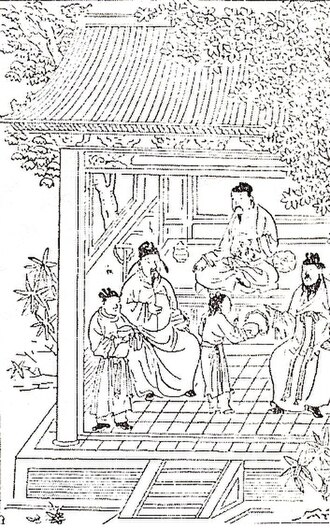
照片:Hu Sihui (or Hu Ssu-Hui),公有领域,来自维基共享资源「Principles of Correct Diet, Yuan Dynasty, 1330.jpg」(经缩小)。
生平与创作
忽思慧(?—?),又译和斯辉,元朝蒙古族或回回人,中医营养和食疗学家。元仁宗延祐年间忽思慧充饮膳太医,元文宗天历三年(1330年)撰成《饮膳正要》一书。
《饮膳正要》三卷,“虞集序”称,忽思慧曾经作为赵国公常普兰奚的关系密切的下属。延祐二年(1315年)常普兰奚加金紫光禄大夫、徽政院使,掌侍奉皇太后诸事,忽思慧此时被选任饮膳太医,入侍仁宗之母兴圣太后答己。忽思慧以饮膳太医之职侍奉皇太后与皇后。《饮膳正要》成书后,进呈中宫供览,受命担任刊刻、校正者《饮膳正要》多数都是和中宫密切的人物:拜住为中政院使,张金界奴为内宰、隆祥总管等。“虞集序”褒颂“圣后”,忽思慧当时在中宫以膳医侍奉元文宗皇后卜答失里。
此书广泛辑录历代名医秘方、验方及蒙古地区的饮食疗法,如牧区的饮食马奶、牛骨髓等,汇饮食营养学和药物学知识为一体,是一部较完整的营养学著作。此书将食物分为米谷、兽、禽、鱼、果、菜、料物七类,论述其性能,并附插图说明。强调异地食物要与本地水土气候相宜,以免致病。注意饮食卫生,以绢巾蒙侍者口鼻,以免气息触大汗的食物。不少药物、药方及饮食名称是以蒙语译音记载的。
以上文字摘自维基百科「忽思慧」(去掉了参考文献等尾部小节),按 CC BY-SA 4.0 使用,作者为维基百科的各位编者。
中文维基百科的条目比较短,下面附上英文维基百科的内容(英文原文):
Hu Sihui (Chinese: 忽思慧, 和斯輝, 忽斯慧, also Hu Zheng Qi Huei; active nr. 1314–1330) was a Chinese court therapist and dietitian during Yuan dynasty. He is known for his book Yinshan zhengyao (Dietary Principles), that became a classic in Chinese medicine and Chinese cuisine. He was the first to empirically discover and clearly describe deficiency diseases.
Biography
The career of Hu Sihui, as he states in preface to his book, was in the reign of Buyantu Khan in Yenyu years (1314—1320). His ethnicity is unclear. He has been credited as of Mongol descent by some East Asian scholars, while Western scholars have pointed out his Turkic descent, his book being "far too comfortable with Turkic and a larger Islamic culture."
He was an official in Xuanhui Yuan (the Ministry of Court Supplies and Provisions), around 1315 Hu Sihui initially emerged as the therapist of Empress Dowager, soon also became the therapist of the acting Empress, and later received the rank of the chief Imperial therapist and became responsible for dietary planning of the numerous members of the Emperor's family.
As tradition has it, Buyantu Khan, after several years of expeditions and irregular life, was overstrained and suffered acute pain in his kidneys. The vegetable soup prescribed by Hu Sihui cured the pains in 3 months, and one of Emperor's spouses became pregnant. The Emperor grandly awarded Hu Sihui as the cause of this "double joy".
In 1330, Hu Sihui, no longer busy with the Emperor and his harem, completed and presented to the Court his book Yinshan zhengyao, summarising his experiences as court dietitian. The main idea of his work was that people preparing food for the Emperor are directly responsible for efficiency of the State, as a monarch may get sick from improper eating, and lose the ability to properly manage state affairs effectively.
Legacy
Hu Sihui's book was widely accepted in Later Yuan, but won even wider influence after the fall of Yuan. Ming Dynasty, after occupying Beijing in 1368, started to combine Chinese cuisine from other regions with the cosmopolitan cuisine of Yuan court. Jingtai Emperor of Ming (ruled 1449—1457) personally wrote a preface to an edition of Yinshan zhengyao.
As a culinary encyclopedia, this book made some regional recipes accepted as a part of the national cuisine of the whole of China. For example, it is this book that contained a recipe for roast duck that could be a predecessor of the widely known Beijing duck.
以上文字摘自英文维基百科「Hu Sihui」(去掉了参考文献等尾部小节),按 CC BY-SA 4.0 使用,作者为维基百科的各位编者。
资料卡
- 母语名
- 忽思慧
- 逝世
- 1330 年
- 职业
- 营养师
资料卡来自 Wikidata Q4501982(CC0),众包数据,个别字段可能不全。