 书单
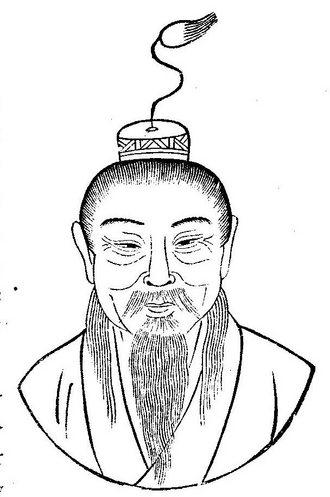
刘向
- 生卒
- 公元前 77 – 公元前 6
- 国籍
- 西汉
- 外文名
- Liu Xiang
照片:User:Guss,公有领域,来自维基共享资源「Liu Xiang (Han scholar).PNG」(经缩小)。
生平与创作
刘向(前77年—前6年),字子政,原名更生,西汉宗室。著有《别录》《新序》《说苑》《列女传》《洪范五行传论》《五纪论》等书,并且编订了《战国策》《楚辞》《孙卿新书》。刘向曾官中垒校尉,故世称刘中垒。明人张溥辑有《刘中垒集》,收入《汉魏六朝百三家集》中。又有赋33篇,今仅存《九叹》一篇。经学家刘歆为其子。刘向的详细事迹可以参考《汉书•楚元王列传》。
生平
刘向是汉高祖之弟楚元王刘交的玄孙,红懿侯刘富的曾孙,光禄大夫、长乐卫尉、宗正刘辟强的孙子,大鸿胪丞、太中大夫、宗正、阳城缪侯刘德的儿子。刘向博览群书,精通天文星象。
汉宣帝时,刘向和王褒等人同献赋颂,官至散骑谏大夫、给事中。
汉元帝时,刘向任宗正,奏章中多以天灾来附会当时的政治现象,希望元帝“放远佞邪之党,坏散险诐之聚,杜闭群枉之门,广开众正之门”,后因反对宦官弘恭、石显乱政而下狱,终免为庶人。后人以屈原与之相提并论。
汉成帝时,改名向,拜中郎,使领护三辅都水,任光禄大夫,校阅经传诸子诗赋等书籍,撰成《别录》一书,为中国最早的分类目录。
后代
刘向有三个儿子,他们都好学:长子刘伋,讲授《易》,担任官职去到郡守;二儿子刘赐,担任九卿丞,早死;小儿子刘歆,最有名气。
评价
高似孙称刘向“炯炯丹心,在汉社稷”;张溥称他:“忠爱憯怛,义兼《诗》、《书》。”凌扬藻说他:“孤忠自许,志不得行,而其精诚,更可贯金石矣”刘知几指责刘向“广陈虚事,多构伪辞”。
以上文字摘自维基百科「刘向」(去掉了参考文献等尾部小节),按 CC BY-SA 4.0 使用,作者为维基百科的各位编者。
中文维基百科的条目比较短,下面附上英文维基百科的内容(英文原文):
Liu Xiang (77–6 BCE), born Liu Gengsheng, courtesy name Zizheng, was a Chinese astronomer, historian, librarian, poet, politician, and writer of the Western Han dynasty. Among his polymathic scholarly specialties were history, literary bibliography, and astronomy. He is particularly well known for his bibliographic work in cataloging and editing the extensive imperial library.
Life
Liu Gengsheng was born in Xuzhou. Being a distant relative of Liu Bang, the founder of the Han dynasty, he was a member of the ruling dynastic clan (the Liu family). Liu Xiang's father ranked as a marquess. Liu Xiang's son, Liu Xin, would continue the scholarly tradition of his father and his relative Liu An (the Prince of Huainan).
By the beginning of Emperor Yuan's reign, Liu Xiang was a member of a group of Confucian officials, including Xiao Wangzhi, who wished to limit the power of the emperor's female family members relatives' clans, the Shi and the Xu. He ended up on the losing side of a power struggle between the powerful eunuch's Hong Gong and Shi Xian. Briefly imprisoned, Liu Xiang was terminated from his official position, and he received no new appointments to the office for the next fifteen years.
The succession of Emperor Cheng to the imperial throne was accompanied by a realignment of power among the various factions involved in government, and Liu Xiang was able to revive his official prospects. In 26 BCE, at the command of the emperor, Liu Xiang spent much of the rest of the 20-odd years of his life engaged in the massive bibliographic work of organizing the imperial library. This work was assisted by his son, Liu Xin, who finally completed the task after his father's death.
Human nature
In comparison with Mencius, who considered human nature good, and Xunzi, who considered human nature bad, Han dynasty poet Yang Xiong is known for considering human nature "mixed". Liu Xiang can be compared with Yang Xiong, considering human nature mixed.
Works
Liu compiled the first catalogue of the imperial library, the Abstracts (別錄, Bielu), and is the first known editor of the Classic of Mountains and Seas (Shanhaijing), which was finished by his son. Liu also edited collections of stories and biographies, including the Strategies of the Warring States (Zhanguoce), the New Prefaces (新序, Xinxu), the Garden of Stories (說苑, Shuoyuan), and the Biographies of Exemplary Women (Lienüzhuan). He has long erroneously been credited with compiling the Biographies of the Immortals (Liexian Zhuan), a collection of Taoist hagiographies and hymns.
Liu Xiang was also a poet. He is credited with the "Nine Laments" ("Jiu Tan") that appears in the Songs of Chu.
以上文字摘自英文维基百科「Liu Xiang (scholar)」(去掉了参考文献等尾部小节),按 CC BY-SA 4.0 使用,作者为维基百科的各位编者。
资料卡
- 出生
- 公元前 77 年
- 出生地
- 沛县
- 逝世
- 公元前 6 年
- 逝世地
- 中国
- 职业
- 诗人、历史学家、哲学家、作家、天文学家、政治人物、图书馆员、学者
- 使用语言
- 中文
资料卡来自 Wikidata Q465282(CC0),众包数据,个别字段可能不全。