书单
Mónica Ojeda
- 生卒
- 1988 –
- 国籍
- 厄瓜多尔
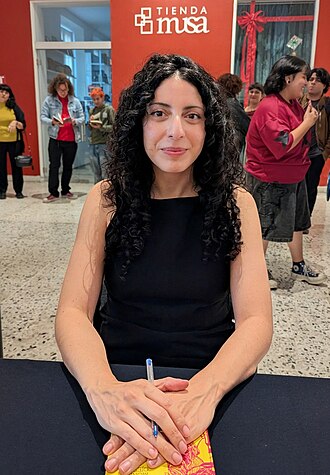
照片:Freddy eduardo,CC BY-SA 4.0,来自维基共享资源「Mónica Ojeda en la FIL 2025.jpg」(经缩小)。
生平与创作
这个词条暂时没有中文维基百科条目,下面是英文维基百科的内容(英文原文):
Mónica Ojeda Franco (born 1988) is an Ecuadorian writer. Ojeda has published poetry, novels and short stories. She describes her work as Andean gothic. A native of Guayaquil, she obtained her bachelor's degree before moving to Spain for a master's in creative writing. Ojeda emigrated from Ecuador to Spain in 2017.
Ojeda's work blends elements of horror fiction with Andean folklore and digital subcultures to explore contemporary social issues in Latin America. Her debut novel, La desfiguración Silva (2015), won the ALBA Narrativa Prize while she was attending university. She came to wider attention with Nefando (2016) and Mandíbula (2018; translated as Jawbone) and was a recipient of the Bogotá39 award for outstanding young Latin American writers in 2017. She has been described as one of Ecuador's most important living writers.
Early life
Ojeda was born in Guayaquil in 1988. Her mother held a degree in literature and taught at a university. Ojeda would read Reader's Digest books and classics like Madame Bovary and Death in Venice from her mother's library as a child. At age ten, her mother found something she wrote. The joy and recognition it brought inspired her to study literature herself. Her grandfather influenced her decision to continue writing. Suffering from schizophrenia, he would mix real-life details with legends and myths. Ojeda decided at thirteen that she hoped to match the power of his storytelling.
Ojeda studied literature at the Universidad Católica de Santiago de Guayaquil before enrolling in a master's degree in creative writing in Barcelona. The Spanish publisher Candaya included one of her stories in an anthology of emerging Ibero-American writers in 2013. The next year, while still pursuing her master's degree, she won the 2014 Alba Narrativa Prize from the intergovernmental ALBA group for La disfiguración Silva (The Silva Disfiguration). It tells of a group of students who invent the biography of Gianella Silva, a supposedly forgotten filmmaker who was part of the Tzantzismo movement in 1960s Ecuador. The book was published in Havana, Cuba, in 2015.
In 2017, at the age of 29, Ojeda emigrated from Ecuador to Spain. She has cited the violence in her native Guayaquil as the reason for her permanent departure and explained that her literary work is "full of that violence, of those fears, but also of all that desire that makes up my historical-geographical experience with Ecuador". Her Spanish partner had spent three years in Ecuador, and the two married before Ojeda's emigration. Ojeda then spent three years in Spain without legal residency, describing the country's immigration process as difficult for Latin Americans.
Later career
Candaya published Ojeda's second novel, Nefando, in 2016. It uses body horror and linguistic experimentation to depict a hacker named El Cuco and a forgotten video game. She later recalled that she started the novel in Guayaquil and completed it in Barcelona, where the quiet and isolation helped her write. Following the book's critical success, Ojeda was selected for the 2017 Bogotá39, an initiative of the Hay Festival and UNESCO's World Book Capital program to recognize the best young writers in Latin America under 40 years old. She questioned the award's criteria and said that only a small percentage of some countries' output reached the Spanish judges. The following year, La Hora called her one of Ecuador's most important living writers.
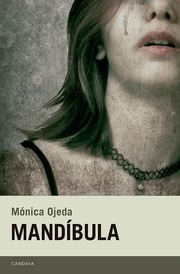
In January 2018, Ojeda published the novel Mandíbula, which tells the story of two teenage girls obsessed with horror stories and creepypastas, one of whom is kidnapped by her literature teacher. It received favorable reviews and was described as "one of the novels of the season" by the Spanish newspaper El País, which ranked it 12th in its list of the 50 best books of 2018. The novel was also selected as one of the ten finalists for the Mario Vargas Llosa Biennial Novel Prize in its 2018 edition. Ojeda received the Prince Claus Fund's Next Generation Award in 2019, with the committee writing that her books "have been pivotal in reshaping modern Spanish-language horror fiction".
In late 2019, Ojeda published her second poetry collection, Historia de la leche (Severo Editorial; released in Spain by Candaya in 2020). It reimagines the biblical story of Cain and Abel through female characters named Caína and Mabel, and features their mother in a plot Ojeda compared to a Greek tragedy. The text subverts traditional Catholic archetypes of the Virgin Mary by depicting maternal milk not as a source of nurture, but as a toxic fluid that transmits inherited violence and guilt. In March 2021, she participated in a Zoom discussion with the Mexican author and academic Cristina Rivera Garza. Around twenty individuals entered the virtual meeting and displayed graphic images of women who were victims of violence.
Ojeda was selected as one of five finalists for the sixth edition of the Ribera del Duero Short Story Award with her 2020 collecton of short stories El mundo de arriba y el mundo de abajo. Páginas de Espuma published it in October 2020 as Las voladoras, a collection influenced by the violence women face in Ecuador as well as the country's geography. For example, in one story a shaman takes his dead daughter from the moorland to the top of a volcano. Ojeda called this style "Andean gothic".
Granta magazine listed Ojeda as one of the 25 best young Spanish-language novelists in 2021. In an interview with El País in July of 2021, she criticized the tendency to market Latin American women writers as a unified literary movement and said that she would not have received the critical attention she did if she had not emigrated to Spain. The following year, Sarah Booker's translation of Mandíbula, titled Jawbone in English, was a finalist for the National Book Award for Translated Literature in the United States. It went on to become her most discussed novel among literary critics.
以上文字摘自英文维基百科「Mónica Ojeda」(有删节,去掉了参考文献等尾部小节),按 CC BY-SA 4.0 使用,作者为维基百科的各位编者。
资料卡
- 出生
- 1988 年 5 月 17 日
- 出生地
- 瓜亚基尔
- 职业
- 作家、小说家、诗人、大学教师、短篇故事作家
- 使用语言
- 西班牙语
- 就读学校
- Universidad Católica de Santiago de Guayaquil、庞佩乌·法布拉·大学
- 领域
- 诗歌、教育
- 代表作
- La desfiguración Silva、Mandíbula
- 获奖
- 克劳斯亲王奖;另有 1 项只有外文名
资料卡来自 Wikidata Q47495734(CC0),众包数据,个别字段可能不全。