书单
Dean H. Kenyon
- 生卒
- 1939 –
- 国籍
- 美国
生平与创作
这个词条暂时没有中文维基百科条目,下面是英文维基百科的内容(英文原文):
Dean H. Kenyon (born 1939) is an American biophysicist and professor emeritus of biology at San Francisco State University. He is a young Earth creationist and one of the proponents of the intelligent design movement. He is the author of the 1969 book Biochemical Predestination.
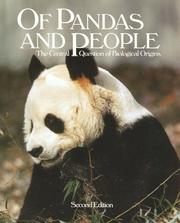
Kenyon became a creationist around 1976, and gave testimony defending creation science during the court cases McLean v. Arkansas and Edwards v. Aguillard. During the latter case, he co-authored the creation science supplementary textbook Of Pandas and People. The case decision went against teaching creation science in public schools, and the authors then altered all references to creationism to refer to intelligent design before the book was published in 1989. He subsequently became a fellow of the Discovery Institute, and continued to endorse young Earth creationism.
Biography
Education
Kenyon graduated with honors from the University of Chicago with a Bachelor of Science in physics in 1961 as a member of Phi Beta Kappa. As an undergraduate, he developed an interest in origin of life research after attending the Darwin Centennial Celebration in 1959. He then earned his Ph.D. in biophysics from Stanford University in 1965. His doctoral dissertation was titled, "Photochemistry of DL-phenylalanine". After receiving his doctorate, he completed research as a postdoctoral fellow of the National Science Foundation in chemical biodynamics at the University of California, Berkeley, under Nobel laureate Melvin Calvin. He then was a research associate at the Ames Research Center from 1965 to 1966.
Career
In 1966, Kenyon started as an assistant professor of biology at San Francisco State University and became emeritus in 2001.
In 1969, Kenyon co-authored Biochemical Predestination with Gary Steinman. Chemist Stephen Berry explained Kenyon's and Steinman's theory as "describing the following causal chain: the properties of the chemical elements dictate the types of monomers that can be formed in prebiotic syntheses, which then dictate the properties of the occurring polymers, which finally dictate the properties of the first eobionts and all succeeding cells." Kenyon's work was about virus production.
During the 1969–1970 academic year he was "on a fellowship at the Graduate Theological Union in Berkeley, where he reviewed the contemporary literature on the relationship of science and religion." Then in 1974, he was a visiting scholar to Trinity College, Oxford.
Kenyon states that his views changed around 1976 after exposure to the work of young Earth creationists:
Then in 1976, a student gave me a book by A.E. Wilder-Smith, The Creation of Life: A Cybernetic Approach to Evolution. Many pages of that book deal with arguments against Biochemical Predestination, and I found myself hard-pressed to come up with a counter-rebuttal. Eventually, several other books and articles by neo-creationists came to my attention. I read some of Henry Morris' books, in particular, The Genesis Flood. I'm not a geologist, and I don't agree with everything in that book, but what stood out was that here was a scientific statement giving a very different view of earth history. Though the book doesn't deal with the subject of the origin of life per se, it had the effect of suggesting that it is possible to have a rational alternative explanation of the past.
In 1980, the San Francisco State University Department of Biology had a dispute over Kenyon's presentation of creationism, then called "scientific creationism" in Biology module 337 Evolution. At that time, Kenyon challenged anyone on the faculty to a debate on the merits of evolutionary theory versus "scientific creationism." According to SFSU biology professor John Hafernik, "There was much discussion in faculty meetings as well. Eventually the faculty voted (none opposed, seven abstentions) not to alter the description of Biology 337 to include creationism. The precedent set, in the context of the 1980 discussions, was that the Department did not support teaching creationism."
Court cases
Kenyon was recruited as an expert in two notable cases about "creation science" during the 1980s.
McLean v. Arkansas
In 1981, Kenyon was recruited to be an expert witness for the creationist side in the McLean v. Arkansas case that tested the constitutionality of Arkansas' Equal Time Legislation that mandated equal time for "creation science" and "evolution science". Kenyon flew to Arkansas to be deposed and testify during the trial. However, apparently under the influence of creationist attorney Wendell Bird (who was displeased with the defense of the creationist position by the Arkansas attorney general Steve Clark), Kenyon left town just before he was to testify:
The attorney general presented six science witnesses, two more than had testified for the ACLU, presumably on the grounds that quantity made up for evident lack of quality. There would have been more had not a serious case of disappearing witnesses set in as the second week wore on. Dean Kenyon, a biologist from San Francisco State University, fled town after watching the demolition of four of the state's witnesses on day 1 of the second week. And Henry Voss, a computer scientist from California, was rapidly withdrawn at the last minute when, in pretrial deposition, he too began to expound on things satanic and demonical.
The Arkansas attorney general apparently threatened to sue Bird after this interference:
There were other witnesses for the defense who did not show up. Several scientists who had been listed as potential witnesses for the state, backed out because of what Clark termed "peer pressure."
以上文字摘自英文维基百科「Dean H. Kenyon」(有删节,去掉了参考文献等尾部小节),按 CC BY-SA 4.0 使用,作者为维基百科的各位编者。
资料卡
- 出生
- 1939 年
- 出生地
- 美国
- 职业
- 教师、生物学家
- 就读学校
- 斯坦福大学、芝加哥大学
资料卡来自 Wikidata Q5246189(CC0),众包数据,个别字段可能不全。