书单
维多·罗素
- 生卒
- 1946 – 1990
- 国籍
- 美国
- 外文名
- Vito Russo
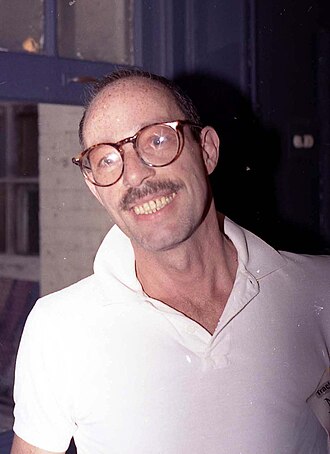
照片:Massimo Consoli,CC BY-SA 2.5,来自维基共享资源「§Russo Vito (1946-1990) - foto di Massimo Consoli 28-VI-1989, NY.jpg」(经缩小)。
生平与创作
维托·鲁索(Vito Russo,1946年7月11日—1990年11月7日是一位美国LGBT活动家、电影历史学家和作家,生于东哈莱姆 。 维托·罗素反感媒体对同性恋者的刻板印象。在目睹了1969年的石墙暴动后,他就投身LGBT活动。 1985年,他与他人共同创立了GLAAD。
以上文字摘自维基百科「维托·鲁索」(去掉了参考文献等尾部小节),按 CC BY-SA 4.0 使用,作者为维基百科的各位编者。
中文维基百科的条目比较短,下面附上英文维基百科的内容(英文原文):
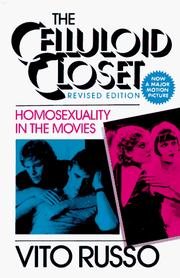
Vito Russo (July 11, 1946 – November 7, 1990) was an American LGBT activist, film historian, and author. He is best remembered as the author of the book The Celluloid Closet (1981, revised edition 1987), described in The New York Times as "an essential reference book" on homosexuality in the US film industry. In 1985, he co-founded the Gay and Lesbian Alliance Against Defamation (GLAAD), a media watchdog organization that strives to end anti-LGBT rhetoric, and advocates for LGBTQ inclusion in popular media.
Life and work
Vito Russo was born in 1946 in Italian Harlem (East Harlem), Manhattan. Growing up, Russo was disturbed by the stereotypical portrayals of gay people in media. After witnessing the Stonewall riot in 1969 and hearing about another raid the following year, Russo became avidly involved in the emerging Gay Activists Alliance.
Russo obtained his undergraduate degree from Fairleigh Dickinson University and earned his Master's in film at New York University. While earning his Master's, Russo also worked with the film departments at a Gay Community Center and New York's Museum of Modern Art. It was his interaction with these communities that led to the synthesis of his politics and works.
Russo developed his material following screenings of camp films shown as fundraisers for the Gay Activists Alliance. He traveled throughout the country from 1972 to 1982, delivering The Celluloid Closet as a live lecture presentation with film clips at colleges, universities, and small cinemas such as the Roxie Cinema in San Francisco and the Hirschfeld Biograph in Dublin. In both the book and in the lecture/film clip presentation, he related the history of gay and lesbian moments – and the treatment of gay and lesbian characters – in American and foreign films of the past.
Russo worked for a time for The Emerald City on Channel J, where he interviewed public figures including John Waters.
In 1983, Russo wrote, produced, and hosted a series focusing on the gay community called Our Time for WNYC-TV public television, that was co-hosted by Marcia Pally. This series featured the nation's first GLBT hard news and documentary video segment produced and directed by social behaviorist D. S. Vanderbilt.
Russo's concern over how LGBTQ people were presented in the popular media led him to co-found the Gay and Lesbian Alliance Against Defamation (GLAAD), a watchdog group that monitors LGBTQ representation in the mainstream media and presents the annual GLAAD Media Awards. The Vito Russo Award is named in his memory and is presented to an openly gay or lesbian member of the media community for their outstanding contribution in combating homophobia. Russo was also actively involved in the AIDS direct action group ACT UP.
Russo appeared in the 1989 documentary Common Threads: Stories from the Quilt as a "storyteller," relating the life and death of his lover Jeffrey Sevcik. The film won the Academy Award for Best Documentary Feature at the 62nd Academy Awards.
In 1990, Russo spent a year at the University of California, Santa Cruz, teaching a class, also titled "The Celluloid Closet". He enjoyed being a professor, spending lecture breaks smoking and joking with his students.
Also in 1990, Merrill College at UC Santa Cruz established Vito Russo House to promote Gay, Lesbian, Bisexual and Transgender awareness and provide a safe and comfortable living environment for queer, straight-supportive and all students who value and appreciate diversity. The house tailors its programming to meet the needs of LGBTQ students and offers all an opportunity to build understanding and tolerance.
Death and legacy
Russo was diagnosed with HIV in 1985 and died of AIDS-related complications in 1990. His work was posthumously brought to television in the 1996 documentary film The Celluloid Closet, co-executive-produced and narrated by Lily Tomlin. His memorial was held at the Rutherford Congregational Church in Rutherford, New Jersey.
以上文字摘自英文维基百科「Vito Russo」(有删节,去掉了参考文献等尾部小节),按 CC BY-SA 4.0 使用,作者为维基百科的各位编者。
资料卡
- 母语名
- Vito Russo
- 出生
- 1946 年 7 月 11 日
- 出生地
- 曼哈顿
- 逝世
- 1990 年 11 月 7 日
- 逝世地
- 曼哈顿
- 职业
- 电影导演、编剧、演员、电影史学家、作家、社运人士、电影演员
- 使用语言
- 英语
- 写作语言
- 英语
- 就读学校
- 纽约大学、费尔里·狄金生大学
资料卡来自 Wikidata Q725318(CC0),众包数据,个别字段可能不全。