 书单
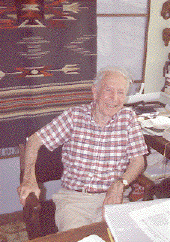
Alexander Lowen
- 生卒
- 1910 – 2008
- 国籍
- 美国
照片:Alessandra Callegari.,CC0,来自维基共享资源「Alexander Lowen - 2002.png」(经缩小)。
生平与创作
这个词条暂时没有中文维基百科条目,下面是英文维基百科的内容(英文原文):
Alexander Lowen (December 23, 1910 – October 28, 2008) was an American physician and psychotherapist.
Life
A student of Wilhelm Reich in the 1940s and early 1950s in New York, Lowen developed bioenergetic analysis, a form of mind-body psychotherapy, with his then-colleague John Pierrakos. He is also noted for developing the concept of bioenergetic grounding, one of the foundational principles of bioenergetic therapy. Lowen was the founder and former executive director of the International Institute for Bioenergetic Analysis (IIBA) in New York City. The IIBA now has over 1,500 members and 54 training institutes worldwide.
Born in New York City to Jewish immigrants, Lowen received a bachelor's degree in science and business from City College of New York, an LL.B and a J.S.D (a doctorate in law) from Brooklyn Law School. His interest in the link between the mind and the body developed during this time. He enrolled in a class on character analysis with Wilhelm Reich. After training to be a therapist himself, Lowen moved to Switzerland to attend the University of Geneva.
Lowen lived and practiced for the majority of his life in New Canaan, Connecticut. He had a stroke in July 2006. The Alexander Lowen Foundation was founded in April 2007 to continue his legacy. Lowen died on October 28, 2008, at the age of 97.
Bioenergetics (1975)
Lowen's 1975 book, Bioenergetics, is titled after the branch of body psychotherapy developed by him. Building upon the work of Reich (as well as some of his own previous publications), Lowen upholds that a key to existential well-being is the ability to release emotionally (syncing mind and body) via the orgasm. He maps human functions to a six-pointed star, the top three points corresponding to the head and hands (more associated with mental functions), the bottom three to the feet and sex organ (more associated with worldly functions). Lowen models stages of psychological development on a diagram functioning akin to dendrochronology.
Lowen argues that problems in body posture or incoordination often stem from childhood trauma and that bioenergetic therapy can help treat neuroses. He suggests somatic methods of therapy, including some involving touch (e.g. to represent a parent), warning the caregiver against taking personal (especially sexual) advantage of the relationship (such betrayals likely resulting in relapse). Particular methods invoke screaming and/or falling into a blanket.
Lowen sometimes correlates bodily functions with cultural associations that have emerged from them, especially word play. Lowen also draws from his own experience both undergoing and providing therapy. He shares diagrams of the apparent flow and congestion of "energy", especially regarding the visual system, but without scientific discussion of the responsible mechanisms.
以上文字摘自英文维基百科「Alexander Lowen」(去掉了参考文献等尾部小节),按 CC BY-SA 4.0 使用,作者为维基百科的各位编者。
资料卡
- 出生
- 1910 年 12 月 23 日
- 出生地
- 纽约
- 逝世
- 2008 年 10 月 28 日
- 逝世地
- 新迦南
- 职业
- 心理治疗师
- 使用语言
- 英语
- 就读学校
- 纽约市立学院、布鲁克林法学院、日内瓦大学(1947)
- 领域
- 躯体心理治疗
资料卡来自 Wikidata Q968616(CC0),众包数据,个别字段可能不全。