书单
百科
这个词条暂时没有中文维基百科条目,下面是英文维基百科的内容(英文原文):
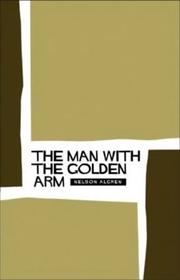
The Man with the Golden Arm is a novel by Nelson Algren, published by Doubleday in November 1949. One of the seminal novels of post-World War II American letters, The Man with the Golden Arm is widely considered Algren's greatest and most enduring work. It won the National Book Award in 1950.
The novel details the trials and hardships of illicit card dealer "Frankie Machine", along with an assortment of colourful characters, on Chicago's Near Northwest Side. A veteran of World War II, Frankie struggles to stabilize his personal life while trying to make ends meet and fight a growing morphine addiction. Much of the story takes place during the immediate postwar period along Division Street and Milwaukee Avenue in the old Polish Downtown.
Plot summary
The events of the novel take place between 1946 and 1948, primarily on the Near Northwest Side of Chicago. The title character is Francis Majcinek, known as "Frankie Machine," a young man of about 30 who is a gifted card dealer and an amateur drummer. While serving in World War II, Frankie is treated for shrapnel in his abdomen and medicated with morphine. He develops an addiction to the drug, although initially in the story he believes he can control his habit.
Frankie lives in a small apartment on Division Street in a Polish neighborhood with his wife, Sophie (nicknamed "Zosh"). Sophie has been using a wheelchair since a drunk-driving incident caused by Frankie (although the novel implies that her paralysis is psychological in nature). She spends most of her time looking out the window and watching the nearby elevated rail line. She takes out her frustrations by fighting with her husband, and she uses his guilt to keep him from leaving her. The turmoil in their relationship only spurs on his addiction.
Frankie works nights dealing in backroom card games operated by "Zero" Schwiefka. He aspires to join the Musicians' Union and work with jazz drummer Gene Krupa, but this dream never materializes. His constant companion and protégé is Solly "Sparrow" Saltskin, a feeble-minded half-Jewish thief who specializes in stealing and selling dogs; Frankie gets Sparrow a job as a "steerer," watching the door to the card games and drawing in gamblers.
Often referring to his drug habit as the "thirty-five-pound monkey on his back," Frankie initially tries to keep Sparrow and the others in the dark about it. He sends Sparrow away whenever he visits "Nifty Louie" Fomorowski, his supplier. One night, while fighting in a back stairwell, Frankie inadvertently kills Nifty Louie. He and Sparrow attempt to cover up his role in the murder.
Meanwhile, Frankie begins an affair with a childhood friend, "Molly-O" Novotny, after her abusive husband is arrested. Molly helps Frankie fight his addiction, but they soon become separated when Frankie is imprisoned for shoplifting and she moves out of the neighborhood. Without Molly, he begins using drugs again when he is released.
Nifty Louie owed money to politically connected men, and finding his killer becomes a priority for the police department. Sparrow is held for questioning by the police, and he is moved from station to station to circumvent habeas corpus requirements. Eventually he breaks down and reveals what he knows, and Frankie is forced to flee.
While on the run, Frankie manages to find Molly at a strip club near Lake Street. He hides in her apartment and beats his addiction, but in the end the authorities learn where he is hiding. He barely manages to escape and gets shot in the foot, leaving Molly behind. He flees to a flophouse, but without any hope of reuniting with Molly or staying free, he hangs himself in his room on April Fools' Day, 1948.
The novel ends with a transcript of the coroner's inquest, as well as a poem for Frankie entitled "Epitaph."
Background
Algren began writing the novel after (much like his protagonist) returning from World War II, and he originally intended to write a war novel. The part of Chicago he lived in served as the backdrop for the story. He originally intended the title to be Night Without Mercy, but the publisher preferred a less ominous title. Algren stated that "golden arm" originated as a term frequently used by a "little Italian bookie... I knew in the Army." In craps, a golden arm is a player who has rolled dice for over one hour without losing.
Before the novel's publication, a version of its concluding poem, "Epitaph: The Man with the Golden Arm", was released in the September 1947 issue of Poetry (New York: Modern Poetry Association).
The first draft of the story did not include the topic of drug addiction. Algren later recalled, "I’d sent the book to the agent, and the agent said she liked it and all that, but it needed a peg, it didn’t seem to be hung on anything." While considering what to do, he went out for drinks with a friend who later revealed that he was an intravenous drug user. This inspired Algren to incorporate drug use into the novel.
Reception
Annual National Book Awards were re-established in 1950 by the American book industry, recognizing books in three categories published in the United States during 1949. Nelson Algren and The Man With the Golden Arm won the Fiction award which is sometimes called "the first National Book Award for Fiction".
Former first lady Eleanor Roosevelt made the presentation.
The novel is widely considered a classic of twentieth-century American literature.
Writing of Algren and the novel, Kurt Vonnegut stated that "he was a pioneering ancestor of mine... He broke new ground by depicting persons said to be dehumanized by poverty and ignorance and injustice as being genuinely dehumanized, and dehumanized quite permanently." Poet Carl Sandburg praised the novel's "strange midnight dignity."
In a 1949 letter to Algren, Ernest Hemingway provided the following review of the novel (which Doubleday chose not to include in its marketing):
以上文字摘自英文维基百科「The Man with the Golden Arm (novel)」(有删节,去掉了参考文献等尾部小节),按 CC BY-SA 4.0 使用,作者为维基百科的各位编者。
资料卡
- 原题
- The Man with the Golden Arm
- 原作语言
- 英语
- 首次出版
- 1949 年 11 月
- 作品形式
- 长篇小说
- 首版出版社
- 双日出版社
- 故事发生地
- 芝加哥
资料卡来自 Wikidata Q3820015(CC0),众包数据,个别字段可能不全。
改编作品
电影1
- 《金臂人》The Man with the Golden Arm
名单来自 Wikidata(CC0):只列条目里写明「改编自 / 取材于」这本书的作品,不按名字猜;众包数据,可能不全。