书单
百科
这个词条暂时没有中文维基百科条目,下面是英文维基百科的内容(英文原文):
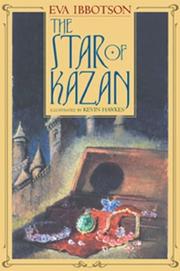
The Star of Kazan is a 2004 novel by Eva Ibbotson.
It won the Nestlé Children's Book Prize Silver Award and was shortlisted for the Carnegie Medal.
Setting
The story takes place over a year in the Austro-Hungarian and German empires in the early 20th century. Certain events are discussed, however, that are set in the late 19th century or other parts of Europe. Though the story is fictional, some people and events from actual history are discussed (such as Emperor Franz-Josef and the founding of the German empire). The author, with ancestry from Vienna herself, dedicates the second chapter of the book to discussing life there at that time.
Plot summary
Ellie and Sigrid are the cook and housemaid to three professors in Vienna. On their day off, they discover a newborn baby girl left behind in a church of the alpine village of Pettelsdorf. With the infant is a note asking for her to be taken to a nunnery in Vienna, but when Ellie and Sigrid find that the nunnery is in quarantine for typhus, they decide to take the baby home and raise her as their own. They name her Annika after Ellie's mother and decide not to give her away after the typhus quarantine is over.
Twelve years later, in 1908, Annika is attending a local school whilst helping the adult maids with the day-to-day duties of running the household. She has befriended the granddaughter of a bookshop owner, Pauline, and the poor son of a washerwoman, Stefan. She celebrates her 'Found Day', the anniversary of her discovery in the church, by attending a Lipizzaner horse show at Vienna's Spanish Riding School. Though Annika is content, she fantasises about her birth mother.
The Eggharts, a wealthy family who live near Annika, begin to care for a dying relative. Loremarie Egghart, the snobbish daughter of Herr Egghart, offers Annika money to read to her great-aunt, and soon Annika learns that she was once a famous theatre personality who was called 'La Rondine' and received expensive gifts from her audiences, including a Russian emerald called the Star of Kazan. La Rondine would ascend a swing and strew flowers over the audience, but after marrying a poor painter who died young, La Rondine could not find work and was forced to sell her jewels. The jeweler, a hunchbacked man, gifted La Rondine with paste jewelry copies of the jewelry, and La Rondine bequeathes them to Annika when she dies soon after.
When the beautiful Frau Edeltraut von Tannenberg comes to the professors' house, she announces that she is Annika's long-lost birth mother. She explains that she abandoned Annika because she had eloped with a man who abandoned her after a week. Edeltraut takes Annika to Spittal, the family's estate in Germany, where Annika meets her uncle Oswald and her imperious half-brother Hermann. Spittal is gloomy and derelict, and much of the furniture has been sold and the staff reduced to an elderly maid and a Roma boy named Zed. Zed cares for Hermann's horse, Rocco, and Annika befriends him against the approval of her aristocratic family. She begins to dislike Hermann, who abuses both Rocco and Zed's dog, Hector, to whom he tied firecrackers that permanently injured him.
Edeltraut persuades Annika to sign a lengthy contract before leaving for Zurich. In actuality, Annika has signed over La Rondine's jewels, including the Star of Kazan. When Edeltraut returns, she is dressed extravagantly and gives gifts to her family, including galoshes for Annika that are a size too small. She claims that her godfather has died and bequeathed a large sum of money to her, which in fact she has sold some of La Rondine's jewels.
Annika's mother asks her to sign some important documents without really explaining them, and then goes to Zurich. Annika has actually signed over La Rondine's jewels, including her famous Star of Kazan, but is unaware of what she has done. When her mother comes back, she says a relative died and left them much money, but in fact she sold some of Annika's jewels so Hermann can go to the army school that he wants to attend, and Annika can have galoshes, which her mother buys a size too small.
One day, while Annika is walking with Zed by the lake, Hector retrieves a remnant of La Rondine's trunk. There is no sign of the jewels. Upon asking Edeltraut of the trunk's mysterious appearance, she retorts that Zed must have stolen it. Afraid of being arrested, Zed flees Spittal with Rocco and arrives in Vienna to tell the professors his suspicions about Annika's mother.
Annika is then sent away to a harsh finishing school, Grossenfluss. When the professors, Ellie, and Stefan discover that a pupil died by suicide they plot Annika's escape, successfully taking her back to Vienna. However, Edeltraut soon returns, and Annika insists on returning to Spittal with her birth mother. Pauline, upset from the proceedings, decides to spend her time on her hobby of collecting news articles of heroic deeds, but spots a piece stating that the lawyer who signed the birth certificate that Frau Edeltraut had of Annika's was jailed for fraud. This spurs Pauline to visit the midwife in Pettelsdorf, only to discover that the women had a stroke twenty years beforehand and can only sign her name. With this knowledge Pauline returns to Vienna and informs everyone about the forgery of the birth certificate. By this time, Annika is already on the boat with Frau Edeltraut and about to set off on the voyage, but fortunately Herr Egghart has arrived in his motor car, and they speed to the river Danube. They manage to alert Annika and inform her that Frau Edeltraut is not her mother, which Annika instantly acknowledges and jumps into the river to evade her.
以上文字摘自英文维基百科「The Star of Kazan」(有删节,去掉了参考文献等尾部小节),按 CC BY-SA 4.0 使用,作者为维基百科的各位编者。
资料卡
- 原作语言
- 英语
- 首次出版
- 2004 年 7 月 2 日
- 首版出版社
- 麦美伦出版社
资料卡来自 Wikidata Q7766297(CC0),众包数据,个别字段可能不全。