书单
百科
这个词条暂时没有中文维基百科条目,下面是英文维基百科的内容(英文原文):
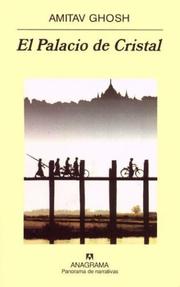
The Glass Palace is a 2000 historical novel by Indian writer Amitav Ghosh. The novel is set in Burma, Bengal, India, and Malaya, spans a century from the Third Anglo-Burmese War and the consequent fall of the Konbaung Dynasty in Mandalay, through the Second World War to late 20th century. Through the stories of a small number of privileged families, it illuminates the struggles that have shaped Burma, India and Malaya into the places they are today. It explores the various facets of the colonial period, including the economic fall of Burma, the rise of timber and rubber plantations, the moral dilemmas faced by Indians in the British Indian Army, and the devastating effects of World War II. Focusing mainly on the early 20th Century, it explores a broad range of issues ranging from the changing economic landscape of Burma and India, to pertinent questions about what constitutes a nation and how these change as society is swept along by the tide of modernity.
The name of the novel derives from the Glass Palace Chronicle, which is an old Burmese historical work commissioned by King Bagyidaw in 1829.
Summary
Part One - Mandalay
The novel starts with an 11-year-old boy called Rajkumar running through the city of Mandalay to find a woman called Ma Cho. He is the last surviving member of his family and comes to Burma from India with a bright entrepreneurial spirit and a hunger for success.
Rajkumar's work as an assistant on Ma Cho's food stall takes place in the shadow of the Glass Palace, in which King Thibaw and his wife reside with their daughters, the princesses. As the Third Anglo-Burmese War breaks out, everyday citizens of Mandalay are able to enter the enshrined building, and it is then that Rajkumar spots Dolly, one of the princesses' attendants, and instantly falls in love with her. However, the entire Royal Family and their entourage are quickly extradited by the British and sent into house arrest thousands of miles away on the West coast of India.
Part Two - Ratnagiri
Whilst Rajkumar's career begins to take shape with the help of Saya John, a teak merchant (Ma Cho's sometime lover), we are given a glimpse into the beginnings of a new life for King Thebaw and his family as they try to settle into the port town of Ratnagiri, north of Goa. King Thebaw is appreciated by the local community, and in time the family come to feel secure and even happy in their new surroundings. In the book, Outram House (the name of the residence the British provide to house the family and what remains of their assistants) comes back into the life of Ratnagiri unexpectedly. The arrival of a new Collector stirs up resentment towards the colonial regime, but Uma, the Collector's wife, who is described as headstrong in the story, is able to help bridge the gap by befriending Dolly.
Meanwhile, Rajkumar has been enduring the hardships of the teak trade, having witnessed man and beast working together on an epic scale as elephants transport large volumes of wood down from the forests for sale into the British Empire's vastly expanding markets. Being the opportunist that he is, Rajkumar starts to make his own way in world after receiving advice from his new friend and colleague Doh Say. Borrowing cash from Saya John, he makes the journey to India to recruit poverty-stricken village-dwellers into the comparatively lucrative (yet undoubtedly perilous) world of early oil-mining in Burma. Having made enough money this way, Rajkumar does what has been his dream for some time: buy a timber-yard of his own, with Doh Say as business partner.
Having built a more than modest commercial empire, Rajkumar had one piece of unfinished business: to track down the only girl he'd ever loved, Dolly. Through an Indian connection in Rangoon (Yangon), Rajkumar makes contact with Ratnagiri via Uma, and is accordingly granted an audience with the Collector and his wife over a meal that of course stiffly conforms to colonial best practice. To his surprise, Dolly is present, and after some drama, he finally persuades her to leave the family she has been exiled with, and return with him to Burma as his wife.
Meanwhile, at Outram House, the first princess is found to be pregnant with Mohanbhai Sawant's (the coachman) child. The Collector panics at the potential scandal and tries convincing the Queen to send Sawant away and to bury the entire affair. However, the Royal Family has no qualms about the First Princess' relations with Sawant. After Dolly's departure, Uma attempts to divorce the Collector. The Collector reveals that Uma's attempt came at an apt time as his superiors had discovered the First Princess' pregnancy, costing him his job and post.
One morning, shortly before his supposed departure from Ratnagiri, the Collector takes a boat out to sea, killing himself, preferring death over shame.
Part Three - The Money Tree
Saya John prides himself on being able to spot the next big commodity, and on their return to Rangoon, he hands Rajkumar and Dolly a small clump of odd elastic material rubber, suggesting his involvement in the rubber trade.
After the Collector's suicide, Uma travels the world as a widow. Uma and Dolly continue their friendship through written letters to each other. While visiting New York, Uma meets Matthew who had been avoiding his return to Saya John. Uma discovers that Matthew is engaged to an American named Elsa. This engagement had caused Matthew to avoid returning to Saya John as Matthew feared Saya John's reaction to his son's engagement to a foreign woman and a protestant no less.
Through the help of Uma and Dolly, Saya John dispels this fear, and Matthew starts making his way home with his new bride. A happy Saya John decides to leave for Malacca to be with his son.
Meanwhile, Dolly gets pregnant with her first child but miscarries. As Saya John prepares to leave for Malacca, Dolly gives birth to another child, giving him the Burmese name "Sein Win" and the Indian name "Neelhadri" or "Neel" for short.
以上文字摘自英文维基百科「The Glass Palace」(有删节,去掉了参考文献等尾部小节),按 CC BY-SA 4.0 使用,作者为维基百科的各位编者。
资料卡
- 原题
- The Glass Palace
- 原作语言
- 英语
- 首次出版
- 2000 年
- 体裁
- 历史小说
资料卡来自 Wikidata Q3225164(CC0),众包数据,个别字段可能不全。