书单
百科
这个词条暂时没有中文维基百科条目,下面是英文维基百科的内容(英文原文):
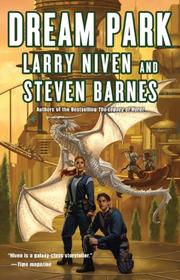
Dream Park is a 1981 sci-fi/murder mystery novel by American writers Larry Niven and Steven Barnes, set in a futuristic amusement park of the same name. It was nominated for the 1982 Locus Award and later expanded into a series of cyberpunk murder mysteries: The Barsoom Project (1989), The California Voodoo Game (1992), and The Moon Maze Game (2011). The books describe a futuristic form of live action role-playing games (LARPs), although the term was not in use when the original novel was published. The novels inspired many LARP groups, notably the International Fantasy Games Society which is named after a fictional entity in the book.
Overview
The Dream Park series is set in a near-future Earth, the first book taking place in March 2051. Technology is used to create realistic games in which participants act out the roles of free-willed protagonists in various stories. These are role-playing games and foreshadowed many aspects of modern live action role-playing games.
Many elements of the Dream Park games will be familiar to players of traditional pen-and-paper role playing games, such as Dungeons & Dragons. The novels are replete with references to dice rolls, character sheets, and experience points, although there's no mention of anyone playing pen-and-paper (just video games). Most of the classic character classes (fighter, mage, thief, and cleric) are still in use, although "engineer" and "scout" are added in.
The most obvious difference between the games and modern LARP is one of budget and scale. Most Dream Park games use massive, elaborately decorated, climate controlled sets, that cover thousands of acres. In one novel, an entire island is created for the game; in another, a crater on the Moon is domed and heavily developed. Holograms (and later augmented reality glasses) are used for special effects. The blades on sharp weapons can be removed and replaced with holographic edges; this allows participants to engage in safe combat. A combination of computers and gamemasters monitor events, prompt actors playing non-protagonist parts, and resolve simulated actions. Thus, after a player's character has been repeatedly struck with a holographic sword a computer might determine that he has died. The player will be informed that he should pantomime a death and is removed from play.
Although the Dream Park concept assumes future technology, it is still an expensive proposition. Players pay fees to play the games. In addition, the first game played is both broadcast live and recorded (the game areas and player costumes include numerous cameras and other sensors). The creator of the game takes the recorded footage and edits it into a movie (with enhanced post-production effects) and other media for resale. While the resulting movies are heavily influenced by the game's creator, the actions of the players are unscripted. In this way the books anticipate reality television.
The games in the Dream Park series are heavily regulated. One of the regulatory groups is the International Fantasy Games Society or IFGS. The creator of a game (called the Game Master) has nearly unlimited power in the game; he can in theory arbitrarily change a game to kill out a given character and eject the player from the game. IFGS existed to protect the interests of players and limit abuse by game creators. One group of fantasy based live action role-playing gamers have taken the IFGS name for their rules and organization.
In each of the novels, the plot moves at multiple levels. The reader is given parallel stories involving the game story itself as the player characters learn the scenario, solve various puzzles and engage in simulated battles with enemies; the players and their real-world relationships with each other and the game organizers; events affecting the venue staff; and usually some kind of out-of-game plot or conspiracy that will impact everyone involved. These are high-stakes games with massive publicity and cutting-edge technology, and they are therefore attractive to a variety of criminals.
Plot
Dream Park is a combination amusement park and live action roleplaying game center, the largest in the world. Most Games are reruns, with team after team of players attempting to complete the pre-packaged adventures and win Gaming Points to inprove the standing of their characters. But someone always has to be first – and every Gamer wants to be part of the initial team that beta-tests a new Game. To have the author/programmer himself serve as the Game Master, to face surprises no one has seen before – even the most jaded elite players compete fiercely for a spot in the Gaming party.
"South Seas Treasure Hunt" promises to be a doozy. The Game Master, Richard Lopez, is one of the best authors in the business. Chester Henderson, the Lore Master (team captain of the Players) is a living legend ... and the two hate each other. Players from around the world have gathered for a chance to play in the biggest grudge match in Gaming history.
The game opens with a bang. Henderson's team is sent to (simulated) Melanesia to retrieve some type of World War II-era superweapon, but dark magic rips their Gooney Bird out of the sky to a crash landing. The party has to fight their way across New Guinea, dealing with magic and monsters of kinds they have never seen before. Demigods, Cargo Cult magicians, and an army of laughing zombies stand between them and victory.
But even as Henderson's team hacks their way through the jungle, the real world threatens the Game. A multi-million dollar experimental prototype has been stolen from Dream Park's Research & Development Department, with a security guard murdered in the process. All the evidence suggests one of the Players in South Seas Treasure is responsible.
以上文字摘自英文维基百科「Dream Park」(有删节,去掉了参考文献等尾部小节),按 CC BY-SA 4.0 使用,作者为维基百科的各位编者。
资料卡
- 原题
- Dream Park
- 原作语言
- 英语
- 首次出版
- 1981 年 3 月
- 作品形式
- 长篇小说
- 体裁
- 科学幻想
资料卡来自 Wikidata Q5306426(CC0),众包数据,个别字段可能不全。
改编作品
游戏1
名单来自 Wikidata(CC0):只列条目里写明「改编自 / 取材于」这本书的作品,不按名字猜;众包数据,可能不全。