书单
百科
这个词条暂时没有中文维基百科条目,下面是英文维基百科的内容(英文原文):
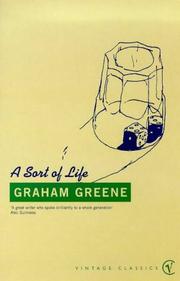
A Sort of Life is the first volume of autobiography by British novelist Graham Greene, first published in 1971.
Overview of the book
This volume covers Greene's early life, from mundane childhood in Hertfordshire, through to school and university and on to his early working life as a sub-editor at The Times and his years as a struggling novelist. His memoirs have been criticized for being oddly impersonal and for brushing over his marriage and his conversion to Catholicism, especially as his faith was to become a powerful motif in many of his novels. Despite these omissions he deals frankly with the personal demons he faced in his teens, including an account of several suicide attempts, the resulting psychoanalysis his father arranged for him, and his brief fascination with Russian roulette.
Key themes in the book
This is an autobiographical book that is short (190 pp in the 1973 pocket-book edition quoted below) and covers the early part of the author’s life, i.e. his childhood and his youth. It is written in a factual and detached style, but with great insight and, it seems, honesty; also, it is written with wit, irony and humor, ostensibly to bring “order” to the “chaos” of a life.
Among the themes covered, the book refers to English society (class prejudice); existential issues (dealing with one’s family, failure in life, coping with setbacks, revenge and bullying, false kindness, suicide and its allure, the quest for an adrenalin rush, the desire to prove oneself in life, extreme commitment in life, happiness, boredom, and loneliness); the life and travails of a writer of fiction (writing as a form of therapy and the posture of the novelist); psychoanalysis; education (including private education, boarding schools, private tuition and working as a private tutor, and university life); sex (the interest in sex in one’s teens); politics (Communism and patriotism); morality and ethics, as well as religion (Catholicism and faith); and journalism (and working as a sub-editor for a national newspaper).
Weirdly, there is little that is truly personal, let alone intimate, beyond the writer’s teen years; for instance, we do not learn anything about how or where or when he had his first sexual encounter. The quest for creativity (through writing, also seen as a form of therapy) and the fear of boredom (G Greene tended to depression right through his life) are 2 dominant themes.
Description of the content of the book
The book starts with a description of life at Berkhamsted School, with the nearby village of Northchurch. The author dwells on his extended and influential family, which is like “a tribe”, as well as his parents; his father became headmaster of the school in 1910. G Greene’s childhood is set in pre-war (i.e. pre-WWI) England; it has a distinct Victorian flavor to it. It sounds closer to the 19th century than to the 20th. G Greene discusses his parents’ marriage and his decision to become a Catholic.
G Greene reminisces on stays with relatives in the countryside or by the coast, also for holidays; his parents seem remote: his mother because it is in her nature, and his father because he seems to feel he should maintain some sort of distance, being the head of the school where his son is a pupil. The author discusses his fears, as a child, dreams, and memories. He talks about his “ailments”, his interaction with domestic animals, as a child, and the games they played.
As a young boy, he has a fascination with war and the military: the rumbles of war (WWI) are perceived to be some exciting, heroic adventure. The “social conditioning” and regimentation of school life does not seem to suit G Greene, who dwells on it in some detail. He deplores the “social snobbery” and the “exaggerated interest in royalty”. He describes his various hobbies, including collecting stamps, coins, Meccano, collecting “cigarette cards”, and his interest in books. G Greene notes that “the influence of early books is profound”, more so than all “religious teachings” as such. He comments on poetry. G Greene evokes his “earliest sexual memories”, visits to London and more particularly Soho. He discusses his favorite holiday resorts (more particularly Littlehampton, which they often went to ).
When he starts in prep school, it is a big change for G Greene; beatings feature; he hates gymnastics and physical activities. August 1914 comes and the war years follow – somewhat unreal and remote, insofar as war is concerned. The author starts practicing truancy on a regular basis in order to escape the tedious and authoritarian school routine: he hides in bushes near the school, by himself, reading, before heading home. He is now 13.
G Greene practices truancy with sophistication. He dwells on the “unhappiness in a child”, the “routine of the boarding school”, the scatology, and the “lavatory joke[s]”. He is subjected to bullying and “mental torture”, which makes him want to take revenge: this is described in detail, including the “desire for revenge”. These “years of humiliation” made him want to prove that he was good at something, conditioning him for the rest of his life, in fact.
G Greene notes that a suicide attempt is often “a cry for help”. In view of his unhappiness in boarding school, “his final breakdown” is caused by his hatred for the “ignoble routine of school”. A pitiful attempt at running away is short-lived but described in detail. But it brings about major changes, seemingly at the initiative of his father, who is concerned that his son may have been roped into a “masturbation ring” on the school’s premises! G Greene’s father is prompted to send his son to see a psychoanalyst – a daring thing to agree to in 1920.
以上文字摘自英文维基百科「A Sort of Life」(有删节,去掉了参考文献等尾部小节),按 CC BY-SA 4.0 使用,作者为维基百科的各位编者。
资料卡
- 原作语言
- 英语
- 首次出版
- 1971 年
- 体裁
- 自传
- 首版出版社
- 博德利·海德
- 主题
- 自传
资料卡来自 Wikidata Q20656726(CC0),众包数据,个别字段可能不全。