书单
百科
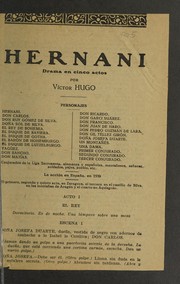
《埃尔纳尼》(Hernani, ou l'Honneur Castillan)是法国浪漫主义作家维克多·雨果的一部亚历山大诗体的押韵戏剧。
标题的名字源自西班牙巴斯克自治区吉普斯夸省的市镇埃尔纳尼。雨果的母亲和她的三个孩子,在前往雨果将军住所的途中,曾在此停留。
1830年2月25日,该剧在巴黎的法兰西喜剧院首演。 今天,它更为人们所铭记的是伴随着首场演出的对抗,所谓埃尔纳尼之战;以及作为朱塞佩·威尔第的歌剧《埃尔纳尼》的灵感来源,而不是它本身的优点。雨果获得了其他浪漫主义者,如赫克托·柏辽兹和泰奥菲尔·戈蒂耶的支持, 反对方是古典主义者,他们认为这部剧是对他们价值观的直接攻击。
在埃德加·爱伦·坡的短篇小说《红死病的面具》中,“埃尔纳尼”被用来描述普罗斯彼洛亲王面具的巨大和优雅。在《悲惨世界》中,马吕斯·彭眉胥的外公吉诺曼批评了《埃尔纳尼》。
威尔第的歌剧《埃尔纳尼》,连同弗朗西斯科·玛丽亚·皮亚夫的意大利歌剧剧本,是根据该剧改编的,于1844年在威尼斯首演。
情节
剧本情节设定于1519年的西班牙宫廷,描写宫廷的浪漫和阴谋。三个男人——两个贵族和一个神秘的强盗——爱上了同一个女人,随后带来了混乱。 剧本表现了强烈的反封建精神,在艺术上打破了古典主义关于悲喜剧的界限。
人物
卡洛斯是真实国王卡洛斯一世(即后来的查理五世)的虚构版本。戈梅兹公爵的名字也来源于一位真实公爵的名字,只是虚构的版本在1519年是一位老人,而真实的公爵当时是个蹒跚学步的孩子。
以上文字摘自维基百科「埃尔纳尼 (戏剧)」(去掉了参考文献等尾部小节),按 CC BY-SA 4.0 使用,作者为维基百科的各位编者。
中文维基百科的条目比较短,下面附上英文维基百科的内容(英文原文):
Hernani (full title: Hernani, ou l'Honneur Castillan) is a drama in rhyming alexandrines by the French romantic author Victor Hugo.
Title origin
The title originates from Hernani, a Spanish town in the Southern Basque Country, where Hugo's mother and her three children stopped on their way to General Hugo's place of residence.
History
The play was given its premiere on 25 February 1830 by the Comédie-Française in Paris. Today, it is more remembered for the demonstrations which accompanied the first performance and for being the inspiration for Giuseppe Verdi's opera Ernani than it is for its own merits. Hugo had enlisted the support of fellow Romanticists such as Hector Berlioz and Théophile Gautier to combat the opposition of Classicists who recognised the play as a direct attack on their values.
In Edgar Allan Poe's short story "The Masque of the Red Death", Hernani is used to describe the magnitude and elegance of Prince Prospero's masquerade. Gillenormand in Les Misérables criticizes Hernani.
Verdi's opera Ernani, with an Italian libretto by Francesco Maria Piave, was based on the play, and first performed in Venice in 1844.
An English-language adaption by the American playwright John Strand appeared in 2013.
Plot
Set in a fictitious version of the Spanish court of 1519, it is based on courtly romance and intrigues. Three men — two noblemen and a mysterious bandit — are in love with the same woman. What follows in the ensuing chaos of action prompted the biographer of Hugo, J.P. Houston, to write "... and a résumé [plot synopsis] will necessarily fail, as in the case of Notre-Dame de Paris, to suggest anything like the involution of its details".
Act I
In the first scenes Hugo introduces Don Carlos, King of Spain (the future Charles V, Holy Roman Emperor) sneaking into the bedchamber of Doña Sol. He forces her maid to help conceal him within the room. Shortly thereafter, Doña Sol enters to welcome her lover Hernani. Hernani and Sol discuss their situation − Doña Sol is about to be forced to marry her elderly uncle, and Hernani is a bandit whose father was executed by the previous King. Hernani and Doña Sol plot to run away together, but Don Carlos emerges from the cabinet where he was hiding, disrupting them. The two men clash swords, but are interrupted by Sol's uncle and fiancé Don Ruy Gomez de Silva. He demands to know why both men are in Sol's private chambers. Don Carlos reveals his identity, and asserts that he had come hoping to meet Ruy Gomez to discuss the recent death of Emperor Maximilian, and claims that Hernani is a member of his entourage, thereby allowing everyone to leave peacefully.
Act II
Don Carlos had overheard Sol and Hernani's plans to run away together, and, accompanied by some aristocratic friends, he appears at the rendezvous point, hoping to seduce Sol in Hernani's place. Doña Sol recognizes him and rejects him. Infuriated, Don Carlos attempts to abduct her. As Don Carlos and Doña Sol struggle over a dagger, Hernani arrives with his own sixty men having overtaken the king's three friends. He explains his hatred for the king over the death of his own father, and challenges Don Carlos to a duel. This time, the King is aware of Hernani's identity as a bandit, and he refuses a duel (as only noblemen could duel), but challenges Hernani to murder him. Hernani's sense of honor prevents him from attacking a man who won't fight back. The King escapes, and sends his men to arrest Hernani and his band of thieves. Hernani escapes after a farewell to Doña Sol.
以上文字摘自英文维基百科「Hernani (drama)」(有删节,去掉了参考文献等尾部小节),按 CC BY-SA 4.0 使用,作者为维基百科的各位编者。
资料卡
- 原题
- Hernani
- 原作语言
- 法语、西班牙语
- 首次出版
- 1830 年
- 作品形式
- 剧作
- 体裁
- 浪漫主义戏剧
资料卡来自 Wikidata Q1125255(CC0),众包数据,个别字段可能不全。
改编作品
舞台剧 / 歌剧 / 芭蕾2
名单来自 Wikidata(CC0):只列条目里写明「改编自 / 取材于」这本书的作品,不按名字猜;众包数据,可能不全。