书单
百科
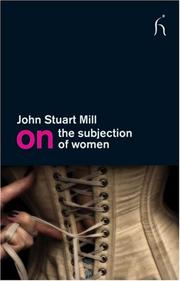
《妇女的屈从地位》(英语:The Subjection of Women)是一篇英国功利主义政治哲学家约翰·斯图亚特·密尔在妻子哈莉特·泰勒·密尔协助下,于1869年出版的呼吁给予妇女平权和参政选举权的女权主义思想著作。密尔在1858年哈莉特离世后,整理并出版了《论自由》一书,随后在1861年完成了《妇女的屈从地位》。在当时欧洲传统道德标准、社会舆论占绝对优势的情况下,对一般欧洲人来说,这本书所倡导的女性平权是带有离经叛道性质的。
在他的自传中,密尔怀念了他妻子和继女对这本著作之创作给予的极大帮助:
在出版这本书(《妇女的屈从地位》)前,许多章节得以为我女儿的绝妙想法、文章所充实;但最重要的,最出类拔萃的贡献当属我的妻子——当属在我们无数次交谈和意见交换中,慢慢充实的一个不可或缺的话题。
尽管大多数学者同意约翰·密尔是本书的唯一执笔者,值得注意的是本书中有许多论点和哈莉特·泰勒·密尔1851年出版的《妇女的参政权》中的论证是类似的。
以上文字摘自维基百科「妇女的屈从地位」(去掉了参考文献等尾部小节),按 CC BY-SA 4.0 使用,作者为维基百科的各位编者。
中文维基百科的条目比较短,下面附上英文维基百科的内容(英文原文):
The Subjection of Women is an essay by English philosopher, political economist and civil servant John Stuart Mill published in 1869, with ideas he developed jointly with his wife Harriet Taylor Mill.
J.S. Mill submitted the finished manuscript of their collaborative work On Liberty (1859) soon after her untimely death in late 1858, and then continued work on The Subjection of Women until its completion in 1861.
Harriet Taylor Mill wrote an earlier essay The Enfranchisement of Women, published under her own name in The Westminster Review in 1851, which covered much of the same ground, and seems to use similar language for many of its arguments.
At the time of its publication, the essay's argument for equality between the sexes was an affront to European conventional norms regarding the status of men and women.
History and context
In his autobiography, Mill describes his indebtedness to his wife, and his daughter Helen Taylor for the creation of The Subjection of Women:
As ultimately published it was enriched with some important ideas of my daughter's and some passages of her writing. But all that is most striking and profound in what was written by me belongs to my wife, coming from the fund of thought that had been made common to us both by our innumerable conversations and discussions on a topic that filled so large a place in our minds.
While scholars generally agree that John Stuart Mill was the sole author, it is also noted that some of the arguments are similar to Harriet Taylor Mill's essay The Enfranchisement of Women, which was published in 1851.
Mill was convinced that the moral and intellectual advancement of humankind would result in greater happiness for everybody. He asserted that the higher pleasures of the intellect yielded far greater happiness than the lower pleasure of the senses. He conceived of human beings as morally and intellectually capable of being educated and civilised. Mill believed everyone should have the right to vote, with the only exceptions being barbarians and uneducated people.
Mill argues that people should be able to vote to defend their own rights and to learn to stand on their two feet, morally and intellectually. This argument is applied to both men and women. Mill often used his position as a member of Parliament to demand the vote for women, a controversial position for the time.
In Mill's time a woman was generally subject to the whims of her husband or father due to social norms which said women were both physically and mentally less able than men and therefore needed to be "taken care of". Contributing to this view were both hierarchical religious views of men and women within the family and social theories based on biological determinism. The archetype of the ideal woman as mother, wife and homemaker was a powerful idea in 19th century society.
At the time of writing, Mill recognized that he was going against the common views of society and was aware that he would be forced to back up his claims persistently. Mill argued that the inequality of women was a relic from the past, when "might was right," but it had no place in the modern world. Mill saw that having effectively half the human race unable to contribute to society outside of the home was a hindrance to human development.
... [T]he legal subordination of one sex to another – is wrong in itself, and now one of the chief hindrances to human improvement; and that it ought to be replaced by a system of perfect equality, admitting no power and privilege on the one side, nor disability on the other.
Arguments
Mill attacks the argument that women are naturally worse at some things than men and should, therefore, be discouraged or forbidden from doing them. He says that we simply don't know what women are capable of, because we have never let them try – one cannot make an authoritative statement without evidence. We can't stop women from trying things because they might not be able to do them. An argument based on speculative physiology is just that, speculation.
以上文字摘自英文维基百科「The Subjection of Women」(有删节,去掉了参考文献等尾部小节),按 CC BY-SA 4.0 使用,作者为维基百科的各位编者。
资料卡
- 原题
- The Subjection of Women
- 原作语言
- 英语
- 首次出版
- 1869 年
- 体裁
- 随笔
- 首版出版社
- 朗文出版社
资料卡来自 Wikidata Q3407659(CC0),众包数据,个别字段可能不全。