书单
百科
这个词条暂时没有中文维基百科条目,下面是英文维基百科的内容(英文原文):
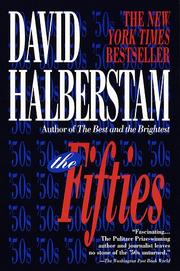
The Fifties (1993) is a history book by David Halberstam centered on the decade of the 1950s in the United States.
Synopsis
Rather than using a straightforward linear narrative, Halberstam separately profiles many of the notable trends and people of the post-war era, starting with Harry S. Truman's stunning presidential victory in 1948 against Thomas E. Dewey. Halberstam chronicles political and cultural trends during the decade, including the beginnings of the Civil Rights Movement and the Cold War, the creation of rock and roll via the rise of Elvis Presley, the introduction of fast food and mass marketing via the rise of McDonald's, the Holiday Inn hotel chain, the transformation of General Motors into the center of new car culture through the work of designer Harley Earl, the beginnings of the sexual revolution with the creation of the birth control pill, and the beginnings of the American counterculture through the emergence of actors Marlon Brando and James Dean and Beat Generation writers Jack Kerouac and Allen Ginsberg. The book ends with an account of the first televised debate between Richard Nixon and John F. Kennedy, serving as a prelude to the 1960s.
Legacy
Journalist Frye Gaillard cited it as an inspiration for his book A Hard Rain: America in the 1960s. A documentary adaptation of the book, co-directed by future Academy Award-winning filmmaker Alex Gibney, was aired in 1997 on The History Channel.
Editions
Halberstam, David (1993). The Fifties. New York: Villard Books. ISBN 9780679415596. OCLC 27188295. First edition
以上文字摘自英文维基百科「The Fifties (book)」(去掉了参考文献等尾部小节),按 CC BY-SA 4.0 使用,作者为维基百科的各位编者。
资料卡
- 原作语言
- 英语
- 首次出版
- 1993 年
资料卡来自 Wikidata Q7733780(CC0),众包数据,个别字段可能不全。