书单
百科
这个词条暂时没有中文维基百科条目,下面是英文维基百科的内容(英文原文):
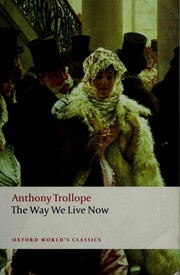
The Way We Live Now is a satirical and political novel by Anthony Trollope, published in London in 1875 after first appearing in serialised form. It is one of the last significant Victorian novels to have been published in monthly parts.
The novel is one of Trollope's longest, comprising 100 chapters, and is particularly rich in sub-plot. It was inspired by the financial scandals of the early 1870s; Trollope had just returned to England from abroad, and was appalled by the greed and dishonesty those scandals exposed. This novel was his rebuke. It dramatised how such greed and dishonesty pervaded the commercial, political, moral, and intellectual life of that era.
Writing and publication
Trollope began writing The Way We Live Now on 1 May 1873, five months after returning from an extended trip to Australia and New Zealand. He paused work in order to write the shorter novel Harry Heathcote of Gangoil, a Christmas novel he had already promised his publisher, but he resumed work on The Way We Live Now by July. It was completed on 22 December 1873, and the first of twenty monthly installments was published by Chapman & Hall beginning in February 1874. Chapman & Hall had purchased the rights for both the serialisation and the full novel for £3,000. However, the serialisation sold badly, prompting the publisher to release the full novel in a two volume form in June 1875, four months before the serialisation was set to finish. The two volume first editions were large octavos occupied by the unsold pages from the serialised printings.
As outlined in Trollope's notes, the original concept for The Way We Live Now centred on Lady Carbury as the main character (Trollope referred to it as the "Carbury novel"). It was therefore meant to be more of a satire of the literary world in which Lady Carbury circulates, with subplots involving Lady Carbury's children (the outline for the Hetta Carbury–Paul Montague–Roger Carbury love triangle is present from the early notes). Trollope envisioned Melmotte, originally intended to be a minor character, first as an American, then later as a Frenchman. Several real-life figures have been proposed as the inspiration for Augustus Melmotte: the French financier Charles Lefevre, as well as the Irish swindler John Sadleir, who like Melmotte committed suicide with prussic acid when his schemes unravelled. Another suggested inspiration for Melmotte is George Hudson, a railway speculator in the 1840s whose prodigious wealth allowed him to live in an ostentatious home in Knightsbridge, where he entertained the highest members of the English aristocracy. He was consequently discredited for his business activities, and died abroad in 1871, just a couple of years before Trollope began work on The Way We Live Now.
Plot summary
Augustus Melmotte is a financier with a mysterious past. He (or rather his wife) is rumoured to have Jewish origins, and to be connected to some failed businesses in Vienna. When he moves his business and his family to London, the city's upper crust begins buzzing with rumours about him—and a host of people ultimately find their lives changed because of him.
Melmotte sets up his office in the City of London and purchases a fine house in Grosvenor Square. He sets out to woo rich and powerful investors by hosting a lavish party. He finds an appropriate investment vehicle when he is approached by an American entrepreneur, Hamilton K. Fisker, to float a company to construct a new railway line running from Salt Lake City, USA, to Veracruz, Mexico. Melmotte's goal is to ramp up the share price without paying any of his own money into the scheme itself, thus further enriching himself, regardless of whether or not the line gets built.
Amongst the aristocrats on the company's board is Sir Felix Carbury, a dissolute young baronet who is quickly running through his widowed mother's savings. In an attempt to restore their fortunes, as they are being beset by their creditors, his mother, Matilda, Lady Carbury—who is embarking on a writing career—endeavours to have him become engaged to Marie, Melmotte's only child, and thus a considerable heiress. Sir Felix manages to win Marie's heart, but his schemes are blocked by Melmotte, who has no intention of allowing his daughter to marry such a minor penniless aristocrat. Felix's situation is also complicated by his relationship with Ruby Ruggles, a pretty farm girl living with her grandfather on the estate of Roger Carbury, his well-off second cousin. Roger Carbury is an upright and moral squire living at the small, but pretty, family estate of Carbury Hall in Suffolk.
In the South Central Pacific and Mexican Railway Board meetings, chaired and controlled by Melmotte, Fisker's partner, Paul Montague, raises difficult questions. Paul's personal life is also complicated. He has fallen in love with Lady Carbury's young daughter Hetta—much to her mother's displeasure—but has been followed to England by his American fiancée, Mrs Winifred Hurtle. Mrs Hurtle is determined to make Paul marry her. Roger has been Paul's mentor, and the two come into conflict over their attentions towards Hetta.
In the meantime, Felix Carbury is torn between his physical attraction to Ruby and his financial need to pursue Marie Melmotte (he is emotionally indifferent to both of them). Ruby, after being beaten by her grandfather for not marrying a respectable local miller, John Crumb, runs away to London and finds refuge in the boarding house owned by her aunt, Mrs Pipkin—where, as it happens, Mrs Hurtle is lodging. Felix learns from Ruby about Mrs Hurtle's relationship with Paul and, coming into conflict with Mrs Hurtle over his attentions to Ruby, reveals all his new-found knowledge to his mother and sister. Hetta is devastated and breaks off her engagement to Paul. Meanwhile, to keep Paul away from the board meetings, Melmotte attempts to send Paul off to Mexico on a nominal inspection trip of the railway line, but Paul declines to go.
以上文字摘自英文维基百科「The Way We Live Now」(有删节,去掉了参考文献等尾部小节),按 CC BY-SA 4.0 使用,作者为维基百科的各位编者。
资料卡
- 原作语言
- 英国英语
- 首次出版
- 1875 年
- 作品形式
- 长篇小说
- 体裁
- 讽刺
- 首版出版社
- 查普曼和霍尔
- 前作
- Lady Anna
- 续作
- The American Senator
资料卡来自 Wikidata Q7773866(CC0),众包数据,个别字段可能不全。