 书单
百科
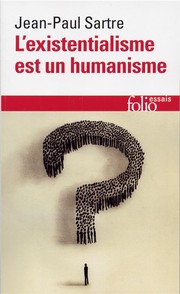
《存在主义是一种人道主义》(法语:L'existentialisme est un humanisme)原是萨特的一篇演讲,目的是“针对几种对存在主义的责难进行辩护”。萨特所说的人道主义并不是指以个人的伟大而赞扬人类伟大的人道主义,而是指人处在一个人的主观性林立的世界中不断超越自我的,以人为核心的人道主义。
以上文字摘自维基百科「存在主义是一种人道主义」(去掉了参考文献等尾部小节),按 CC BY-SA 4.0 使用,作者为维基百科的各位编者。
中文维基百科的条目比较短,下面附上英文维基百科的内容(英文原文):
Existentialism Is a Humanism (French: L'existentialisme est un humanisme) is a 1946 work by the philosopher Jean-Paul Sartre.
Summary
Sartre asserts that the key defining concept of existentialism is that the existence of a person is prior to their essence or "existence precedes essence".
Thus, Sartre rejects what he calls "deterministic excuses" and claims that people must take responsibility for their behavior. Sartre defines anguish as the emotion that people feel once they realize that they are responsible not just for themselves, but for all humanity. Anguish leads people to realize that their actions guide humanity and allows them to make judgments about others based on their attitude towards freedom. Nevertheless, "It is not the will that gives value to the possibility. Valuation depends on me, that’s true, but not on my will. It depends on my project, that is to say, on how I perceive the world, how I experience it." Anguish is also associated with Sartre's notion of despair, which he defines as optimistic reliance on a set of possibilities that make action possible. Sartre claims that "In fashioning myself, I fashion Man.", saying that the individual's action will affect and shape mankind. The being-for-itself uses despair to embrace freedom and take meaningful action in full acceptance of whatever consequences may arise as a result. He also describes abandonment as the loneliness that atheists feel when they realize that there is no God to prescribe a way of life, no guidance for people on how to live; that we're abandoned in the sense of being alone in the universe and the arbiters of our own essence. "There is a contingency of human existence. It is a condemnation of their being. Their being is not determined, so it is up to everyone to create their own existence, for which they are then responsible. They cannot not be free, there is a form of necessity for freedom, which can never be given up." Sartre closes his work by emphasizing that existentialism, as it is a philosophy of action and one's defining oneself, is optimistic and liberating. "Sartre offers a description of human beings as a project and as a commitment."
以上文字摘自英文维基百科「Existentialism Is a Humanism」(去掉了参考文献等尾部小节),按 CC BY-SA 4.0 使用,作者为维基百科的各位编者。
资料卡
- 原题
- L'existentialisme est un humanisme
- 原作语言
- 法语
- 首次出版
- 1946 年
- 体裁
- 随笔
- 主题
- 存在主义
资料卡来自 Wikidata Q1247929(CC0),众包数据,个别字段可能不全。
