书单
百科
这个词条暂时没有中文维基百科条目,下面是英文维基百科的内容(英文原文):
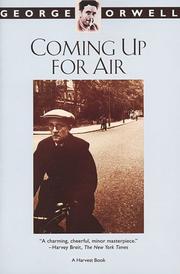
Coming Up for Air is the seventh book and fourth novel by the English writer George Orwell, published in June 1939 by Victor Gollancz. It was written between 1938 and 1939 while Orwell spent time recuperating from illness in French Morocco, mainly in Marrakesh. He delivered the completed manuscript to Victor Gollancz upon his return to London in March 1939.
The story follows George Bowling, a 45-year-old husband, father, and insurance salesman, who foresees World War II and attempts to recapture idyllic childhood innocence and escape his dreary life by returning to Lower Binfield, his birthplace. The novel is comical and pessimistic, with its views that speculative builders, commercialism, and capitalism are killing the best of rural England, and that his country is facing the sinister appearance of new, external national threats.
Background
As a child, Orwell lived at Shiplake and Henley in the Thames Valley. His father, Richard Walmesley Blair, was a civil servant in British India, and he lived a genteel life with his mother and two sisters, though spending much of the year at boarding school at Eastbourne and later at Eton in Britain. He particularly enjoyed fishing and shooting rabbits with a neighbouring family.
In 1937 Orwell spent some months fighting in the Spanish Civil War. He was wounded in the throat in May 1937, by a Nationalist sniper at Huesca.
Orwell was severely ill in 1938 and was advised to spend the winter in a warm climate. The novelist L. H. Myers anonymously gave £300 to enable this and Orwell went with his wife to North Africa where he stayed in French Morocco, mainly in Marrakesh, from September 1938 to March 1939. (Orwell never learned the source of the money and he accepted it only on condition that it be considered a loan. He repaid the loan, eight years later, when he began making money from the success of Animal Farm.) Orwell wrote Coming Up for Air while he was in North Africa and left the manuscript at his agent's office within a few hours of arriving back in England on 30 March 1939.
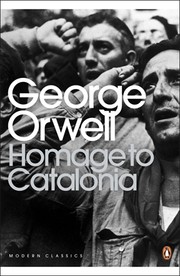
It was submitted to Victor Gollancz, who had an option on Orwell's next three novels, in spite of the 'cold treatment which [Orwell] had been given when Homage to Catalonia was rejected.' In fact Orwell heard in April 1939 that Gollancz had reservations about the book, and was delaying a decision to accept it. The descriptions in the novel of a character who lectures at a meeting of Gollancz's Left Book Club, and of the meeting itself, were such that Gollancz 'could not have helped being offended by them.' Nevertheless, the publisher did bring out the novel without demanding major changes and it was published on 12 June 1939. It was the last Orwell novel to bear the Gollancz imprint.
Plot summary
The book's themes are nostalgia, the folly of trying to go back and recapture past glories, and the easy way the dreams and aspirations of one's youth can be smothered by the humdrum routine of work, marriage, and getting old. It is written in the first person, with George Bowling, the 45-year-old protagonist, who reveals his life and experiences while undertaking a trip back to his boyhood home as an adult.
At the book's opening, Bowling has a day off work to go to London to collect a new set of false teeth. A news poster about the contemporary King Zog of Albania sets off thoughts of a biblical character Og, King of Bashan, whom he recalls from Sunday church as a child. Along with 'some sound in the traffic or the smell of horse dung or something', these thoughts trigger Bowling's memory of his childhood as the son of an unambitious seed merchant in "Lower Binfield" near the River Thames. Bowling relates his life history, dwelling on how a lucky break during the First World War landed him a comfortable job away from any action and provided contacts that helped him become a successful salesman.
Bowling is wondering what to do with a modest sum of money that he has won on a horserace and which he has concealed from his wife and family. Much later (part III), he and his wife attend a Left Book Club meeting where he is horrified by the hate shown by the anti-fascist speaker and bemused by the Marxist ramblings of the communists who have participated in the meeting. Fed up with this, he seeks his friend Old Porteous, the retired schoolmaster. He usually enjoys Porteous' company, but on this occasion, his dry, dead classics make Bowling even more depressed.
Bowling decides to use the money on a 'trip down memory lane' to revisit the places of his childhood. He recalls a pond with giant fish, which he had missed the chance to try and catch thirty years previously. He, therefore, plans to return to Lower Binfield, but when he arrives, he finds the place unrecognizable. Eventually, he locates the old pub where he is to stay, finding it much changed. His home has become a tea shop. Only the church and vicar appear the same, but he is shocked when he discovers an old girlfriend, for she has been so ravaged by time that she is almost unrecognizable and utterly devoid of the qualities he once had adored. She fails to recognize him at all. Bowling remembers the slow and painful decline of his father's seed business – resulting from the nearby establishment of corporate competition.
This painful memory seems to have sensitized him to – and given him a repugnance for – what he sees as the marching ravages of "Progress". The final disappointment is that the estate where he used to fish has been built over, and the secluded and once-hidden pond that contained the huge carp he constantly intended to take on with his fishing rod but never got around to has become a rubbish dump. The social and material changes experienced by Bowling since childhood make his past seem distant. The concept of "you can't go home again" hangs heavily over Bowling's journey as he realizes that many of his old haunts are gone or considerably changed from his younger years.
以上文字摘自英文维基百科「Coming Up for Air」(有删节,去掉了参考文献等尾部小节),按 CC BY-SA 4.0 使用,作者为维基百科的各位编者。
资料卡
- 原题
- Coming Up for Air
- 原作语言
- 英语
- 首次出版
- 1939 年 6 月 12 日
- 作品形式
- 长篇小说
- 首版出版社
- 维克多·格兰茨
- 前作
- 向加泰罗尼亚致敬
- 续作
- 在鲸腹中、Inside the Whale and Other Essays 等 3 项
资料卡来自 Wikidata Q967866(CC0),众包数据,个别字段可能不全。