书单
百科
这个词条暂时没有中文维基百科条目,下面是英文维基百科的内容(英文原文):
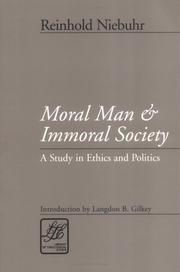
Moral Man and Immoral Society: A Study in Ethics and Politics is a 1932 book by Reinhold Niebuhr, an American Protestant theologian. The thesis of the book is that people are more likely to sin as members of groups than as individuals. The book attacks liberalism, both secular and religious, and is particularly critical of John Dewey and the Social Gospel.
Niebuhr wrote the book in a single summer. He drew the book's contents from his experiences as a pastor in Detroit, Michigan prior to his professorship at Union Theological Seminary. Moral Man and Immoral Society generated much controversy and raised Niebuhr's public profile significantly. Initial reception of the book by liberal Christian critics was negative, but its reputation soon improved as the rise of fascism throughout the 1930s was seen as having been predicted in the book. Soon after the book's publication, Paul Lehmann gave a copy to Dietrich Bonhoeffer, who read it and was impressed by the book's thesis but disliked the book's critique of pacifism. The book eventually gained significant readership among American Jews because, after a period of considerable anti-theological sentiment among Jews in the United States, many Jews began to return to the study of theology and, having no Jewish works of theology to read, turned to Protestant theological works.
以上文字摘自英文维基百科「Moral Man and Immoral Society」(去掉了参考文献等尾部小节),按 CC BY-SA 4.0 使用,作者为维基百科的各位编者。
资料卡
- 原题
- Moral Man and Immoral Society
- 原作语言
- 英语
- 首次出版
- 1932 年
- 主题
- 自由主义
资料卡来自 Wikidata Q20657367(CC0),众包数据,个别字段可能不全。