书单
百科
这个词条暂时没有中文维基百科条目,下面是英文维基百科的内容(英文原文):
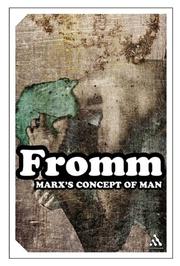
Marx's Concept of Man is a 1961 book about Karl Marx's theory of human nature by the psychoanalyst Erich Fromm.
Summary
In Marx's Concept of Man, Erich Fromm provides a detailed analysis of Karl Marx's ideas about human nature and how those ideas informed his economic and political theories. Fromm shows how Marx's conception of man as a "species-being" who is fundamentally social and cooperative, rather than selfish and individualistic, shaped his vision of a society based on economic justice and equality. Fromm also critiques Marx's idea that religion is the "opiate of the people," arguing that it is actually an expression of man's alienation from himself and from others. Fromm concludes that Marx's greatest contribution was his recognition of the human need for self-actualization, which can only be met through social relationships based on love and solidarity.
Fromm praises Reason and Revolution (1941), one of Herbert Marcuse's books on Georg Wilhelm Friedrich Hegel and Raya Dunayevskaya's Marxism and Freedom: From 1776 Until Today (1958).
以上文字摘自英文维基百科「Marx's Concept of Man」(去掉了参考文献等尾部小节),按 CC BY-SA 4.0 使用,作者为维基百科的各位编者。
资料卡
- 原题
- Marx's Concept of Man
- 原作语言
- 英语
- 首次出版
- 1961 年
- 体裁
- 哲学
- 主题
- 马克思的人性理论
资料卡来自 Wikidata Q6778582(CC0),众包数据,个别字段可能不全。