书单
百科
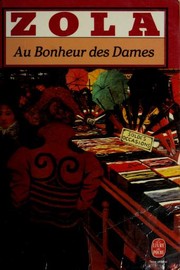
《妇女乐园》(法语:Au Bonheur des Dames)是埃米尔·左拉的《卢贡-马卡尔家族》系列小说的第十一部,发表于1883年。
小说以百货公司为背景,这是十九世纪中叶零售业的一个创新发展。其原型是著名的乐蓬马歇百货公司。
《妇女乐园》是《家常事》(Pot-Bouille,1882)的续集。和它的前作一样,《妇女乐园》(Au Bonheur des Dames)聚焦于奥克塔夫·莫雷(Octave Mouret),她在前一部小说的结尾娶了一家小丝绸店的老板卡罗琳·赫杜恩(Caroline Hédouin)。奥克塔夫现在是一位鳏夫,在书的开头,奥克塔夫已经将业务扩展为一个国际零售巨头,占据了整个城市街区的大部分。
以上文字摘自维基百科「妇女乐园」(去掉了参考文献等尾部小节),按 CC BY-SA 4.0 使用,作者为维基百科的各位编者。
中文维基百科的条目比较短,下面附上英文维基百科的内容(英文原文):
Au Bonheur des Dames (French pronunciation: [obɔnœʁ deˈdam]; The Ladies' Delight or The Ladies' Paradise) is the eleventh novel in the Rougon-Macquart series by Émile Zola. It was first serialized in the periodical Gil Blas from December 17, 1882 to March 1, 1883; and published in novel form by Charpentier in 1883.
The novel is set in the world of the department store, a novel development in mid-nineteenth century retail sales. Zola models his store after Le Bon Marché, which consolidated under one roof many of the goods hitherto sold in separate shops. The narrative details many of Le Bon Marché's innovations, including its mail-order business, its system of commissions, its staff commissary, and its methods of receiving and retailing goods.
Au Bonheur des Dames is a sequel to Pot-Bouille. Like its predecessor, Au Bonheur des Dames focuses on Octave Mouret, who at the end of the previous novel married Caroline Hédouin, the owner of a small silk shop. Now a widower, Octave has expanded the business into an international retail powerhouse occupying, at the beginning of the book, the greater part of a city block.
Plot summary
The events of Au Bonheur des Dames take place between 1864 and 1869. The novel tells the story of Denise Baudu, a 20-year-old woman from Valognes who comes to Paris with her younger brothers and begins working as a saleswoman at the department store "Au Bonheur des Dames". Zola describes the inner workings of the store from the employees' perspective, including the 13-hour workdays, the substandard food and the bare lodgings for the female staff. Many of the conflicts in the novel spring from each employee's struggle for advancement and the malicious infighting and gossip among the staff.
Denise's story is played against the career of Octave Mouret, the owner of Au Bonheur des Dames, whose retail innovations and store expansions threaten the existence of all the neighborhood shops. Under one roof, Octave has gathered textiles (silks, woolens) as well as all manner of ready-made garments (dresses, coats, lingerie, gloves), accessories necessary for making clothes, and ancillary items like carpeting and furniture. His aim is to overwhelm the senses of his female customers, forcing them to spend by bombarding them with an array of buying choices and by juxtaposing goods in enticing and intoxicating ways. Massive advertising, huge sales, home delivery and a system of refunds and novelties such as a reading room and a snack bar further induce his female clientele to patronize his store in growing numbers. In the process, he drives the traditional retailers who operate smaller speciality shops out of business.
In Pot-Bouille, an earlier novel, Octave is depicted as a ladies' man, sometimes inept, who seduces or attempts to seduce women who can give him some social or financial advantage. In Au Bonheur des Dames, he uses a young widow to influence a political figure–modeled after Baron Haussmann–to gain frontage access to a huge thoroughfare, the present day rue de Quatre-Septembre, for the store. Despite his contempt for women, Octave finds himself slowly falling in love with Denise, whose refusal to be seduced by his charms further inflames him. The book ends with Denise admitting her love for Octave and agreeing to marry him.
The depiction of women is modern. The department store is described as a place where female customers can live out their fantasies and impulses; for the female employees, it offers the possibility of financial independence.
Relationship to the other Rougon-Macquart novels
Zola designed the Rougon-Macquart novels to demonstrate how heredity and environment operate on the members of one family over the course of the Second French Empire. In this case, the environment is the department store.
以上文字摘自英文维基百科「Au Bonheur des Dames」(有删节,去掉了参考文献等尾部小节),按 CC BY-SA 4.0 使用,作者为维基百科的各位编者。
资料卡
- 原题
- Au Bonheur des Dames
- 译者
- Celia Recarey Rendo
- 原作语言
- 法语
- 首次出版
- 1883 年
- 作品形式
- 长篇小说
- 体裁
- 自然主义文学
- 所属系列
- 卢贡-马卡尔家族
- 前作
- 家常事
- 续作
- La Joie de vivre
- 故事发生地
- 巴黎
资料卡来自 Wikidata Q1170032(CC0),众包数据,个别字段可能不全。
改编作品
电影2
电视剧 / 剧集1
- 《天堂一刻》The Paradise
名单来自 Wikidata(CC0):只列条目里写明「改编自 / 取材于」这本书的作品,不按名字猜;众包数据,可能不全。