书单
百科
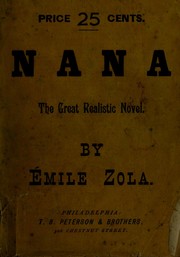
《娜娜》(法语:Nana)是法国写实主义作家左拉的《卢贡-马卡尔家族》系列作品的第九部。1877年,该系列的第七部小说《小酒店》(L'Assommoir)出版,轰动全巴黎,左拉一举成名,这时他已经开始在构思娜娜的角色。1878年,左拉完成系列的第八部小说《爱情的一页》(Une Page d'amour),但事后证明销路不佳。于是左拉写信给出版商说:“这一损失,我们要从《娜娜》拿回来,我的想像中了不起的作品《娜娜》。”
娜娜·古波是《小酒店》中白铁匠古波的女儿,生于1852年,原本是花店的学徒,喜欢酗酒的父亲对她施展暴力,她受不了只好跟一名商人私奔,后来成为歌剧院的一名演员,演出下流的喜剧《金发维纳斯》,她毫无艺术才能,演技低俗,老板博尔德纳夫让她裸体上场,迷惑当时法国上流社会的男性贵族,银行家斯泰内为之倾倒,为她买下的一座郊外别墅“藏娇楼”。供养她的男人,一旦耗尽家产,就被她拒之门外;娜娜有时又是一名轻浮的妓女,用肉体迷惑俄国王子、军官、新闻记者、侯爵、伯爵,甚至是黑人,这些有钱人甘心为她挥霍大量金钱。但另一方面娜娜富有同情心,她把仅有的钱捐给穷人;她向往小家庭生活,与丑角演员丰唐婚后,断绝了与原先所有情人的关系,努力当个好妻子,像家庭主妇一样到市场买菜。她也是一名慈母,去姑妈家里看望儿子小路易,却感染天花,病死在一家旅馆,这时正是第二帝国即将在普法战争中崩溃。娜娜始终未能摆脱纸醉金迷的生活,从小家境贫穷、父亲酗酒、出外卖淫,一连串的堕落史,造成了娜娜本身的悲剧。作者以娜娜一生的兴衰,反映了第二帝国腐化堕落的社会的写照,恶势力太强,使得娜娜无法摆脱这样的环境,她的灵魂被腐蚀,始终未能断绝娼妓的生活。
故事于1879年10月15日开始在《伏尔泰报》上连载,1880年2月5日载完,同年小说出版,空前畅销,前后再版10次,第一天出货超过5万5千册。
以上文字摘自维基百科「娜娜 (小說)」(去掉了参考文献等尾部小节),按 CC BY-SA 4.0 使用,作者为维基百科的各位编者。
中文维基百科的条目比较短,下面附上英文维基百科的内容(英文原文):
Nana is a novel by the French naturalist author Émile Zola. Completed in 1880, Nana is the ninth installment in the 20-volume Les Rougon-Macquart series.
Origins
A year before he started to write Nana, Zola knew nothing about the Théâtre des Variétés. Ludovic Halévy invited him to attend an operetta with him there on February 15, 1878, and took him backstage. Halévy told him innumerable stories about the amorous life of the star, Anna Judic, whose ménage à trois served as the model for the relationships of Rose Mignon, her husband, and Steiner in Zola's novel. Halévy also provided Zola with stories about famous prostitutes such as Blanche d'Antigny, Anna Deslions, Delphine de Lizy, and Hortense Schneider, upon which Zola drew in developing the character of his title character. Yet it was Valtesse de la Bigne, painted by both Manet and Henri Gervex, who most inspired him; it is she who is immortalised in his scandalous novel Nana.
Synopsis
Nana tells the story of Anna "Nana" Coupeau's rise from streetwalker to high-class prostitute during the last three years of the French Second Empire. Nana first appeared near the end of L'Assommoir (1877), Zola's earlier novel in the Rougon-Macquart series, where she is the daughter of an abusive drunk. At the conclusion of that novel, she is living in the streets and just beginning a life of prostitution.
Nana opens with a night at the Théâtre des Variétés in April 1867 just after the Exposition Universelle has opened. Nana is 18 years old, but she would have been 15 according to the family tree of the Rougon-Macquarts Zola had published years before starting work on this novel. Zola describes in detail the performance of La blonde Vénus, a fictional operetta modeled after Offenbach's La belle Hélène, in which Nana is cast as the lead. All of Paris is talking about her, but this is her first stage appearance. When asked to say something about her talents, Bordenave, the manager of the theatre, explains that a star does not need to know how to sing or act: "Nana has something else, dammit, and something that takes the place of everything else. I scented it out, and it smells damnably strong in her, or else I lost my sense of smell." Just as the crowd is about to dismiss her performance as terrible, young Georges Hugon shouts: "Très chic!" From then on, she owns the audience. Zola describes her appearance only thinly veiled in the third act: "All of a sudden, in the good-natured child the woman stood revealed, a disturbing woman with all the impulsive madness of her sex, opening the gates of the unknown world of desire. Nana was still smiling, but with the deadly smile of a man-eater."
In the course of the novel Nana destroys every man who pursues her: Philippe Hugon is imprisoned after stealing from the army to lend Nana money; the wealthy banker Steiner bankrupts himself trying to please her; Georges Hugon stabs himself with scissors in anguish over her; Vandeuvres incinerates himself after Nana ruins him financially; Fauchery, a journalist and publisher who falls for Nana early on, writes a scathing article about her later, and falls for her again and is ruined financially; and Count Muffat, whose faithfulness to Nana brings him back for humiliation after humiliation until he finds her in bed with his elderly father-in-law. In George Becker's words: "What emerges from [Nana] is the completeness of Nana's destructive force, brought to a culmination in the thirteenth chapter by a kind of roll call of the victims of her voracity".
以上文字摘自英文维基百科「Nana (novel)」(有删节,去掉了参考文献等尾部小节),按 CC BY-SA 4.0 使用,作者为维基百科的各位编者。
资料卡
- 原题
- Nana
- 原作语言
- 法语
- 首次出版
- 1880 年
- 作品形式
- 长篇小说
- 所属系列
- 卢贡-马卡尔家族
- 前作
- 爱情的一页
- 续作
- 家常事
- 主题
- 自然主义文学、性交易
- 故事发生地
- 巴黎
- 故事年代
- 1860年代
资料卡来自 Wikidata Q1138346(CC0),众包数据,个别字段可能不全。
改编作品
电影3
电视剧 / 剧集1
舞台剧 / 歌剧 / 芭蕾1
另有 1 个同名的版本或演出没有单列。
名单来自 Wikidata(CC0):只列条目里写明「改编自 / 取材于」这本书的作品,不按名字猜;众包数据,可能不全。