 书单
百科
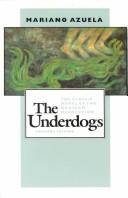
《在底层的人们》(西班牙语:Los de abajo)是墨西哥作家马里亚诺·阿苏埃拉于1915年发表的小说,讲述了农民德梅特里奥·马西亚斯(Demetrio Macías)参加墨西哥革命,后成为革命军领袖,最终战死的故事。其借由马西亚斯的一生,从政治及社会以及文化的意识形态层面重新认识了墨西哥革命,并透过主人公的弱点指出了墨西哥农民在革命中失败的原因。该作品语言简洁朴素、在结构上突破了传统的线性叙述模式,转而使用散文结构,亦体现了作者敏锐的观察力,具有较高的文学价值。《在底层的人们》于1925年重新发表后开始受到墨西哥国内外作家及学者的关注,曾四度被改编为同名的戏剧,翻译成多国语言,也成为了墨西哥革命文学的嚆矢,令现实主义文学在拉丁美洲进入高潮。学者王央乐亦将《在底层的人们》与何塞·欧斯塔西奥·里韦拉的《漩涡》、里卡多·圭拉尔德斯的《堂塞贡多·松布拉》、罗慕洛·加列戈斯的《堂娜芭芭拉》及阿尔西德斯·阿格达斯的《青铜的种族》并列为拉丁美洲五大现实主义小说。
以上文字摘自维基百科「在底层的人们」(去掉了参考文献等尾部小节),按 CC BY-SA 4.0 使用,作者为维基百科的各位编者。
中文维基百科的条目比较短,下面附上英文维基百科的内容(英文原文):
The Underdogs (Spanish: Los de abajo) is a novel by Mexican author Mariano Azuela which tells the story of a group of commoners who are dragged into the Mexican Revolution and the changes in their psyche due to living through the conflict. It is heavily influenced by the author's experiences during the revolution, where he participated as a medical officer for Pancho Villa's Northern Division. The novel was the first of its kind to be translated into English, as part of a project sponsored by the Mexican Government and the Mexican Renaissance intellectual movement to promote Mexico as a literature-creating country. It had been previously well received by American critics like Earl K. James from the New York Times in 1928 so the translation project went on and was released in 1929 by Brentano's Books, at the time, the largest bookstore chain in the US. It has been considered "The Novel of the Mexican Revolution" since 1924, when journalist Francisco Monterde wrote about it for the Excélsior as an example of virile and modern post-revolutionary literature.
Synopsis
The book tells us the story of Demetrio Macías, a peasant who, after having a misunderstanding with a local cacique (land owner), is hunted by national government soldiers (Federales) and decides to flee when they arrive at his home and kill his dog, prompting him to abandon his family and take revenge. He escapes to the mountains and forms a group of rebels who support the Mexican Revolution.
The whole novel has various reading levels and the character names represent forces or ideals beyond the characters themselves. Some of them are prototypes of the kind of people that were dragged into the revolution, like Demetrio, whose name is associated with the goddess of farming and agriculture Demeter; La Pintada (translated as War paint) a tough woman; and Camila, a teenager peasant who is dragged into the conflict by means of subterfuge to become Macías's lover. Others symbolize revolutionary hopes and conflicts, like Luis Cervantes, an educated man (whose name evokes Miguel de Cervantes) mistreated by the Federales and therefore turning on them, and Güero Margarito, a cruel man who finds justification for his deeds in the turbulence of the times. Macías's dog, killed at the beginning, is a symbol of peace, fittingly named Palomo (dove).
With a concise, unsympathetic tone, Azuela takes the reader along with this band of outcasts as they move along the hills of the country, seemingly struggling for a cause whose leader changes from day to night. The rebels, not very certain of what or whom they are fighting for, practice the abuse and injustice they used to suffer in the hands of the old leaders. So the Mexican people, as the title of the book hints, are always the "ones below", no matter who runs the country.
In the end, Macías has lost his cherished ones and most of his men, and reunites with his family with no real desire or hope for redemption or peace. He has forebodings of his destiny, and the last scene of the book leaves him firing his rifle with deathly accuracy, alone and extremely outnumbered by his enemies.
以上文字摘自英文维基百科「The Underdogs (novel)」(有删节,去掉了参考文献等尾部小节),按 CC BY-SA 4.0 使用,作者为维基百科的各位编者。
资料卡
- 原题
- Los de abajo
- 插图
- 何塞·克莱门特·奥罗斯科
- 原作语言
- 西班牙语
- 首次出版
- 1916 年
- 作品形式
- 长篇小说
- 故事发生地
- 墨西哥革命、墨西哥
资料卡来自 Wikidata Q3890709(CC0),众包数据,个别字段可能不全。
改编作品
电影1
名单来自 Wikidata(CC0):只列条目里写明「改编自 / 取材于」这本书的作品,不按名字猜;众包数据,可能不全。