书单
百科
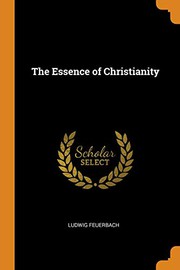
《基督教的本质》(德语:Das Wesen des Christentums)是路德维希·安德列斯·费尔巴哈的一本书。它于1841年首次出版,其中描述了费尔巴哈的哲学思想和宗教批判。
影响
这本书通常被认为是人文主义的经典,也是作者费尔巴哈的代表作。卡尔·马克思和弗里德里希·恩格斯都深受这本书的影响,尽管他们都批评了费尔巴哈对唯物主义的不一致的支持。费尔巴哈的异化理论后来被马克思用在了他的异化理论中。 由麦克斯·施蒂纳写作的唯一者及其所有物则是针对这本书的批判。施蒂纳在他的作品中批判了费尔巴哈在本书中表达的“上帝是抽象的人类”的人文主义观点。
以上文字摘自维基百科「基督教的本质」(去掉了参考文献等尾部小节),按 CC BY-SA 4.0 使用,作者为维基百科的各位编者。
中文维基百科的条目比较短,下面附上英文维基百科的内容(英文原文):
The Essence of Christianity (German: Das Wesen des Christentums; historical orthography: Das Weſen des Chriſtenthums) is a book by Ludwig Feuerbach first published in 1841. It explains Feuerbach's philosophy and critique of religion.
Feuerbach, a leading figure among the Young Hegelians, was influenced by Hegel's philosophy regarding the infinite and the finite, but inverted it: rather than understanding finite human qualities as manifestations of an infinite God, as did Hegel, Feuerbach understood the infinite God as an objectification of finite humanity's essential qualities. This is the defining attribute of Feuerbach's critique of religion.
Summary
In Part I of his book, Feuerbach developed what he calls the "true or anthropological essence of religion," treating of God in his various aspects "as a being of the understanding," "as a moral being or law," "as love" and so on. Feuerbach talks of how man is equally a conscious being, more so than God because man has placed upon God the ability of understanding. He explains that, in the contemplation of reality, man really becomes acquainted with himself; from there, Feuerbach shows that God corresponds to some feature or need of human nature in every aspect. "If man is to find contentment in God," he writes, "he must find himself in God."
Thus, for Feuerbach, God is nothing else than man: he is, so to speak, the outward projection of man's inward nature; this projection is dubbed as a chimera. Feuerbach also explores the idea that the conception of God as a higher being is dependent upon the human concept of benevolence. Feuerbach states that "a God who is not benevolent, not just, not wise, is no God." For Feuerbach, these qualities do not source their divinity from their godly association; the godly association is only because these qualities are, themselves, divine. Therefore, man is capable of understanding and applying meanings of divinity to religion, and not the other way around. Feuerbach thereby inverses the traditional formula of subject and predicate within religion: "that which in religion is the predicate, we must make the subject, and that which in religion is a subject we must make a predicate."
Feuerbach explains the attraction to religion, and the attribution of divinity to figures such as God, by arguing that God represents the powers and qualities of humanity itself. God, he writes, "is the principle of [man's] salvation, of [man's] good dispositions and actions, consequently [man's] own good principle and nature." For Feuerbach, religious belief therefore depends upon the attributing of human qualities to God: without such qualities, God would become merely an abstract object devoid of significance, and the sense of God's existence would disappear. Thus, when all human qualities are removed from God, "God is no longer anything more to [man] than a negative being." As a result of the attribution of these qualities to God, however, man becomes alienated from himself, since "God alone is the being who acts of himself." For Feuerbach, this leaves humanity bereft of its proper qualities, as they have been ceded to an abstract, alien being.
In Part II Feuerbach discusses the "false or theological essence of religion," i.e., the view of God as having a separate existence from man. He argues that from this view arises various mistaken beliefs, such as the belief in revelation, which for him not only destroys the moral feeling of religion but also "the divinest feeling in man, the sense of truth." Another example is the belief in sacraments, e.g., the Lord's Supper, which for Feuerbach is 'religious materialism' of which the necessary consequences are "superstition and immorality."
以上文字摘自英文维基百科「The Essence of Christianity」(有删节,去掉了参考文献等尾部小节),按 CC BY-SA 4.0 使用,作者为维基百科的各位编者。
资料卡
- 首次出版
- 1841 年
- 改编自 / 取材于
- 纯粹理性批判
资料卡来自 Wikidata Q1170769(CC0),众包数据,个别字段可能不全。