 书单
百科
这个词条暂时没有中文维基百科条目,下面是英文维基百科的内容(英文原文):
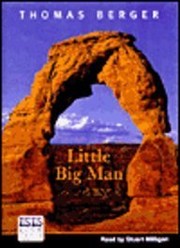
Little Big Man is a 1964 novel by American author Thomas Berger. Often described as a satire or parody of the western genre, the book is a modern example of picaresque fiction. Berger made use of a large volume of overlooked first-person primary materials, such as diaries, letters, and memoirs, to fashion a wide-ranging and entertaining tale that comments on alienation, identity, and perceptions of reality. Easily Berger's best known work, Little Big Man was made into a popular 1970 film by Arthur Penn. It has been called "Berger's response to the great American myth of the frontier, representing as it does most of the central traditions of American literature."
Plot
The novel is structured as a recorded narrative of the purported exploits of 111-year-old Jack Crabb, a white male who was raised by the Cheyenne nation, as he describes his wanderings across the nineteenth-century American West to Ralph Fielding Snell, a somewhat gullible "Man of Letters." Though unknown to conventional history, Crabb has supposedly crossed paths with many of the West's notable figures, including Wild Bill Hickok, Wyatt Earp, Buffalo Bill, and George Armstrong Custer. At various times captured, rescued, escaped, and returned to or from both white and Native American societies of the time, Crabb also claims to be the "sole white survivor" of the Battle of the Little Bighorn.
Major themes
As Berger's protagonist ventures back and forth between the Plains Indians and the whites, he finds himself at home in neither culture. Similarly, as Jack's roles vary over the course of his wanderings, from Cheyenne warrior to Army scout to small-time huckster, etc., so does the style of the narrative, as Berger draws on the great variety of themes found in the Western genre.
Literary significance and reception
Although the novel made it from hardback to paperback publication, sales were modest. Earning no serious critical attention at first, Little Big Man stayed on the literary scene through word-of-mouth.
Awards and nominations
In 1965, Berger received a Richard and Hinda Rosenthal Award, National Institute of Arts and Letters, and a Western Heritage Award, for Little Big Man.
Adaptations
Actor Marlon Brando owned the film rights to the book for several years, but was unable to secure backing. The project went to Arthur Penn, who directed Little Big Man from a screenplay adapted by Calder Willingham. It was released in 1970, and starred Dustin Hoffman, Faye Dunaway, and Chief Dan George.
Sequel
In 1999 Berger's The Return of Little Big Man was published, continuing the story of Jack Crabb. In it Crabb recounts his recollections of the killing of Wild Bill Hickok, the Gunfight at the OK Corral, the killing of Sitting Bull, Buffalo Bill's Wild West Show, and the Columbian Exposition.
以上文字摘自英文维基百科「Little Big Man (novel)」(去掉了参考文献等尾部小节),按 CC BY-SA 4.0 使用,作者为维基百科的各位编者。
资料卡
- 原题
- Little Big Man
- 原作语言
- 英语
- 首次出版
- 1964 年
- 体裁
- 恶汉小说
- 首版出版社
- 戴尔出版公司
- 故事发生地
- 美国
资料卡来自 Wikidata Q3795149(CC0),众包数据,个别字段可能不全。
改编作品
电影1
- 《小人物》Little Big Man
名单来自 Wikidata(CC0):只列条目里写明「改编自 / 取材于」这本书的作品,不按名字猜;众包数据,可能不全。