书单
百科
这个词条暂时没有中文维基百科条目,下面是英文维基百科的内容(英文原文):
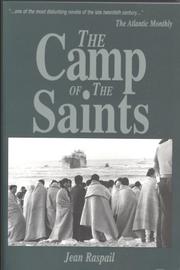
The Camp of the Saints (French: Le Camp des Saints) is a 1973 French dystopian fiction novel by Jean Raspail. A speculative fictional account, it depicts the destruction of Western civilization through mass Third World immigration to France and the Western world. The name of the book comes from a passage in the Book of Revelation depicting the apocalypse. Almost 40 years after its initial publication, the novel returned to the bestseller list in 2011. It was first published in French in 1973 by Éditions Robert Laffont. It was first translated into English by Norman Shapiro, and first published in English by Scribner in 1975.
On its publication, the book received praise from some prominent French literary figures, and through time has also been praised by some critics and politicians in Europe and the United States. It has also been criticized by both French and English-language commentators for conveying racist, xenophobic, nativist, and anti-immigration themes. The novel is popular within far-right and white nationalist circles.
Background
The novel was authored by novelist and explorer Jean Raspail. He had written several books before The Camp of the Saints, mostly travel works or adventure fiction. Several sources noted the book to be very different from the rest of his writings. Raspail has said his inspiration came while at the French Riviera in 1972, as he was looking out at the Mediterranean, he had a "vision": A million poor wretches, armed only with their weakness and their numbers, overwhelmed by misery, encumbered with starving brown and black children, ready to disembark on our soil, the vanguard of the multitudes pressing hard against every part of the tired and overfed West. I literally saw them, saw the major problem they presented, a problem absolutely insoluble by our present moral standards. To let them in would destroy us. To reject them would destroy them.
In May of that year, he published a column outlining the novel. Raspail spent ten months writing the book. During this time, he said this "vision" "never left me"; he described the book as a kind of emotional outpour. The name of the book comes from a passage in Revelation 20:7–9 in which Satan gathers an army from the nations of the earth and encircles "the camp of the saints". In Raspail's story, the camp of the saints is Europe and Satan's army is a migrant fleet of a million people sailing from India.
Plot
In Calcutta, India, Catholic priests promote the adoption of Indian children by those back in Belgium as a form of charity. When the Belgian government realizes that the number of Indian children raised in Belgium has reached 40,000 in just five years, an emergency policy attempts to halt the migration. Desperate to send their children to what they call a "land of plenty", a mob of desperate Indians swarms the consulate. As a Belgian aid worker works through the crowd, an Indian gong farmer known only as "the turd eater", carrying aloft his deformed child, begs him to take them back to Europe, to which the worker agrees.
The worker and farmer bring the crowd to the docks, where there are hundreds of ships once owned by European powers, now suited only for river traffic. Nevertheless, the crowd boards, and a hundred ships soon leave for Europe; conditions on board are cramped, unsanitary and miserable, with many passengers including children publicly fornicating. As the ships pass "the straits of Ceylon", helicopters swarm overhead, capturing images of the migrants to be published in Europe. Meanwhile in the Russian Far East, Soviet troops see masses of Chinese ready to enter Siberia but are reluctant to fight them.
As the fleet crosses the Indian Ocean, the political situation in France becomes more charged. At a press conference about the crisis, a pro-migrant official is confronted by a journalist who demands to know if France will "have the courage to stand up to" the migrants when they reach the country. The official decries this question as morally offensive and threatens to throw the journalist out when he continues to yell. Other journalists seek to inflame tensions between the French and Africans and Arabs already living in the country. Over time, these journalists begin to write that the migrant fleet is on a mission to "enrich, cleanse and redeem the Capitalist West". At the same time as the fleet is praised by those in Paris, the people of Southern France, terrified of the migrants' arrival, flee to the north.
As the fleet approaches the Suez Canal, Egyptian military forces fire a warning shot, causing the fleet to steer south, around the Cape of Good Hope. To the surprise of observers, the apartheid regime of South Africa floats out barges of food and supplies, which the migrants throw overboard. The international press is thrilled, believing the rejection of these supplies to be a political statement against the apartheid South African regime. Western leaders, confident the migrants will accept supplies from their "more virtuous" nations, organize a supply mission, funded by governments, charities, rock stars and major churches, to meet the migrants off São Tomé. However, the fleet does not stop for these barges either, and when a worker from the Pope's barge attempts to board one of the ships, he is strangled and thrown overboard. The press attempts to contain coverage of the murder.
以上文字摘自英文维基百科「The Camp of the Saints」(有删节,去掉了参考文献等尾部小节),按 CC BY-SA 4.0 使用,作者为维基百科的各位编者。
资料卡
- 原题
- Le Camp des Saints
- 原作语言
- 法语
- 首次出版
- 1973 年
- 作品形式
- 长篇小说
- 体裁
- 反乌托邦作品、科学幻想、政治小说、推想虚构作品
- 主题
- 人口迁徙
资料卡来自 Wikidata Q1137873(CC0),众包数据,个别字段可能不全。