书单
百科
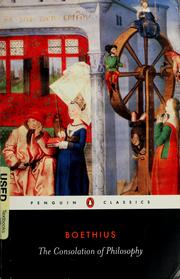
哲学的慰藉(拉丁语:De consolatione philosophiae)是罗马政治家波爱修斯的哲学著作,写于524年左右。该著作被称为是西方中世纪和文艺复兴初期基督教最重要、最有影响力的著作,也是古典时期西方最后一部重要著作。该著作很有可能是在他被流放和在监狱中等待处决时写成的。波爱修斯一生致力于保存古代的古典主义知识,尤其是哲学。
英国作家阿兰·德波顿一部重要作品也以该名称命名。
以上文字摘自维基百科「哲学的慰藉」(去掉了参考文献等尾部小节),按 CC BY-SA 4.0 使用,作者为维基百科的各位编者。
中文维基百科的条目比较短,下面附上英文维基百科的内容(英文原文):
On the Consolation of Philosophy (Latin: De consolatione philosophiae), often titled as The Consolation of Philosophy or simply the Consolation, is a philosophical work by the Roman philosopher and Christian theologian Boethius. Written in 523 while he was imprisoned and awaiting execution by the Ostrogothic King Theodoric, it is often described as the last great Western work of the Classical Period. Boethius's Consolation heavily influenced the philosophy of late antiquity, as well as Medieval and early Renaissance Christianity.
Description
On the Consolation of Philosophy was written in AD 523 during a one-year imprisonment Boethius served while awaiting trial—and eventual execution—for the alleged crime of treason under the Ostrogothic King Theodoric the Great. Boethius was at the very heights of power in Rome, holding the prestigious office of magister officiorum, and was brought down by treachery. This experience inspired the text, which reflects on how evil can exist in a world governed by God (an example of theodicy), and how happiness is still attainable amidst fickle fortune, while also considering the nature of happiness and God. In 1891, the academic Hugh Fraser Stewart described the work as "by far the most interesting example of prison literature the world has ever seen."
Boethius writes the book as a conversation between himself and a female personification of philosophy, referred to as "Lady Philosophy". Philosophy consoles Boethius by discussing the transitory nature of wealth, fame, and power ("no man can ever truly be secure until he has been forsaken by Fortune"), and the ultimate superiority of things of the mind, which she calls the "one true good". She contends that happiness comes from within, and that virtue is all that one truly has because it is not imperiled by the vicissitudes of fortune.
Boethius engages with the nature of predestination and free will, the problem of evil and the "problem of desert", human nature, virtue, and justice. He speaks about the nature of free will and determinism when he asks whether God knows and sees all, or whether man has free will. On human nature, Boethius says that humans are essentially good, and only when they give in to "wickedness" do they "sink to the level of being an animal." On justice, he says criminals are not to be abused, but rather treated with sympathy and respect, using the analogy of doctor and patient to illustrate the ideal relationship between prosecutor and criminal.
Outline
On the Consolation of Philosophy is laid out as follows:
Book I: Boethius laments his imprisonment before he is visited by Philosophy, personified as a woman.
Book II: Philosophy illustrates the capricious nature of Fate by discussing the "wheel of Fortune"; she further argues that true happiness lies in the pursuit of wisdom.
Book III: Building on the ideas laid out in the previous book, Philosophy explains how wisdom has a divine source; she also demonstrates how many earthly goods (e.g., wealth and beauty) are fleeting at best.
Book IV: Philosophy and Boethius discuss the nature of good and evil, with Philosophy offering several explanations concerned with evil events and why the wicked can never attain true happiness.
Book V: Boethius asks Philosophy about the role Chance plays in the order of everything. Philosophy argues that Chance is guided by Providence. Boethius then asks Philosophy about the compatibility of an omniscient God and free will.
Interpretation
In the Consolation, Boethius answered religious questions without reference to Christianity, relying solely on natural philosophy and the Classical Greek tradition. He believed in the correspondence between faith and reason. The truths found in Christianity would be no different from the truths found in philosophy. In the words of Henry Chadwick, "If the Consolation contains nothing distinctively Christian, it is also relevant that it contains nothing specifically pagan either...[it] is a work written by a Platonist who is also a Christian."
以上文字摘自英文维基百科「On the Consolation of Philosophy」(有删节,去掉了参考文献等尾部小节),按 CC BY-SA 4.0 使用,作者为维基百科的各位编者。
资料卡
- 原题
- De consolatione philosophiae
- 原作语言
- 晚期拉丁语
资料卡来自 Wikidata Q861927(CC0),众包数据,个别字段可能不全。
改编作品
取材于它的书2
名单来自 Wikidata(CC0):只列条目里写明「改编自 / 取材于」这本书的作品,不按名字猜;众包数据,可能不全。