 书单
百科
这个词条暂时没有中文维基百科条目,下面是英文维基百科的内容(英文原文):
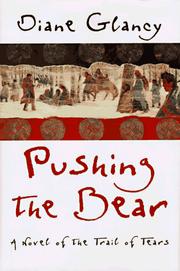
Pushing the Bear is a historical novel by Diane Glancy which explores the lives of the Cherokee in 1838/39 during their forced removal from their land along the Trail of Tears in the United States. The book was published in 1996 by Harcourt.
Plot summary
Pushing the Bear tells the story of Cherokee removal in the Trail of Tears. Diane Glancy weaves the story together through the voices of a variety of characters, the majority of whom are Cherokee Indians, but also through historical documents, missionaries and the soldiers who were responsible for guiding the Cherokee along the trail. Glancy describes the horror and tribulations close to thirteen thousand Cherokee Indians faced from the months of September 1838 to February 1839.
Maritole, a mother, wife, daughter and aunt, is the main voice in the novel. Her character reveals the thoughts of the women, the relationship between soldiers and those walking the trail, and the losses, both emotionally and physically, that the people suffered. Through the plethora of voices, Glancy is presents the knowledge of Indian Removal, with the perspectives of those who walked, suffered and died along the trail. After nine hundred miles of trudging through mountains, snow and water, the bitterness and pain experienced by the Cherokee is combined with their sense of helplessness and their sorrow over losing their connection with their land, their livelihood, their traditional gender roles, and their family.
The novel travels chronologically through each month and location along the Trail of Tears. Glancy taps into an emotional and horrific, but historically accurate account of what many now refer to as Indian genocide. In an interview with Jennifer Andrews for the American Indian Quarterly, Glancy tells Andrews that "the land had to give me permission to write. The ancestors had to give permission to write, too. For instance, I started off Pushing the Bear with one voice, and it wasn't enough. I had to go back and add her husband and everybody who had traveled with them on the Trail of Tears. It takes many voices to tell a story, and I think we carry those voices within us" (Andrews 651).
Synopsis of major characters
Maritole
Maritole is the protagonist and main narrator of the novel. She is a mother, wife, sister, aunt, daughter and neighbor. Throughout the novel, Maritole's struggles with her marriage and the unity of her family and her people, as well as her internal struggle for materialistic items and individuality. Maritole's time on the trail is constantly filled with a longing for her previous life in North Carolina and her grandmother's home in which she and her husband, Knobowtee, lived. Temptations and curiosities also rise between Maritole and a soldier, Sergeant Williams.
Knobowtee
Knobowtee is Maritole's husband. He is angered and confused by the Indian Removal. His narratives give insight into his anger at treaties, or the written word, and at other Cherokee, mainly those from Georgia, who he believes caused the removal. Knobowtee's loss of power and frustrating helplessness stem from the fact that he can no longer farm the land, his main role as a man, resulting in his loss of masculinity. Knobowtee's reaction to all these problems is violence, hatred and separation from Maritole.
Sergeant Williams
Sergeant Williams is one of the soldiers hired to help guide the Cherokee Indians across the Trail of Tears. While the novel depicts many negative views of cruel and unjust soldiers, it also gives views of sympathetic men, one of whom is Sergeant Williams. Initially described as the "man with blue eyes," Williams's name becomes more individualized as his character becomes more familiar and personal to Maritole. He provides her with food, clothing and warmth, resulting in an angered Knobowtee and ostracized Maritole. Their questionable relationship eventually leads to Williams's dismissal from his job.
Maritole's father
Maritole's father travels the trail with his wife, daughter, son and extended family. While he remains nameless in the novel, Maritole's father represents hope for the Cherokee in the future. Many of his passages display a yearning for the old land, food and customs, yet he tries to bring calm and peace to his family and neighbors on the trail. Maritole's father understands that although much of their old life was taken, their family and unity is what is most important.
Reverend Bushyhead
Reverend Bushyhead is a real historical figure, fully named Reverend Jesse Bushyhead. According to A Cherokee Encyclopedia, he "attended Reverend Evan Jones's Valley River Mission School in North Carolina and was ordained a Baptist minister in 1830" (Conley 45). In the novel, Reverend Bushyhead travels the trail with his wife, who gives birth to a daughter, Eliza, on the trail. Bushyhead preaches to the Cherokee, gives them messages of hope, and fights for their treatment and protection.
Tanner
Tanner is Maritole's brother. He tries to protect his family, especially his wife and two sons, as best as he can along the trail. Although he has a family to keep safe, Tanner joins the rest of the Cherokee men during the removal who were frustrated at the government, their loss of land, and the weakening of their masculinity. He sometimes conflicts with Knobowtee, his sister's husband, who results to acts of violence that stem from his anger and bitterness.
Luthy
Luthy is the wife of Maritole's brother, Tanner, and mother of two sons, Mark and Ephum. Luthy aids in representing motherhood and the loss of power women experienced as they were taken away from some of their traditional roles in a matriarchal society. In some passages, a tone of jealousy and longing resonates within Maritole towards Luthy, who still has her children. Luthy lost her parents at a young age. She gradually weakens and is overcome with bouts of delirium.
以上文字摘自英文维基百科「Pushing the Bear」(有删节,去掉了参考文献等尾部小节),按 CC BY-SA 4.0 使用,作者为维基百科的各位编者。
资料卡
- 原题
- Pushing the Bear
- 原作语言
- 英语
- 首次出版
- 1996 年
- 作品形式
- 长篇小说
- 体裁
- 历史类虚构作品
资料卡来自 Wikidata Q7261793(CC0),众包数据,个别字段可能不全。