书单
百科
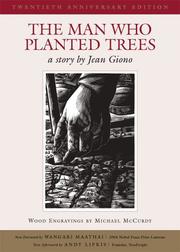
种树的男人,又译作植树的牧羊人(法语:L'homme qui plantait des arbres)为法国作家让·纪沃诺(Jean Giono)于1953年出版的短篇故事,原是应读者文摘邀请而写的。
本文被人民教育出版社的七年级语文义务教育教科书上册(五·四学制)选入,题目为《13 植树的牧羊人》(第十三课)
内容
主人公在第一次世界大战前(1913年)在法国普罗旺斯地区的阿尔卑斯山地做了一次旅行。在旅行中由于缺水,便开始寻找水源,却只找到了一个废弃的村庄。再走了几个小时后,看见了一个黑影,本以为是棵枯树,后来发现是一个牧羊人,周围躺着许多羊。牧羊人招待了主人公,后来主人公询问是否可以多住几天,因为想知道牧羊人的日常生活。第二天主人公看见牧羊人在挑橡子,想帮忙,但被拒绝。后来主人公一直跟着牧羊人,却假装在随便到处走走。后来牧羊人走向主人公并且在主人公面前种橡树。主人公趁正在吃午餐时问了牧羊人有关他的事情。一年后第一次世界大战爆发,主人公应征参战,战争结束后,主人公回到了牧羊人所住的地方。主人公惊奇的发现:牧羊人不仅还很健康,而且种了橡树,山毛榉,白桦树。1920年起,主人公几乎每年去看望牧羊人。1954年是主人公最后一次见到牧羊人。1913年,主人公发现昔日的废墟,已成为今日的村庄。
连接
完整翻译种树人
种树的男人
French: L'homme qui plantait des arbres
以上文字摘自维基百科「種樹的男人」(去掉了参考文献等尾部小节),按 CC BY-SA 4.0 使用,作者为维基百科的各位编者。
中文维基百科的条目比较短,下面附上英文维基百科的内容(英文原文):
The Man Who Planted Trees (French title: L'homme qui plantait des arbres) is an allegorical tale by French author Jean Giono, published in 1953. It tells the story of one shepherd's long and successful singlehanded effort to re-forest a desolate valley in the foothills of the Alps, near Provence, throughout the first half of the 20th century. It was written in French, and first published in English. The story has become known worldwide and is seen as an inspiration for ecological regeneration brought about by man. In 1988, Frédéric Back won an Academy Award for the animated short film The Man Who Planted Trees.
Plot
The story begins in the year 1913, when a young man who is the narrator is travelling alone on a hiking trip through Provence, France, and into the Alps, enjoying the relatively unspoiled wilderness. He runs out of water in a treeless, desolate valley where only wild lavender grows and there is no trace of civilization except old, empty crumbling buildings. He finds only a dried-up well, but is saved by a middle-aged shepherd who takes him to a spring he knows of.
Curious about this man and why he has chosen such a lonely life, the narrator stays with him for a time. The shepherd, Elzéard Bouffier, after being widowed, decided to restore the ruined landscape of the isolated and largely abandoned valley by single-handedly cultivating a forest, by planting acorns. He makes holes in the ground with his straight iron staff and drops into them acorns that he collected from miles away. He is also growing beech and birch saplings for planting.
The narrator leaves the shepherd, returns home, and later fights in the First World War. In 1920, shell-shocked and depressed after the war, the man returns. He is surprised to see young saplings of all forms taking root in the valley, and new streams running through it, where the trees are changing the climate. The narrator makes a full recovery in the peace and beauty of the regrowing valley, and continues to visit the region and M. Bouffier every year. He finds on one visit that Bouffier is no longer a shepherd, because of the sheep eating his young trees, and has become a beekeeper instead.
The valley receives official protection after the First World War, with the French authorities mistakenly believing that the rapid growth of the new forest is a bizarre natural phenomenon, as they are unaware of Bouffier's selfless deeds. Over three decades, Bouffier continues to plant trees, and the valley is turned into a kind of Garden of Eden. By the end of the story, the valley is vibrant with life and is peacefully settled, with more than 10,000 people living there, not knowing they owe their happiness to Bouffier. The narrator tells one of his friends, a government forester, the truth about the new forest, and the friend also helps to protect it.
In 1945, the narrator visits the now very old Bouffier one last time. In 1947, in a hospice in Banon, the man who planted trees peacefully passes away.
Background
Many readers believed that Elzéard Bouffier was a genuine historical figure and that the narrator of the story was a young Jean Giono himself, and that the tale is part autobiographical. Giono did live during this time, and while he was alive Giono enjoyed allowing people to believe that the story was real, and considered it as a tribute to his skill. His daughter, Aline Giono, described it as "a family story for a long time", but Jean Giono himself explained in a 1957 letter to an official of the city of Digne:Sorry to disappoint you, but Elzéard Bouffier is a fictional person. The goal was to make trees likeable, or more specifically, make planting trees likeable.
In the letter, he describes how the book was translated in a multitude of languages, distributed freely, and therefore was a success. He adds that, although "it does not bring me a cent", it is one of the texts of which he is most proud.
以上文字摘自英文维基百科「The Man Who Planted Trees」(有删节,去掉了参考文献等尾部小节),按 CC BY-SA 4.0 使用,作者为维基百科的各位编者。
资料卡
- 原题
- L'Homme qui plantait des arbres
- 原作语言
- 法语
- 首次出版
- 1953 年
- 作品形式
- 短篇小说
- 首发于
- 月
- 首版出版社
- Gwasg Carreg Gwalch
- 主要人物
- Elzéard Bouffier
资料卡来自 Wikidata Q1031656(CC0),众包数据,个别字段可能不全。
改编作品
电影1
- 《种树的牧羊人》The Man Who Planted Trees
名单来自 Wikidata(CC0):只列条目里写明「改编自 / 取材于」这本书的作品,不按名字猜;众包数据,可能不全。