书单
百科
这个词条暂时没有中文维基百科条目,下面是英文维基百科的内容(英文原文):
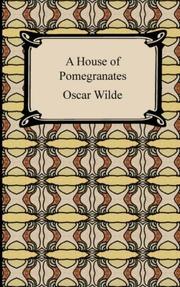
A House of Pomegranates is a collection of fairy tales written by Oscar Wilde, published in 1891. It is Wilde's second fairy tale collection, following The Happy Prince and Other Tales (1888). He said of the book that it was "intended neither for the British child nor the British public".
Influences
Wilde's fairy tales were heavily influenced by the Brothers Grimm as well as Hans Christian Andersen. He also derived his dialectic technique of paradox and the notion of pederastic code from Plato. Furthermore, Wilde was heavily influenced by Walter Pater; he called Pater's The Renaissance: Studies in the History of Art and Poetry his "golden book", declaring he never went anywhere without it. He also called it "...the very flower of decadence; the last trumpet should have sounded the moment it was written". The aesthetics suggested by Pater guided Wilde in creating the worlds within A House of Pomegranates, each respective story reflecting decadent subjects and delving into their own senses of sensuality.
Despite this collection being similarly defined by decadent themes which "...encode and express a pederastic ethos through the particular focus on sensual experience and moral enlightenment", he also preaches an orthodox Christian morality and pagan joys. While facing critique that his fairytales were not suited for children, he wrote that he "had about as much intention of pleasing the British child as [he] had of pleasing the British public". Regardless, Wilde pulls readers away from rigid innocence and introduces new pleasures within his fairytales, offering an idealistic kind of sensuality.
Contents
The Young King
Nearing death, an old king reveals his secret grandson, who lived with a poor family, is next in line for the throne. The old king's servants bring the son back. The son is thrilled with the change of lifestyle and admires all the riches he is surrounded by. He sends orders for more art, jewels and riches to be brought to him. Falling asleep, he dreams about the royal workshop, filled with malnourished workers. The young king asks one of the workers who their master is and the worker explains that the master is a man just like them, save for the fact that he lives a rich person's life while the workers toil and suffer. The young king realizes they are working to make him a robe. He then has another dream, where a young worker dies collecting pearls for the king's scepter. There is a third dream where Death and Avarice fight over the workers mining for the young king's crown. Waking up, the young king refuses to wear the robe, crown and scepter. At first the people antagonize him for this, but soon they realize the king's justness.
The Birthday of the Infanta
A princess in Spain is celebrating her twelfth birthday; performers are invited to entertain the princess and she takes a liking to the dancing dwarf. Yet, nobody in the court wants to be near the dwarf because of his physical appearance. Later on, the princess gives the dwarf a white rose, with him thinking that this means she's in love with him. They start to dance in the forest and the dwarf starts to dream of running away with the princess. However, he realizes why people shun him, as he sees his own reflection in a mirror and initially mistakes himself for a monster. The dwarf is miserable, having realized that the princess was only interested in mocking him. Shortly afterwards the princess walks in, demanding the dwarf to dance for her and he doesn't respond, as he is dead from a broken heart. The princess then tells herself she will not play with people who have hearts from now on.
The Fisherman and His Soul
A fisherman catches a mermaid; he thinks she's very beautiful and tries to keep her, but she pleads that he lets her go. He agrees on the condition that whenever he calls she comes and sings so he can catch fish. He falls in love with the mermaid and asks her to marry him; she explains she can't unless he has no soul. The fisherman sees a young witch who agrees to help him get rid of his soul if he dances with her at the Witches' Sabbath. She tells the fisherman he can be free of his soul if he cuts his shadow away from his feet. Before they are separated, his soul asks the fisherman not to let him out without a heart, but the fisherman refuses. The soul promises to return every year and call for the fisherman. Over the next two years the soul brings tales of wisdom and riches, but the fisherman rejects all of these over love. The third year, the soul invites the fisherman to join him on his journey, but he tricks the fisherman into killing a merchant because the soul does not have a heart. He tries to return to the mermaid but she does not come back. Two years later the mermaid's dead body washes ashore and the fisherman's heart breaks, allowing him and the soul to completely merge as one. The fisherman drowns himself and dies.
以上文字摘自英文维基百科「A House of Pomegranates」(有删节,去掉了参考文献等尾部小节),按 CC BY-SA 4.0 使用,作者为维基百科的各位编者。
资料卡
- 原题
- A House of Pomegranates
- 原作语言
- 英语
- 首次出版
- 1891 年
- 作品形式
- 短篇小说集
- 体裁
- 童话
- 前作
- 快乐王子与其他故事
资料卡来自 Wikidata Q734607(CC0),众包数据,个别字段可能不全。