书单
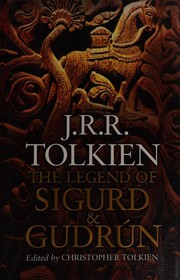
The Legend of Sigurd and Gudrún (2009)
百科
这个词条暂时没有中文维基百科条目,下面是英文维基百科的内容(英文原文):
The Legend of Sigurd and Gudrún is a book containing two narrative poems and related texts composed by English writer J. R. R. Tolkien. It was published by Houghton Mifflin Harcourt and HarperCollins on 5 May 2009.
The two poems that make up most of the book were probably written during the 1930s, and were inspired by the legend of Sigurd and the fall of the Niflungs in Norse mythology. Both poems are in a form of alliterative verse inspired by the traditional verse of the Poetic Edda, compiled in the 13th century. Christopher Tolkien has added copious notes and commentary on his father's work.
Plot
Upphaf
Asgard is besieged by jötunns and trolls. Wielding the hammer Mjöllnir, Thor repels the enemies. A seeress prophesies Ragnarök, where Odin will be slain by the wolf Fenrir and Thor by the Midgard serpent, unless a mortal descendant of Odin, a serpent-slayer, fights alongside the gods. In vain, Odin scatters his seed among mortals.
Andvari's gold
Odin, Loki, and Hoenir arrive at the dwarf Andvari's cave. Meeting the demon Hreidmar's son Ótr whom they mistake for an otter, Loki kills and skins him, and steals his salmon. Enraged, Hreidmar and his sons, Fafnir and Regin, bind the three gods in unbreakable chains and demand that Otr's pelt be covered with gold in compensation. Loki seeks out Andvari and extorts the gold ransom. Andvari attempts to conceal a golden ring, but Loki seizes it as well. Enraged, Andvari vows that the ring and the gold will be the death of all who possess them. Loki delivers the gold to Hreidmar and his sons.
Signý
Rerir the sea lord, Odin's grandson, conducts raids in Viking longships. His son Völsung, Odin's favourite, marries a valkyrie, who has twins, Sigmund and Signý. Siggeir, King of the Gauts, demands Signý's hand in marriage. At the wedding feast, Odin enters the hall disguised as Grímnir. He drives a sword into the oak at the center of the hall and dares the men present to pull it out. Only Sigmund succeeds; he refuses the fortune Siggeir offers in exchange for it. Enraged, Siggeir declares war on Völsung and kills him and his men. Only Signý's ten brothers are captured. The brothers are imprisoned in stocks, and each night one is eaten by a she-wolf. Sigmund, the last survivor, slays the she-wolf (with Signý's secret help) and escapes to an enchanted cave, where he sleeps with an elvish maiden, not realizing she is his sister in disguise. Their son is Sinfjötli. When he comes of age, he visits his father in the cave and delivers the sword of Grímnir. Father and son range through Gautland as outlaws. They infiltrate the hall of Siggeir and kill everyone; they ask Signý to leave with them, but she refuses and dies at her husband's side.
The Death of Sinfjötli
Sigmund and Sinfjötli return by ship to the land of the Völsungs. Sigmund takes a queen from among the war captives. Loathing the man who slew her father, the Queen brews poison for Sinfjötli. Sigmund, suspecting that his wine has been tampered with, drains Sinfjötli's and remains unharmed. Enraged, the Queen brews poisoned beer, which again is offered to Sinfjötli but drunk by his father with no harm. Still determined to slay Sinfjötli, the Queen gives him poisoned ale. This time the cup is drunk by Sinfjötli himself, who falls dead. Sinfjötli is welcomed in Valhalla by his grandfather Völsung, who comments that the serpent slayer is still awaited.
Sigurd born
Sigmund grows old, having lost both his son and his treacherous Queen. He marries the beauteous Princess Sigrlinn. Enraged at this slight, the seven rejected sons of kings invade the land. Sigmund is confronted by a one-eyed warrior, and is severely wounded. Sigrlinn vows to heal his wounds, but Sigmund refuses. He prophesies that her unborn child will be the serpent-slayer, and orders her to carefully preserve the fragments of Grímnir's gift. He dies and Sigrlinn is carried into slavery. When the parentage of her son is revealed, Sigrlinn is wed to the king of that land. Sigurd is sent to be fostered by Regin, son of Hreidmar.
Regin
Otr's ransom is held by Regin's brother Fafnir, transformed into a dragon. Coveting the hoard, Regin goads Sigurd into fighting Fafnir. Twice Regin tries to forge a sword for Sigurd, only to see him effortlessly break them. At last, Sigurd asks his mother Sigrlinn for the shards of the sword Grímnir. Regin forges them into the sword Gram. Sigurd buys the horse Grani, sired by Odin's eight-legged steed Sleipnir, and goes forth to kill Fafnir. Sigurd hides and stabs the dragon in the heart. As Fafnir's black blood drains over Sigurd and hardens his flesh, the young warrior withdraws his sword and leaps into the dragon's sight.
As the dragon dies, Regin attempts to claim some of the gold. Regin draws a knife and cuts out Fafnir's heart. Ordering Sigurd to roast it for him, Regin departs. Sigurd fashions a spit and kindles a fire. After burning his finger on the roasting heart, Sigurd puts the finger in his mouth and suddenly understands the language of birds. As he listens to the birds speaking, Sigurd decides to eat the heart whole. Upon seeing Regin sneaking towards him with a drawn blade, Sigurd draws Gram and slays his foster father. He loads the gold hoard onto Grani and departs.
Brynhildr
Sigurd arrives at Hindarfell. As they climb the mountainside, Grani leaps the ring of lightning and fire which surrounds the valkyrie Brynhild. Sigurd slices her corslet with Gram, awakening her. Brynhild explains how Odin doomed her to mate a mortal man. Brynhild had vowed to wed only the prophesied serpent-slayer. When Sigurd relates his descent from Odin and the slaying of Fafnir, Brynhild says that the gods await him in Valhalla. They become engaged, but she vows that she will only wed Sigurd when he has won a kingdom. After cautioning him to avoid the abode of a witch-hearted woman, she returns to Hindarfell. Sigurd rides to the court of the Niflungs' at Worms.
以上文字摘自英文维基百科「The Legend of Sigurd and Gudrún」(有删节,去掉了参考文献等尾部小节),按 CC BY-SA 4.0 使用,作者为维基百科的各位编者。
资料卡
- 原作语言
- 英语
- 首次出版
- 2009 年 5 月 5 日
- 作品形式
- 诗作
- 体裁
- 奇幻
- 首版出版社
- 哈珀柯林斯、霍顿-米夫林-哈考特出版社
- 页数
- 384
- 前作
- 胡林的儿女
- 续作
- The Fall of Arthur
- 主题
- 北欧神话
资料卡来自 Wikidata Q535639(CC0),众包数据,个别字段可能不全。