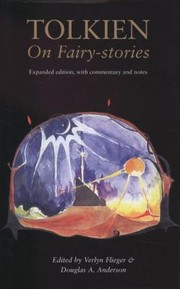
书单
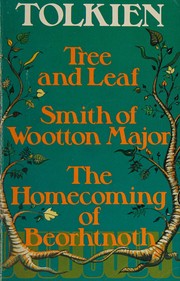
百科
《尼格尔的叶子》(英语:Leaf by Niggle)是J·R·R·托尔金创作的短篇小说,首度发表于1945年1月的《都柏林评论》上。
情节概要
故事主角是善良而又懒惰的画家尼格尔,他多年来一心要完成一幅画作,从小树叶一直发展到位在森林之中的一棵树。尼格尔虽知悉自己来日无多,但因许多琐事耽搁而一直未能完成该幅画作。一次他在风雨中病倒后,搭乘火车开始了旅程,第一站是工厂,尼格尔在那里工作了一个世纪,后来他搭上火车继续旅程,进入他画中的世界,与老邻居帕立斯重逢,两人一同让森林变得更加完善。最后尼格尔在向导的指引下,进入他向往已久的山内。
创作背景
托尔金在撰写《魔戒》的停顿期间创作了《尼格尔的叶子》,这个故事的灵感主要来自于一起事件,他在诺斯摩尔路的邻居艾格纽老太太曾在聊天时表态希望砍掉路上的一棵白杨树,因为担心暴风雨时该棵白杨树会倒在她的屋子上,热爱大自然的托尔金便劝艾格纽老太太应该将树保留,后来他因此有了灵感,而逐渐写出《尼格尔的叶子》。一年之后,他有了继续撰写《魔戒》动力。
托尔金的女儿普丽西拉认为《尼格尔的叶子》有自传色彩,对托尔金“有慰藉、净化、解放心灵之效”。托尔金本人也曾认为他的中土大陆神话就是他“自己的内心之树”。
分析
学者柯林·杜瑞兹认为:画家尼格尔象征着托尔金本人,树叶代表《霍比特人》、树则代表《魔戒》和《精灵宝钻》这样宏大的故事,森林代表中土大陆,旅程代表死亡,工厂代表地狱,尼格尔向往已久的山代表天国。
以上文字摘自维基百科「尼格爾的葉子」(去掉了参考文献等尾部小节),按 CC BY-SA 4.0 使用,作者为维基百科的各位编者。
中文维基百科的条目比较短,下面附上英文维基百科的内容(英文原文):
"Leaf by Niggle" is a short story written by J. R. R. Tolkien in 1938–39 and first published in the Dublin Review in January 1945. It was reprinted in Tolkien's book Tree and Leaf, and in several later collections. Contrary to Tolkien's claim that he despised allegory in any form, the story is an allegory of Tolkien's own creative process, and, to an extent, of his own life, following the structure of Dante's Purgatorio. It also expresses his philosophy of divine creation and human sub-creation. Tolkien said the story came to him in a dream.
Context
J. R. R. Tolkien was a scholar of English literature, a philologist and medievalist interested in language and poetry from the Middle Ages, especially that of Anglo-Saxon England and Northern Europe. His professional knowledge of works such as Beowulf shaped his fictional world of Middle-earth, including his high fantasy novel The Lord of the Rings.
Plot summary
In this story, an artist named Niggle lives in a society that does not value art. Working only to please himself, he paints a canvas of a great tree with a forest in the distance. He invests each and every leaf of his tree with obsessive attention to detail, making every leaf uniquely beautiful. Niggle ends up discarding all his other artworks, or tacks them onto the main canvas, which becomes a single vast embodiment of his vision.
However, mundane duties constantly prevent Niggle from giving his work the attention it deserves, so it remains incomplete and is not fully realised. At the back of his head, Niggle knows that he has a great trip looming, and he must prepare for it, but Niggle's next door neighbour, a gardener named Parish, frequently drops by asking for assistance. Parish is lame, has a sick wife, and genuinely needs help. Niggle, having a good heart, takes time out to help—but he is also reluctant because he would rather work on his painting. Niggle has other pressing work duties as well that require his attention. Then Niggle himself catches a chill doing errands for Parish in the rain.
Eventually, Niggle is forced to take his trip, and cannot get out of it. He has not prepared, and as a result the trip goes wrong, and he ends up in a kind of institution, in which he must perform menial labour each day. Back at the home to which he cannot return, Niggle's painting is abandoned, used to patch a damaged roof, and all but destroyed (except for the one perfect leaf of the story's title, which is placed in the local museum).
In time, Niggle is paroled from the institution, and he is sent to a place "for a little gentle treatment". He discovers that this new place is the country of the tree and forest of his great painting. This place is the true realisation of his vision, not the flawed and incomplete version in his painting.
Niggle is reunited with his old neighbour, Parish, who now proves his worth as a gardener, and together they make the tree and forest even more beautiful. Finally, Niggle journeys farther and deeper into the Forest, and beyond into the great mountains that he only faintly glimpsed in his painting.
Long after both Niggle and Parish have taken their journeys, the place that they created together becomes a destination for many travellers to visit before their final voyage into the mountains, and it earns the name "Niggle's Parish".
Publication history
"Leaf by Niggle" was first published in the Dublin Review in 1945. It first appeared in a book in 1964 alongside "On Fairy-Stories" in Tree and Leaf. It has been republished in the collections The Tolkien Reader (1966), Poems & Stories (1980), A Tolkien Miscellany (2002), and Tales from the Perilous Realm (2021).
Analysis
Allegory
Tolkien made the general statement "I dislike allegory" in one of his letters, but in specific references to "Leaf by Niggle", he wrote that "It is not really or properly an 'allegory' so much as 'mythical'", and "I tried to show allegorically how [sub-creation] might come to be taken up into Creation in some plane in my 'purgatorial' story Leaf by Niggle."
以上文字摘自英文维基百科「Leaf by Niggle」(有删节,去掉了参考文献等尾部小节),按 CC BY-SA 4.0 使用,作者为维基百科的各位编者。
资料卡
- 原题
- Leaf by Niggle
- 原作语言
- 英语
- 首次出版
- 1945 年
- 作品形式
- 短篇小说
- 体裁
- 奇幻
- 首发于
- 托尔金奇幻小说集、Poems and Stories 等 3 项
- 前作
- 哈比人历险记
- 续作
- 论童话故事
资料卡来自 Wikidata Q212202(CC0),众包数据,个别字段可能不全。