书单
百科
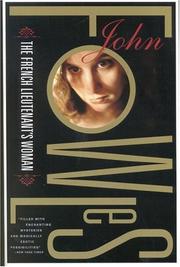
《法国中尉的女人》(The French Lieutenant's Woman)是1969年的后现代历史科幻小说,作者是约翰·福尔斯。
《法国中尉的女人》以维多利亚时代的文学为基础。
《美国图书馆》将《法国中尉的女人》描述为1969年最著名的小说之一。
以上文字摘自维基百科「法國中尉的女人 (小說)」(去掉了参考文献等尾部小节),按 CC BY-SA 4.0 使用,作者为维基百科的各位编者。
中文维基百科的条目比较短,下面附上英文维基百科的内容(英文原文):
The French Lieutenant's Woman is a 1969 postmodern historical fiction novel by John Fowles. The plot explores the fraught relationship of gentleman and amateur naturalist Charles Smithson and Sarah Woodruff, the former governess and independent woman with whom he falls in love. The novel builds on Fowles's authority in Victorian literature, both following and critiquing many of the conventions of period novels.
The book was the author's third, after The Collector (1963), and The Magus (1965). American Libraries magazine counted the novel among the "Notable Books of 1969". Subsequent to its initial popularity, publishers produced numerous editions and translated the novel into many languages; soon after the initial publication, the novel was also treated extensively by scholars. The novel remains popular, figuring in both public and academic conversations. In 2005 Time chose the book as one of the 100 best English-language novels since the magazine began publication in 1923.
Part of the novel's reputation concerns its postmodern literary qualities, with expressions of metafiction, historiography, metahistory, Marxist criticism, and feminism. Stylistically and thematically, the novel has been described as historiographic metafiction. The contrast between the independent Sarah Woodruff and the more stereotypical male characters often earns the novel attention for its treatment of gender issues.
The novel was adapted into a film in 1981, with script by the playwright Harold Pinter, directed by Karel Reisz, starring Meryl Streep and Jeremy Irons. The film received considerable critical acclaim, including several BAFTA and Golden Globe awards.
Plot summary
Set in the mid-nineteenth century, the narrator identifies the novel's protagonist as Sarah Woodruff, the Woman of the title, also known as "Tragedy" and as "The French Lieutenant's Whore". She lives in the coastal town of Lyme Regis as a disgraced woman, supposedly abandoned by a French ship's officer named Varguennes who had returned to France and married. Employed as a servant in the household of the very pious Mrs. Poulteney, she spends some of her limited free time on The Cobb, a stone jetty where she stares out to sea.
One day, Charles Smithson, an orphaned gentleman, and Ernestina Freeman, his fiancée and a daughter of a wealthy tradesman, see Sarah walking along the cliffside. Ernestina tells Charles something of Sarah's story, and he becomes curious about her. Though continuing to court Ernestina, Charles has several more encounters with Sarah, meeting her clandestinely three times. During these meetings, Sarah tells Charles of her history, and asks for his emotional and social support. During the same period, he learns of the possible loss of his place as heir to his elderly uncle, who has become engaged to a woman young enough to bear a child. Meanwhile, Charles's servant Sam falls in love with Mary, the maid of Ernestina's aunt.
In fact, Charles has fallen in love with Sarah and advises her to leave Lyme for Exeter. Returning from a journey to warn Ernestina's father about his uncertain inheritance, Charles stops in Exeter as if to visit Sarah. From there, the narrator, who intervenes throughout the novel and later becomes a character in it, offers three different ways in which the novel could end:
以上文字摘自英文维基百科「The French Lieutenant's Woman」(有删节,去掉了参考文献等尾部小节),按 CC BY-SA 4.0 使用,作者为维基百科的各位编者。
资料卡
- 原题
- The French Lieutenant's Woman
- 原作语言
- 英语
- 首次出版
- 1969 年
- 作品形式
- 长篇小说
- 体裁
- 史学元虚构、历史类虚构作品
- 首版出版社
- 乔纳森·凯普
- 故事发生地
- 莱姆里杰斯
- 故事年代
- 维多利亚时代
- 获奖
- 20世纪百大英文小说
资料卡来自 Wikidata Q1268075(CC0),众包数据,个别字段可能不全。
改编作品
电影1
- 《法国中尉的女人》The French Lieutenant's Woman
名单来自 Wikidata(CC0):只列条目里写明「改编自 / 取材于」这本书的作品,不按名字猜;众包数据,可能不全。