书单
百科
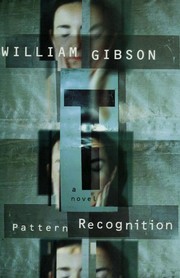
《模式识别》(Pattern Recognition)为美国科幻小说家威廉·吉布森于2003年出版之小说。此书为吉布森第一部关于当代社会的作品,也是第一部直接提及911事件的文学作品之一。
本书改编的一部同名电影《模式识别》的制作计划已被华纳公司放弃。
以上文字摘自维基百科「模式识别 (小说)」(去掉了参考文献等尾部小节),按 CC BY-SA 4.0 使用,作者为维基百科的各位编者。
中文维基百科的条目比较短,下面附上英文维基百科的内容(英文原文):
Pattern Recognition is a novel by the American-Canadian science fiction writer William Gibson published in 2003. Set in August and September 2002, the story follows Cayce Pollard, a 32-year-old marketing consultant who has a psychological sensitivity to corporate symbols. The action takes place in London, Tokyo, and Moscow as Cayce judges the effectiveness of a proposed corporate symbol and is hired to find the creators of film clips anonymously posted to the internet.
The novel's central theme examines the human desire to detect patterns or meaning, and the risks of finding patterns in meaningless data. Other themes include methods of interpretation of history, cultural familiarity with brand names, and tensions between art and commercialization. The September 11, 2001, attacks are used as a motif representing the transition to the new century. Critics have noted that Pattern Recognition was influenced by Thomas Pynchon's postmodern detective story The Crying of Lot 49.
Pattern Recognition was Gibson's eighth novel and his first to be set in the contemporary world. Like his previous works, it has been classified as a science fiction and postmodern novel, with the action unfolding along a thriller plot line. Critics approved of the writing but found the plot unoriginal and some of the language distracting. The book peaked at number four on the New York Times Best Seller list, was nominated for the 2003 British Science Fiction Association Award, and was shortlisted for the 2004 Arthur C. Clarke Award and Locus Awards.
Background
Before writing Pattern Recognition, the author, William Gibson, published seven novels (one co-written) and numerous short stories beginning in 1977. His previous novel, All Tomorrow's Parties, was published in October 1999 as the conclusion of the Bridge trilogy. Pattern Recognition was written between 2001 and 2002 while Gibson was living in Vancouver, British Columbia and released in February 2003. Pattern Recognition was originally intended to be a stand-alone novel, but afterwards Gibson wrote Spook Country and Zero History which take place in the same universe and use some of the same characters.
Gibson traveled to Tokyo in 2001 to prepare for this new novel, which takes place in London, Moscow, and Tokyo. He did not travel to London or Moscow but used interviews with friends and internet resources for research. In September 2001 Gibson had written about 100 pages but was struggling to finish. He stopped writing after watching the September 11, 2001 attacks on television and "realized [the novel] had become a story that took place in an alternate time track, in which Sept. 11 hadn't happened". He considered abandoning the novel but a few weeks later re-wrote portions to use the attacks as a motivating factor for the distress the main character feels. In a 2003 interview he said, "There I was, in the winter of 2001, with no idea what the summer of 2002 was going to be like. ... In the original post-9/11 draft, London felt more like London is feeling right now. Cayce keeps seeing trucks full of soldiers. But I took that out, because as it got closer to the time, it wasn't actually happening."
以上文字摘自英文维基百科「Pattern Recognition (novel)」(有删节,去掉了参考文献等尾部小节),按 CC BY-SA 4.0 使用,作者为维基百科的各位编者。
资料卡
- 原题
- Pattern Recognition
- 原作语言
- 美国英语、英语
- 首次出版
- 2003 年 2 月 3 日
- 作品形式
- 长篇小说
- 体裁
- 科学幻想、科技惊悚
- 首版出版社
- G·P·帕特南之子
- 所属系列
- 胡伯特斯·比根德
- 续作
- 幽灵山村
- 故事发生地
- 伦敦、英格兰
- 故事年代
- 2002年
资料卡来自 Wikidata Q2295976(CC0),众包数据,个别字段可能不全。