书单
百科
这个词条暂时没有中文维基百科条目,下面是英文维基百科的内容(英文原文):
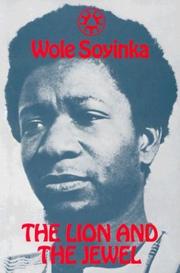
The Lion and the Jewel is a play by Nigerian writer Wole Soyinka that was first performed in 1959 in Ibadan. In 1966, it was staged in London, England, at the Royal Court Theatre.
The play chronicles how Baroka, the lion, fights with the modern Lakunle over the right to marry Sidi, the titular Jewel. Lakunle is portrayed as the civilized antithesis of Baroka and unilaterally attempts to modernize his community and change its social conventions for no reason other than the fact that he can. This is a parody of the westernized elite that inherited power from the colonists upon Independence in Africa.
The playscript was first published in 1962 by Oxford University Press. Soyinka emphasises the theme of the corrupted African culture through the play, as well as how the youth should embrace the original African culture. A review by Naijabanquet describes The Lion and the Jewel as "a masterpiece that successfully combines the concept of literature as a tool both for socio-cultural activism and shining spotlight on aesthetics."
Characters
Main characters
Baroka – The Baale or viceroyal chieftain of Ilujinle, a Yoruba village in the realm of the Ibadan clan's kingdom. A crafty individual, he is the Lion referred to in the title. At 62 years of age, he has already sired 63 children, thanks to polygamy, and still wants to woo Sidi, the Jewel.
Lakunle – The progressive and absurdly arrogant Westernised teacher. He is in his twenties. He appears to only be semi-literate.
Sidi – A beautiful but somewhat egotistical village girl who is wooed by both Baroka and Lakunle. She is also the village belle; thus she is the titular Jewel.
Sadiku – The chief's sly senior wife, head of his harem.
Ailatu – Baroka's favourite, who loses her place in his affections due to her jealousy of Sidi.
Supporting characters
The Surveyor - an outsider who plans to construct a road through the village.
Plot
The play takes place over a Sunday. It is divided into three parts: morning, noon, and night.
Morning
The play opens with a teacher, Lakunle, who is teaching when Sidi walks past carrying a pail of water. The teacher peers through the window and disappears. Lakunle comes out and insists on taking the pail from Sidi's head. She refuses, saying that she would look silly. Lakunle discouraged her to carry loads on her head or else her neck will be shortened. He also tells her not to expose so much of her cleavage with the cloth she wears around her breasts. Sidi says that it is too inconvenient for her to do so. She scolds him, saying that the village thinks he's crazy, but Lakunle says that he is not so easily cowed by taunts. Lakunle also insults her saying that her brain is smaller than his because of her feminine gender (which proves his semi-literacy, mentioned at first), making her angry.
After arguing, Sidi wants to leave, but Lakunle tells her of his love for her, but she remains indifferent. Eventually, it is revealed that Sidi does not want to marry him because Lakunle refuses to pay her bride-price as it is uncivilized, outrageous custom. Sidi tells him that if she did so, it could imply that she was not a virgin. Lakunle further professes how he wants to marry her and treat her "just like the Lagos couples he had seen". Sidi doesn't care. She also says that she finds the Western custom of kissing repulsive. She tells him that not paying her bride price was mean and miserly.
Soon, a village girl came to announce to Sidi the arrival of the stranger and the photo album he brought along bearing pictures of the village. As the village girls enter, they play "The Dance of the Lost Traveller", which features the sudden arrival of a photographer in their midst some time ago. They tease the traveller in the play, calling his motorbike "the devil's own horse" and the camera that he used to take pictures "the one-eyed box". Four girls act the "devil-horse", a youth is selected to play the snake, and Lakunle becomes the Traveller. He seeks to be excused to teach Primary Four Geography but Sidi informs him that the village is on holiday due to the arrival of the photographer/traveller.
We also find out that the photographer made a picture book about the village based on the photos he took. There is a picture of Sidi on the front page, and a two-page spread of her somewhere inside. Baroka is featured too, but he "is in a little corner somewhere in the book, and that corner he shares with one of the wall on village latrines". They banter about for a while, Lakunle gave in and participated because he couldn't tolerate being taunted by them.
The Dance of the Lost Traveller
The four girls kneeled on the ground, forming the wheels of the car. Lakunle adjusts their position and sits in air in the middle. He pretends to drive the "car". The girls dance the stall. They shudder, and drop their faces onto their laps. He pretends to try to restart the "car". He gets out and checks the "wheels" and also pinches them. He tries to start the "car", fails and takes his things for a trek.
He hears a girl misbehaving, but attributes it to sunstroke, so he throws the bottle that he was drinking from in that general direction. He hears a scream and a torrent of abuse. He takes a closer look and sees a girl (played by Sidi). He tries to take photos, but falls down into the stream.
以上文字摘自英文维基百科「The Lion and the Jewel」(有删节,去掉了参考文献等尾部小节),按 CC BY-SA 4.0 使用,作者为维基百科的各位编者。
资料卡
- 原题
- The Lion and the Jewel
- 原作语言
- 英语
- 首次出版
- 1967 年
- 作品形式
- 剧作
- 体裁
- 小说文学
- 首发于
- 伦敦
- 所属系列
- 非洲作家系列
- 主题
- 文化冲突
- 主要人物
- Sidi、Lakunle、Baroka、Sadiku
资料卡来自 Wikidata Q7747492(CC0),众包数据,个别字段可能不全。