书单
百科
这个词条暂时没有中文维基百科条目,下面是英文维基百科的内容(英文原文):
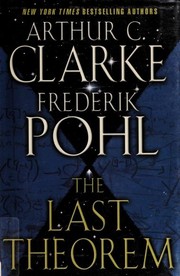
The Last Theorem is a 2008 science fiction novel by Arthur C. Clarke and Frederik Pohl. It was first published in the United Kingdom by HarperVoyager in July 2008, and in the United States by Del Rey Books in August 2008. The book is about a young Sri Lankan mathematician who finds a short proof of Fermat's Last Theorem, while an alien invasion of Earth is in progress.
The novel began as Clarke's, but when ill health and a psychological (or possibly neurological) form of writer's block prevented him from making progress, he handed over his notes and the incomplete manuscript to Pohl, who, in close consultation with Clarke, completed the novel. Clarke reviewed the final manuscript in early March 2008, just days before he died.
In general The Last Theorem was not well received by critics. Entertainment Weekly in their review of the novel said that "uneven pacing and tone mar an intriguing cautionary tale". The Los Angeles Times wondered how stable the manuscript was when it was published, adding that it does nothing to "burnish the legacy of either of its authors". The San Francisco Chronicle, however, described the novel as a "fitting valedictory for Clarke, ... and a reminder of Pohl's great relevance to a genre he has championed for more than 70 years".
Background
Science fiction Grand Masters Arthur C. Clarke and Frederik Pohl collaborated for the first time on The Last Theorem. The novel initially was Clarke's, and he began working on it in early 2004. But in 2006, at the age of 88, ill health brought on by complications from post-polio syndrome, and writer's block, impeded his progress, and he asked Pohl for help. Pohl explained: "Arthur said to me that he woke up one morning and didn't know how to write any of the books he had contracted. The stories had just gone out of his head." Clarke gave Pohl a 40–50 page manuscript plus roughly 50 pages of notes, and over the next two years, Pohl wrote the book. Pohl said that "Everything in the novel is something he either suggested or wrote or I discussed with him." Some of Clarke's notes were so obscure that even Clarke himself could not understand them. Pohl, only two years younger than Clarke, had health problems of his own: he could no longer type and wrote the book out in longhand, leaving it up to his wife to translate his "indecipherable scribbles". Clarke reviewed and approved the final manuscript of The Last Theorem in early March 2008, just days before he died. Pohl died five years later in September 2013.
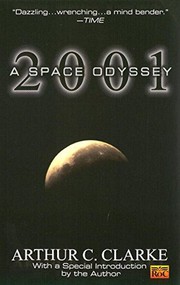
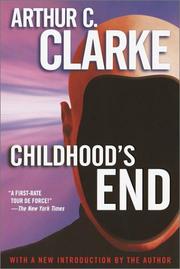
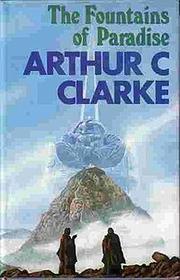
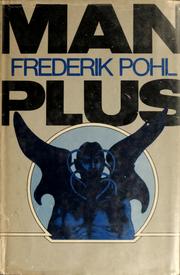
Some of the concepts that appear in The Last Theorem originally appeared in Clarke's earlier works. The space elevator that is built in Sri Lanka originally featured in The Fountains of Paradise (1979) where it was also built in Sri Lanka (then Ceylon). Because the elevator will work only on or near the equator, Clarke "moved" Ceylon south to the equator in The Fountains of Paradise, and the equator north to Sri Lanka in The Last Theorem. The solar powered space yacht race was first featured in a short story of Clarke's, "The Wind from the Sun" (1964), and the concept of a "mysterious Elder Race" deciding our fate, in this case the Grand Galactics, has appeared in several of Clarke's previous novels, including Childhood's End (1953) and the Space Odyssey Series (1968–1997). Some of Pohl's earlier themes also appear here, including his human-machine hybrid which featured in Man Plus (1976).
Clarke wrote over 30 science fiction novels and over 100 works of short fiction, winning both the Hugo and Nebula Awards several times. He moved to Sri Lanka (then Ceylon) in 1956 and remained there for the rest of his life. One of his greatest wishes was for peace in Sri Lanka. The Last Theorem is set in his adopted country, and Pohl said that tensions between the Sinhalese Sri Lankan government and the Tamil liberation army (the Tamil Tigers) were "major inspirations for the novel".
Pohl's writing career spans 70 years, and includes over 50 science fiction novels and numerous short stories. He also won both the Hugo and Nebula Awards several times. One of Pohl's fascinations has been mathematics, in particular number theory. He would often spend his spare time "playing" with prime numbers, and even tried to write a formula for generating primes. But he did invent several mathematical parlour tricks, some of which are featured in The Last Theorem.
Plot summary
The Last Theorem is set in Sri Lanka in the early- to mid-21st century and follows the life of a mathematician, Ranjit Subramanian. While studying at Colombo University, he becomes obsessed with Fermat's Last Theorem, a conjecture made by Pierre de Fermat in 1637, for which he claimed to have conceived a proof that he never wrote down. The proof eluded mathematicians across the world for over 350 years, until in 1995 British mathematician Andrew Wiles published a 100-page proof of the theorem. But not everyone was "satisfied" with Wiles's proof because it used twentieth century mathematical techniques not available in Fermat's time.
In the novel's back-story, extraterrestrial sapients, the "Grand Galactics", are alarmed when they detect the photon shock waves from nuclear bomb detonations on Earth. The Grand Galactics monitor and control the destinies of a number of high-performance sapient races and order one of these races, the "Nine Limbeds", to send "cease and desist" messages to Earth. When these messages have no effect, the Grand Galactics order another race, the "One Point Fives", to launch an armada to Earth to exterminate the undesirable species.
以上文字摘自英文维基百科「The Last Theorem」(有删节,去掉了参考文献等尾部小节),按 CC BY-SA 4.0 使用,作者为维基百科的各位编者。
资料卡
- 原题
- The Last Theorem
- 原作语言
- 英语
- 首次出版
- 2008 年
- 作品形式
- 长篇小说
- 体裁
- 科学幻想
资料卡来自 Wikidata Q13530565(CC0),众包数据,个别字段可能不全。