书单
百科
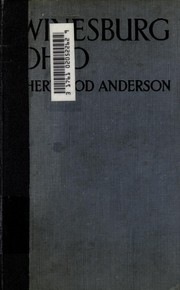
《小城畸人》(Winesburg, Ohio: A Group of Tales of Ohio Small-Town Life)是美国作家舍伍德·安德森的代表作,是美国早期现代主义小说中颇具争议的一部。
书中安德森刻画了一座小城镇中的人物,这群人被他称之为畸人,畸人的“畸”并不表现在外表上,而体现在他们的个性上。他们都具有“奇异美丽的个性”,有着常人没有的某一行为动作或是某一坚定信念,因而他们的行为或信念在常人看来是不可思议的、奇怪的,被看作是畸人。尽管畸人的个性不同,他们却有着共同的心理特质。小说的背景是美国内战后的几十年,这正是美国完成工业革命、迅速发展资本主义的阶段。一向主宰美国社会的乐观主义谢下帷幕,对传统道德的怀疑、美国梦造成的幻灭感浮出水面。书中体现的不是对生命、大自然进行赞美的乐观主义情绪,而是生命中的种种困境和无助之感。
台湾、香港出版或上海美新处筹画的译本
《温士堡·俄亥俄》
《安德森选集》
《小城故事》
《小城畸人》
中国大陆出版的译本
《小城畸人》,吴岩译,上海译文出版社,1983年
《小城畸人》,刘士聪译,人民文学出版社,2011年
《俄亥俄,温斯堡》,杨向荣译,南海出版公司,2012年
《小城畸人》,王占华译,安徽人民出版社,2013年
《小城畸人》,陈胤全译,天津人民出版社,2019年
《温斯堡小镇》,张芸译,花城出版社,2021年
以上文字摘自维基百科「小城畸人」(去掉了参考文献等尾部小节),按 CC BY-SA 4.0 使用,作者为维基百科的各位编者。
中文维基百科的条目比较短,下面附上英文维基百科的内容(英文原文):
Winesburg, Ohio (full title: Winesburg, Ohio: A Group of Tales of Ohio Small-Town Life) is a 1919 short story cycle by the American author Sherwood Anderson. The work is structured around the life of protagonist George Willard, from the time he was a child to his growing independence and ultimate abandonment of Winesburg as a young man. It is set in the fictional town of Winesburg, Ohio (not to be confused with the actual Winesburg, Ohio), which is loosely based on Anderson's childhood memories of Clyde, Ohio.
Mostly written from late 1915 to early 1916, with a few stories completed closer to publication, they were "...conceived as complementary parts of a whole, centered in the background of a single community." The book consists of twenty-two stories, with the first story, "The Book of the Grotesque", serving as an introduction. Each of the stories shares a specific character's past and present struggle to overcome the loneliness and isolation that seem to permeate the town. Stylistically, because of its emphasis on the psychological insights of characters over plot, and plainspoken prose, Winesburg, Ohio is known as one of the earliest works of Modernist literature.
Winesburg, Ohio was received well by critics despite some reservations about its moral tone and unconventional storytelling. Though its reputation waned in the 1930s, it has since rebounded and is now considered one of the most influential portraits of pre-industrial small-town life in the United States.
In 1998, the Modern Library ranked Winesburg, Ohio 24th on its list of the 100 best English-language novels of the 20th century.
Genre
Though there is practically no argument about the unity of structure within Winesburg, Ohio, few scholars have concluded that it fits the standards of a conventional novel. Instead, it is typically placed "...midway between the novel proper and the mere collection of stories," known as the short story cycle. Aside from its structural unity, the common setting, characters, symbolism and "consistency of mood" are all additional qualities that tie the stories together despite their initial publication as separate tales.
Promoted to younger writers by Anderson himself, Winesburg, Ohio has served as a representative early example of the modern short story cycle in American letters. Comparisons between Winesburg, Ohio and Jean Toomer's Cane (1923), Ernest Hemingway's In Our Time (1925), William Faulkner's Go Down, Moses (1942), and several of John Steinbeck's works, among others, demonstrate the pervasiveness of the formal innovations made in Anderson's book.
The focus on George Willard's development as a young man and a writer has also led some critics to put Winesburg, Ohio within the tradition of "the American boy book, the Bildungsroman, and the Künstlerroman".
Setting
It is widely acknowledged that the fictional model of the book's town, Winesburg, is based on Sherwood Anderson's boyhood memories of Clyde, Ohio, where Anderson lived between the ages of eight and nineteen (1884–1896), and not the actual town of Winesburg, Ohio. This view is supported by the similarities between the names and qualities of several Winesburg characters and Clyde's townspeople, in addition to mentions of specific geographic details of Clyde and the surrounding area.
It is not known why Anderson chose the name Winesburg for the town in the book. What is known is that the name was not necessarily determined by the stories themselves. In actuality, Anderson had been using Winesburg, Ohio, as a base for Talbot Whittingham, the protagonist of an unfinished novel he had been writing on-and-off for several years prior to the composition of the Winesburg stories.
以上文字摘自英文维基百科「Winesburg, Ohio」(有删节,去掉了参考文献等尾部小节),按 CC BY-SA 4.0 使用,作者为维基百科的各位编者。
资料卡
- 原作语言
- 美国英语
- 首次出版
- 1919 年
- 作品形式
- 短篇小说集
- 首版出版社
- B. W. Huebsch
- 获奖
- 20世纪百大英文小说
资料卡来自 Wikidata Q10958564(CC0),众包数据,个别字段可能不全。