书单
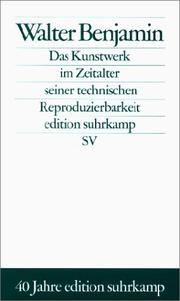
机械复制时代的艺术作品 (1936)
- 作者
- 瓦尔特·本雅明
- 首版
- 1936 年
- 国家/地区
- 德国
- Open Library
- 14 个版本
百科
机械复制时代的艺术作品(德语:Das Kunstwerk im Zeitalter seiner technischen Reproduzierbarkeit),是法兰克福学派哲学家华特·班雅明的文章。它发表于1935年德国《社会研究期刊》(Zeitschrift für Sozialforschung)上。
文章评价与主旨
这篇是班雅明最广为引用的文章,对文化研究及媒体理论的领域影响甚深。
班雅明称,写作此文,是用于描述一种有用于“艺术政治的革命性要求的形成”的理论。在传统、宗教仪式价值消退的机械复制时代,艺术的发展将以政治实践为本。
文章提出前代的艺术作品皆有灵光(aura),灵光讲求本真(authenticity),与传统、崇拜仪式(ritual)密不可分;而机械复制时代来临后,大量生产的艺术作品不再有原真,灵光开始消退,艺术用作宗教用途的价值同时减退,也就是说,班雅明批评复制。在摄影、电影出现后,艺术的涵义和范围一方面被它们所丰富,同时它们更将艺术的价值推向政治,简单来说,班雅明批评电影工业。班雅明并进一步指出 ,当时法西斯主义者,将政治美学化(Aestheticisation of politics),以及共产主义统治者将艺术政治化(Politicisation of Art)。
中文出版
此文中文版由国立中央大学法文系教授许绮玲所译,收录于《迎向灵光消逝的年代》一书。
以上文字摘自维基百科「機械複製時代的藝術作品」(去掉了参考文献等尾部小节),按 CC BY-SA 4.0 使用,作者为维基百科的各位编者。
中文维基百科的条目比较短,下面附上英文维基百科的内容(英文原文):
"The Work of Art in the Age of Mechanical Reproduction" (German: Das Kunstwerk im Zeitalter seiner technischen Reproduzierbarkeit; 1935), by Walter Benjamin, is an essay of cultural criticism which proposes and explains that mechanical reproduction devalues the aura (uniqueness) of a work of art, and that in the age of mechanical reproduction and the absence of traditional and ritualistic values, the production of art would be inherently based upon the praxis of politics.
The essay was written during the Nazi régime (1933–1945) in Germany. Its first draft was composed in 1935 during the year that the Nuremberg Race Laws were passed in the Third Reich and Leni Riefenstahl's film documentary of the Nuremberg Rally (Triumph of the Will) debuted to critical praise, sweeping the film awards across Europe. The essay presents a theory of art that is "useful for the formulation of revolutionary demands in the politics of art" in a mass culture. It remains a prophetic and trenchantly anti-fascist manifesto, instructing readers in the interpretation of mass cultural forms inclined towards the fertilization and acceleration of totalitarianism.
Benjamin's essay is concerned with several ideas: the aura of a work of art; the artistic authenticity of the artefact; the cultural authority of the work of art; and the aestheticization of politics for the production of art. As a result, it has become a foundational theoretical resource in the fields of art history and architectural theory, cultural studies, and media theory.
Summary
Benjamin presents the thematic bases for a theory of art by quoting the essay "The Conquest of Ubiquity" (1928), by Paul Valéry, to establish how works of art created and developed in past eras are different from contemporary works of art; that the understanding and treatment of art and of artistic technique must progressively develop in order to understand a work of art in the context of the modern time.Our fine arts were developed, their types and uses were established, in times very different from the present, by men whose power of action upon things was insignificant in comparison with ours. But the amazing growth of our techniques, the adaptability and precision they have attained, the ideas and habits they are creating, make it a certainty that profound changes are impending in the ancient craft of the Beautiful. In all the arts there is a physical component which can no longer be considered or treated as it used to be, which cannot remain unaffected by our modern knowledge and power. For the last twenty years neither matter nor space nor time has been what it was from time immemorial. We must expect great innovations to transform the entire technique of the arts, thereby affecting artistic invention itself and perhaps even bringing about an amazing change in our very notion of art.
Artistic production
In the preface to the essay, Benjamin presents Marxist analyses of the organisation of a capitalist society and of the place of the arts in a capitalist society, both in the public sphere and in the private sphere; and explains the socio-economic conditions of society to extrapolate future developments of capitalism that will result in the economic exploitation of the proletariat, and so will produce the socio-economic conditions that would abolish capitalism. By reviewing the historical and technological developments of the mechanical means for reproducing a work of art, Benjamin establishes that artistic reproduction is not a modern human activity, such as the industrial arts of the foundry and the stamp mill in Ancient Greece (12th–9th c. BC), and the modern arts of woodcut relief-printing and engraving, etching, lithography, and photography, which are industrial techniques of mass production that permit greater accuracy in the mechanical reproduction of a work of art than would an artist manually reproducing an artefact created by a master artist.
以上文字摘自英文维基百科「The Work of Art in the Age of Mechanical Reproduction」(有删节,去掉了参考文献等尾部小节),按 CC BY-SA 4.0 使用,作者为维基百科的各位编者。
资料卡
- 原题
- Das Kunstwerk im Zeitalter seiner technischen Reproduzierbarkeit
- 原作语言
- 德语
- 首次出版
- 1936 年
- 体裁
- 随笔
- 主题
- 艺术、摄影、电影摄影、马克思主义、资本主义、美学
资料卡来自 Wikidata Q1169425(CC0),众包数据,个别字段可能不全。