 书单
百科
这个词条暂时没有中文维基百科条目,下面是英文维基百科的内容(英文原文):
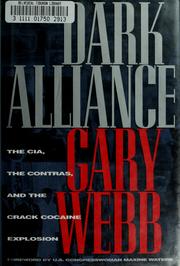
Dark Alliance: The CIA, the Contras, and the Crack Cocaine Explosion is a 1998 book by journalist Gary Webb. The book is based on "Dark Alliance", Webb's three-part investigative series published in the San Jose Mercury News in August 1996. The original series claimed that, in order to help raise funds for efforts against the Nicaraguan Sandinista government, the CIA supported cocaine trafficking into the US by top members of Nicaraguan Contra Rebel organizations and allowed the subsequent crack epidemic to spread in Los Angeles. The book expands on the series and recounts media reaction to Webb's original newspaper exposé.
Dark Alliance was published in 1998 by Seven Stories Press, with an introduction by U.S. Representative Maxine Waters. A revised edition was published in 1999. The same year the book won a Pen Oakland Censorship Award and a Firecracker Alternative Book Award. It served as part of the basis for Kill the Messenger, a 2014 film based on Webb's life.
Synopsis
According to Webb, in the 1980s when the CIA exerted a certain amount of control over Contra groups such as the FDN, the agency as well as the U.S. Drug Enforcement Administration (DEA) granted amnesty to and put on the agency's bankroll important Contra supporters and fundraisers who were known to the US Government to be cocaine smugglers. Later, at the behest of Oliver North, the Reagan Administration began to use Contra drug money to support the anti-communist Nicaraguan rebels' efforts against the Sandinista government. The Sandinistas were hated by successive Democratic and Republican U.S. administrations due to their communist affiliations.
Blandon, a cocaine smuggler who founded an FDN chapter in Los Angeles, was a major supplier for Freeway Ricky Ross. With access to cheap, pure cocaine and the idea to cook the cocaine into crack, Ross established a major drug network and fueled the popularity of crack. By 1983, Ross was purchasing 10 to 15 kilos of cocaine a week from CIA-backed Contra supporter Blandon - according to Blandon. All the while, Webb alleges, the CIA was supporting the Contras supplying him with the cocaine. Meanwhile, the US Justice Department and its agencies - who were aware of the Contra-linked drug trafficking operations of the FDN supporters - derailed local police investigations and blocked the prosecution of the Contra-linked cocaine traffickers.
Webb also discusses his experiences writing the investigative series that the book expands on. He notes that the use of the Internet and the uploading of the documents on which his assertions rest "made it possible to share [the files the story was based on] directly with your readers. If they cared to, they could read and hear exactly what you had read and heard, and make up their own minds about the story. It was raw interactive journalism, perhaps too interactive for some." The release of the "Dark Alliance" series on the San Jose Mercury News' state-of-the-art website, complete with images and facsimiles of the copious official US Government documentary record assembled by Webb and his colleagues broke new ground for both journalism and the Internet. Microsoft's Encarta encyclopedia enthused that "The unlimited space of the Web allowed the Mercury News to move forward into a whole new kind of journalism... the Web... let intelligent readers review the source materials and draw their own conclusions. This step, far beyond the traditional role of newspapers, attracted attention and readers from all over the world." The number of visits or "hits" to the "Dark Alliance" website rapidly climbed to 500,000, then 800,000 and topped out at 1,000,000 a day - phenomenal for this early stage of the development of the modern Internet. In October 1996, two months after the release of the series, a Boston Globe reporter wrote "that the story was 'pulsing through [L.A.'s] black neighborhoods like a shockwave, provoking a stunning, growing level of anger and indignation. Talk-radio stations with predominantly black audiences are deluged with calls on the subject. Demonstrations, candle-lighting ceremonies and town-hall meetings are becoming regular affairs. And people on the street are heatedly discussing the topic.'" "Nonetheless, the media slowly turned against Webb and attempted to discredit him. Notably, The New York Times, The Washington Post, and the Los Angeles Times ran articles calling his argument unfounded. The Mercury News originally stood by Webb’s reporting, but, amidst the denunciations by other news sources, executive editor Jerome Ceppos published an apology for much of the series’ content in May 1997.
Critical reception
Reviewers' opinions of the book were mixed. David Corn, Washington editor for The Nation magazine, reviewed the book in The Washington Post. Corn had previously been critical of aspects of the "Dark Alliance" newspaper series, and he found that the book "reflects the positives and negatives of the original series." He noted that Webb "deserves credit for pursuing an important piece of recent history and forcing the CIA and the Justice Department to investigate the contra-drug connection", but remained critical of several aspects of the book, observing that Webb's "threshold of proof is on the low side".
以上文字摘自英文维基百科「Dark Alliance (book)」(有删节,去掉了参考文献等尾部小节),按 CC BY-SA 4.0 使用,作者为维基百科的各位编者。
资料卡
- 首次出版
- 1998 年
- 首版出版社
- 七故事出版社
资料卡来自 Wikidata Q17513084(CC0),众包数据,个别字段可能不全。