书单
百科
这个词条暂时没有中文维基百科条目,下面是英文维基百科的内容(英文原文):
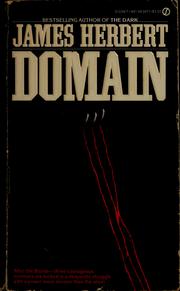
Domain (1984) is a horror novel by British writer James Herbert. The third and final novel of Herbert's Rats trilogy, it tells the story of how the rats have not only survived but begin to take over London from humanity in the aftermath of a nuclear strike.
Background
Herbert's Rats trilogy was based in part on his own experiences in growing up among the Blitz-damaged areas of Whitechapel and Bethnal Green, east London, which were a haven for rats, and as a young adult he saw Todd Browning's 1931 Dracula, where the rat-infestation scene made a great impact on him; he was later to claim that he conceived the idea after watching it.
Plot
The book is divided into three sections: 'Advent', 'Aftermath' and 'Domain'.
A prologue describes rats living underground, listening to the nuclear attack—thought to have been a culmination of Middle Eastern geopolitical tensions—that devastates London. 'Advent' starts above ground. The book's protagonist, ex-pilot Mike Culver, attempts to escape with other people, but encounters Alex Dealey, a civil servant who has been temporarily blinded by the blasts. Dealey explains to Culver that he can save his life, if he follows directions. Culver manages to get them to the Chancery Lane bunker, but has to ignore all the people left above who will soon get caught in the fallout.
In the bunker, Culver meets Kate, and they develop feelings for each other. The second section, 'Aftermath', begins with a group of men from the bunker going above ground on a foraging mission. They eventually find their way to the main government bunker on the Thames Embankment, only to discover that the rats have already killed its inhabitants, including senior members of the government. Culver's party, now reduced in number, discover the rat nest, and the centre of which, directing the other rats, was a two-headed, sentient queen. She had given birth and the foetuses were similar to a human embryo.
The book ends with Culver, Dealey and the survivors being rescued by helicopter. They discover that it was China that launched the attack and was subsequently flattened; more people escaped London than was expected and while martial law now reigned a coalition government was about to be formed and society rebuilt.
However, there is an epilogue which describes the rats still underground in London, implying that they are planning to regroup and possibly spread.
Themes and analysis
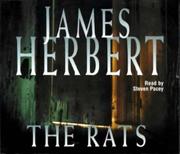
It is the third and last of Herbert's Rats trilogy, beginning in 1974 with The Rats, and followed five years later by Lair. Herbert noted that in Domain, the "horror continued—it was never truly beaten. Just as a real-life horror and evil are a continuum." However, in the last of the trilogy the nuclear holocaust is as much an influence on the story as the rats themselves, or as Herbert put it, "the rats are just an added ingredient, to give the book an extra dimension". Winter—writing soon after Domain's publication—saw this as indicating Herbert's "ever-growing ambition". Campbell has argued that the dystopian landscape is the book's major nexus, and makes Domain one of Herbert's "bleakest books, relieved only by irony and the occasional sense of the nightmarishly absurd". Campbell has also described the book as "only nominally a novel about the rats", and that its main message is a warning of the potential future.
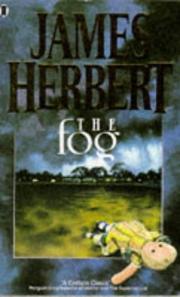
Critics have noted that Herbert's early novels were often rooted in contemporaneous social politics. In The Fog, for example, the real enemy is not the escaped gas, or science, but the Ministry of Defence (MOD), the "great, faceless they". and, likewise, in Domain, the rats—by now even closer, descriptively, to humanity—represent the British establishment under Margaret Thatcher. Herbert compared his position to that of condemning the government that sends soldiers to war, while sympathising with the soldier himself. Herbert later expanded on this philosophy in his Authorised Biography, explaining that, while The Rats was "a critique of our governing bodies, who have successfully allowed our inner cities to rot", Domain not only validated that hypothesis but suggested that members of the governing bodies that created and allowed the creatures to exist would one day be devoured by their own creation. The critic Douglas E. Winter has suggested the rats can also be seen as symbolic of London's urban decay. The rats are not a natural phenomena, their mutation having been triggered by nuclear testing off Papua New Guinea.
以上文字摘自英文维基百科「Domain (novel)」(有删节,去掉了参考文献等尾部小节),按 CC BY-SA 4.0 使用,作者为维基百科的各位编者。
资料卡
- 原题
- Domain
- 原作语言
- 英语
- 作品形式
- 长篇小说
- 体裁
- 科学幻想
- 所属系列
- Rats
- 前作
- Lair
资料卡来自 Wikidata Q16650980(CC0),众包数据,个别字段可能不全。