书单
百科
这个词条暂时没有中文维基百科条目,下面是英文维基百科的内容(英文原文):
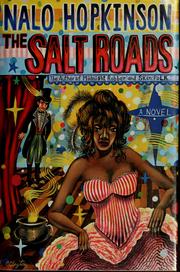
The Salt Roads is a novel by Canadian-Jamaican writer Nalo Hopkinson, published in 2003. It has been categorized as historical fiction, speculative fiction, science fiction, and magical realism.
Critical acclaim
The novel was called "a fabulous, wonderful, inventive novel... a fine celebration of African heritage" by Jewell Parker Rhodes. Though it has been said that the novel "may have left its sci-fi/fantasy roots behind", it was nonetheless warmly received as a work that was quintessentially "Hopkinson" in many respects, not the least of which was its "re-creation of independent Black space". Hopkinson has been lauded for embracing uncommon vernaculars in her narratives, as well as melding many mythologies and cultural roots into her stories; The Salt Roads was no exception. High expectations surrounded the release of The Salt Roads after the book was identified by Warner Books as having significant crossover appeal beyond the science fiction genre, and Hopkinson went on a tour of ten cities (the biggest of her career at the time) to promote the novel.
Plot introduction
Across the restrictions of time and space, the goddess Lasirén experiences and aids the struggles for freedom of the Ginen, the enslaved African people. The story is told through the eyes of Lasirén and the main three women whose lives become intertwined with her consciousness: Mer, an 18th-century enslaved woman and respected healer on a plantation in St. Domingue, Jeanne Duval, the 19th century Haitian actress/dancer and mistress to the French poet Baudelaire, and Thais, the fourth century prostitute-turned-saint. Each of the women is on her own life journey, and the goddess interweaves and influences their sexual, personal, and religious experiences.
Title
When Mer, Tipingee, and Georgine go to the river to bury Georgine's stillborn child, their cries induce the '(re)birth' of Lasirén (also referred to as Ezili). As told by the goddess, she is “born from song and prayer". Later on, Lasiren will speak to Mer on the banks of the same river, and will ask Mer to find out why the salt roads are blocked. As told by Mer:
"The sea roads, they're drying up."
"The sea is drying up?"
"Not this sea, Stupid child!" Her tail slapped, sent up a fountain, exploding and drenching me. "The sea in the minds of my Ginen. The sea roads, the salt roads. And the sweet ones, too; the rivers. Can't follow them to their sources any more. You must fix it, Mer" (pg. 65).
The subject of salt roads reappears throughout the novel; the roads are the spiritual connection between the Ginen and their African deities (like Lasirén). By extension, the drying up of the salt roads represents the loss of connection between the enslaved Africans and their heritage. Mer struggles throughout the novel to understand how she can fix these salt roads, and it is understood that freeing the Ginen depends heavily upon the preservation of their roots via maintenance of the salt roads. If The Salt Roads is a story of freeing, in one interpretation or another, the Ginen, its title represents the key to that struggle.
Plot overview
The Salt Roads tells a story of the Ginen fertility god, Lasirén. Lasirén moves through both the ethereal space of the Loa and the physical space of humans. She often does the latter by possession of the bodies of other characters, especially females. While inhabiting them for varying periods of time, Lasirén helps the three main human characters find their place(s) in the world, and she influences their lives and the outcomes of their decisions through direct and indirect means. The novel weaves together the stories of the three women with the common thread of Lasirén's consciousness and her efforts to help the Ginen's struggle for freedom.
The novel begins with the introduction of Mer, a slave and healer on a sugar plantation in St. Domingue. In the opening chapter, Mer and her helper/lover Tipingee deliver the stillborn child of a slave woman named Georgine. The three women later bury the body at the edge of a nearby river, and their songs and prayers deliver Lasirén into being. Lasirén subsequently appears to Mer to inform her that the salt roads are drying up, and tasks Mer with clearing them. This task underpins the majority of Mer's story - her struggles to both understand and undertake the work of clearing Lasirén's path to the minds of the Ginen drive the progression and development of the novel's plot during her lifetime. Her service to Lasirén puts Mer at odds with Makandal, and Mer's eventual possession by Lasirén at a key point in the story results in the failure of Makandal's revolution, the killing of Makandal, and the loss of Mer's tongue. Though she is later given the chance to escape her own enslavement, Mer chooses to stay with the slaves on the plantation. It is understood that Mer embodies one of Lasirén's aspects - her duty will be to heal the Ginen, and to fight for their freedom by preserving their heritage and thus keeping the salt roads clear for Lasirén.
The second main human character in The Salt Roads is Jeanne Duval, also known as Lemer and Prosper. She is a Haitian actress and singer in Paris who becomes the mistress of the author and poet, Charles Baudelaire. Jeanne's story is a struggle for economic freedom. She seeks joy and comfort, not only for herself but also for her ailing mother. Jeanne's relationship with Charles is tumultuous, and Lasirén's influence varies over the course of Jeanne's lifetime. As wealth comes and goes for Jeanne, the novel explores the importance of love, contentment, and money, as well as their relationship to one another. Ultimately, despite a long life of physical, emotional, and economic detriment, Jeanne finds herself loved and content at the end of her life as a result of Lasirén's influence. If Mer's life is a struggle for freedom from physical enslavement, Jeanne's can be understood as the struggle for freedom from economic and intellectual enslavement.
以上文字摘自英文维基百科「The Salt Roads」(有删节,去掉了参考文献等尾部小节),按 CC BY-SA 4.0 使用,作者为维基百科的各位编者。
资料卡
- 原题
- The Salt Roads
- 原作语言
- 英语
- 首次出版
- 2003 年 11 月
- 作品形式
- 长篇小说
- 体裁
- 奇幻、历史类虚构作品
- 首版出版社
- 桦榭图书集团
资料卡来自 Wikidata Q7762126(CC0),众包数据,个别字段可能不全。