 书单
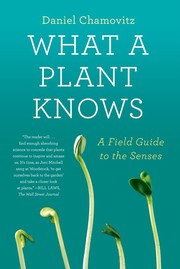
What a plant knows : a field guide to the senses (2013)
- 作者
- Daniel Chamovitz
- 首版
- 2013 年
- 国家/地区
- 美国
- Open Library
- 1 个版本
百科
这个词条暂时没有中文维基百科条目,下面是英文维基百科的内容(英文原文):
What a Plant Knows is a popular science book about sensory system of plants by Daniel Chamovitz. Originally published in 2012, the book explores how plants perceive their environment through senses analogous to human sight, smell, touch, hearing, and memory. The book has been translated into over 20 languages and has influenced discussions in plant biology, philosophy, and ethics. A revised edition was published in 2017.
Judiciously manipulating similes with dashes of anthropomorphism, Chamovitz introduces each of the vital human senses (all except taste) and explains its meaning for humans as contrasted with its function in plants. There are no noses or eyes as such in the plant world, but there are organs and responses that mimic our physiology. Much like how humans smell food, plants too have chemical receptors that bind to very specific gaseous chemical compounds. The author recounts how willows, attacked by caterpillars, send airborne pheromones to neighboring willows. Warned by these gaseous signals (or “smells”) of a nearby infestation, the neighbors begin manufacturing increased levels of toxic chemicals to render their leaves unpalatable to the caterpillars.
Synopsis
The book is structured around the concept of plant senses, with each chapter dedicated to a specific sense:
Sight: Explores how plants detect light and its direction, enabling them to orient themselves for optimal photosynthesis.
Smell: Discusses how plants emit and detect volatile compounds, facilitating communication and defense mechanisms.
Taste: Discusses how plants secrete and detect soluble compounds, enabling communication between plants and regulation of plant nutrition.
Touch: Examines plants' responses to mechanical stimuli, such as the rapid closure of the Venus flytrap upon contact.
Hearing: Investigates the controversial idea that plants may respond to sound vibrations, although this area remains under scientific scrutiny.
Balance: Shows how plants perceive proprioception and coordinate movements.
Memory: Considers how plants can "remember" past exposures to stimuli, affecting future responses.
Chamovitz emphasizes that while plants do not possess consciousness, their sensory capabilities are complex and vital for survival.
Release details / editions / publication
Hardcover edition, 2012
Paperback version, 2013
Revised edition, 2017
What a Plant Knows has been translated and published in a number of languages. Since its original publication, what a plant knows has been cited in over 500 academic journals influencing the discourse not only in plant biology, but in diverse Fields such as ethics, philosophy, and human biology.
以上文字摘自英文维基百科「What a Plant Knows」(去掉了参考文献等尾部小节),按 CC BY-SA 4.0 使用,作者为维基百科的各位编者。
资料卡
- 原题
- What a plant knows : a field guide to the senses
- 原作语言
- 英语
- 首次出版
- 2013 年 4 月 30 日
资料卡来自 Wikidata Q18379174(CC0),众包数据,个别字段可能不全。