书单
百科
这个词条暂时没有中文维基百科条目,下面是英文维基百科的内容(英文原文):
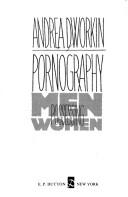
Pornography: Men Possessing Women is the third nonfiction book by American radical feminist writer and activist Andrea Dworkin. It was published in 1981 by Putnam. An anti-pornography feminist, Dworkin argued that pornography dehumanizes women and that the pornography industry is implicated in violence against women.
Summary
Dworkin analyzes (and extensively cites examples drawn from) contemporary and historical pornography as an industry that hates and dehumanizes women. Dworkin argues that the industry is implicated in violence against women, both in its production (through the abuse of the women that are used to star in it) and in the social consequences of its consumption by encouraging men to eroticize the domination, humiliation, and abuse of women.
Dworkin draws on testimonies of women, who have suffered as a consequence of sexual abuse and exploitation, and compares it to exploitation under slavery, using the example of Frederick Douglass. She explains how several attempts were made to draft laws defining pornography as a violation of women's rights, but none were successful. "Women continue speaking out in public forums, even though we are formally and purposefully silenced in actual courts of law", she writes. She questions why women's subjugation and abuse is seen as something they enjoy, contrary to other forms of violence, such as antisemitism in Nazi Germany.
The book is about whether pornography, defined as "the graphic depiction of whores", allows women to exercise the rights protected by the First Amendment. Dworkin makes the distinction between obscenity, which requires moral judgment; erotics, which are supposedly based on mutuality and reciprocity; and pornography. But she argues that erotics are "high-class pornography" in a male-dominated system.
Chapter 1: Power
She outlines the power of men as: 1) a metaphysical assertion of self; 2) physical strength; 3) the capacity to terrorize; 4) the power of naming; 5) the power of owning; 6) the power of money; and 7) the power of sex.
The "metaphysical assertion of self" is described as a subject position. The male self is defined by this continuum of wanting and taking. "I want and I am entitled to have, therefore I am", she writes of the male self. Dworkin suggests that men occupy a powerful subject position that is protected by laws and customs, art and literature, documented in history, and upheld in the distribution of wealth. Men have this self (an "unselfconscious parasitism"), and women must, by definition, lack it. The first sign of his parasitism is in his relationship to his mother. He then transfers this to other women in his life and uses women to enlarge himself.
Men also have the power of physical strength, which is based on legends and myths as much as reality. This is not the same as being muscular or strong, but it is the right to physical strength. "Its [physical strength] absolute value is mythologized and mystified so that women are cowed by its legend as well as its reality". She explains how physical weakness in women is wanted by men and how they raise and choose weak women, tying weakness to feminine beauty. Making it a symbol of wealth for men and a necessity for better economic aspirations for women.
The capacity to terrorize is the metaphysical assertion of self plus strength, which creates fear in a whole class of people (men over women). This happens through rape, battery, sexual abuse, and the use of prostitutes. This behavior is idolized in movies about heroism, war, and glory. In TV, literature, books, drama, this story plays out. Men's acts are huge and awesome even when villainous, and women become the prize. Dworkin outlines how male supremacist biology, Social Darwinism, and religion all contribute to sacralizing male violence and encouraging it. Men's dangerous nature is generated through culture and promotion of violent acts, as well as "its enduring reputation", whether for good or not.
The power of naming means that men have the ability to define experiences, and this is upheld by force and then used to justify force. As an example, men name women as "weak" and then further weaken them with preferences and standards of beauty that leave women mutilated and stunted. "If she wants him sexually he names her slut; if she does not want him he rapes her and says she does; if she would rather study or paint he names her repressed and brags he can cure her pathological interests with the apocryphal 'good fuck'", Dworkin writes. Anything that contradicts this power is destroyed, thus, "the power of naming itself, in the male system, is a form of force".
The power of owning refers to husbands' ownership of wives and fathers' ownership of daughters. This ownership is natural, as he is the "one who takes". Once he has had, it is his. It is not defined merely by its real manifestation. Dworkin argues that the institution of marriage was derived from rape as a practice. "Rape, originally defined as abduction, became marriage by capture. Marriage meant the taking was to extend in time, to be not only use of but lifelong possession of, or ownership", she says.
以上文字摘自英文维基百科「Pornography: Men Possessing Women」(有删节,去掉了参考文献等尾部小节),按 CC BY-SA 4.0 使用,作者为维基百科的各位编者。
资料卡
- 原题
- Pornography: Men Possessing Women
- 原作语言
- 英语
- 首次出版
- 1981 年
- 首版出版社
- 企鹅出版
- 主题
- 色情
资料卡来自 Wikidata Q7230212(CC0),众包数据,个别字段可能不全。