书单
百科
这个词条暂时没有中文维基百科条目,下面是英文维基百科的内容(英文原文):
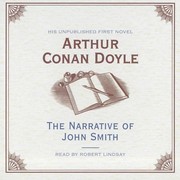
The Narrative of John Smith (2011) is a novel written in 1883 by Arthur Conan Doyle, published posthumously by The British Library. In a work of narrative fiction, Doyle writes from the perspective of a middle-aged bachelor named John Smith recovering from rheumatic gout. Unlike his later work in detective fiction, fantasy, and science fiction, this novel unfolds through a series of tangential, essay-like thoughts stemming from observations on everyday life. The subjects are of a “personal-social-political complexion”.
Synopsis
Plot
Each day is represented by a chapter.
Beginning with John Smith's diagnosis of rheumatic gout, the doctor confines him to bed rest for one week; Smith conveys his dismay, then reluctantly accepts. Dr. Turner encourages Smith that the mind can “make a heaven of hell” and that he should set to work writing a book. They begin to debate the circumstances which might drive talent out of a man, and after the doctor exits, Smith considers the immense service a doctor contributes to the world. After many short, uncorrelated thoughts, Smith dwells on his surroundings as stimulants and companions (and his particular affinity for knick-knacks). This leads the internal conversation towards personal anecdotes and various thoughts on a broad spectrum. Smith describes his landlady, Mrs. Rundle, and observes her three children on their way home fighting over a penny. Because of this, he notes, “Remember that the era of civilization is but the narrow golden border which trims the dense blackness of primeval history.”
The second chapter begins with the Doctor, discussing current medical topics with Smith. Left to his own devices alone again, Smith expresses hopes for Lamarckism: the eradication of disease and eventually of the perfection of the human race through education and invention. He introduces his neighbors, the Olivers: an old man and his daughter, a painter about the age of thirty. The two have fallen on hard times and Smith secretly commissions Miss Oliver through Mrs. Rundle. Smith debates Roman Catholicism as the Doctor defends Anglican Protestantism upon his return. Afterwards, a veteran known as “the Major” enters with a limp and grey eyes—they converse on the tragedy of war, condemning Imperialism.
Smith reveals himself as an art enthusiast, while he observes Miss Oliver paint. He then tells a joke about his poverty during the gold rush in Australia—his friends having bought scrap meat claiming it was for dogs. This leads Smith to analyze humor, then genius, and instinct, after which he writes about the labors of writing, including instruction as well as opinion on popular literature.
Looking for something to debate, Smith asks the Doctor about the ideal conditions for human life and if eternal life can be attained. This leads into his thoughts about evolution leaving the human race hairless and toothless, eventually becoming demigods. Smith briefly mourns the present plagued condition of humanity, grieving and dying. The Major enters, suited for war claiming able-bodiedness at age sixty, ready to fight the Russians advancing towards China, at which the narrator is greatly alarmed and internally states the Major's uncharacteristic over eagerness for war. Smith reflects on the medicinal goal of lengthening human life compared to war, slaying for the greater good, and which is true philanthropy.
Without prior notice, Miss Oliver visits Smith, revealing her knowledge of his commission through Mrs. Rundle and thanking him. Showing him the drawings, he approves cordially, though he detests them. She notes that his room is decorated with masterpieces, to which he responds that he is speculating about her impending fame. He requests another picture, but she declines on the grounds of her wedding the next month. Upon her departure, Smith considers marriage “the great female destiny—to become the supplement of a man”. His thoughts continue onto Britain's political standing among the nations of the world, the unpredictability of literary success, and the creation of man. A curate visits, listening to Smith's opinions about Jesus Christ, Creation, and organized religion, questioning if he is a “dissenter”, then determining that he is a prideful infidel, leaving insulted.
The final chapter is of Smith and the doctor discussing disease as a battle; the doctor pronounces Smith's victory. They begin to discuss leucocytes in the bloodstream when the manuscript ends.
Characters
The introduction describes the novel's loosely developed characters as “extensions of [the narrator]”. Their purpose in many scenarios seems to be to probe the inner workings of John Smith through action or dialogue. Some of the characters, however, became prototypes for more developed characters in the Sherlock Holmes stories.
John Smith is a fifty-year-old man confined to bed rest for one week on account of rheumatic gout. The novel, being told from his point of view, consists of conscious thought as well as dialogue on contemporary topics with external figures. He characterizes himself by his activeness (a continuous reminder of his physical state) and identity as an art enthusiast and writer.
以上文字摘自英文维基百科「The Narrative of John Smith」(有删节,去掉了参考文献等尾部小节),按 CC BY-SA 4.0 使用,作者为维基百科的各位编者。
资料卡
- 原题
- The Narrative of John Smith
- 原作语言
- 英语
- 首次出版
- 2011 年
- 作品形式
- 长篇小说
资料卡来自 Wikidata Q16387251(CC0),众包数据,个别字段可能不全。