书单
百科
这个词条暂时没有中文维基百科条目,下面是英文维基百科的内容(英文原文):
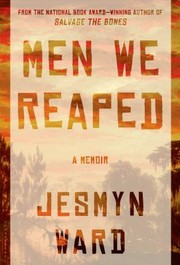
Men We Reaped is a memoir by the African-American writer Jesmyn Ward. The book was published by Bloomsbury in 2013. The memoir focuses on Ward's own personal history and the deaths of five Black men in her life over a four-year span between 2000 and 2004. Men We Reaped won the Heartland Prize for non-fiction, and was nominated for the National Book Critics Circle Award for Autobiography and the Hurston/Wright Legacy Award for Nonfiction.
Source of the title
The book's title comes from a Harriet Tubman quotation, on the occasion of the unsuccessful assault of the all-Black 54th Massachusetts Volunteer Infantry upon the Confederate forces at Fort Wagner during the American Civil War: "We saw the lightning and that was the guns; We heard the thunder and that was the big guns; We heard the rain falling and that was the blood falling; and when we came to get in the crops, it was dead men that we reaped."
Synopsis
Five men in Ward's life die in the space of four years. All are Black men between the ages of 19–32, including her brother, Joshua, killed by a white drunk driver. Though seemingly unconnected, Ward takes her readers on a journey—personal, familial and communal—showing how they were in reality bonded by identity and place, and how race, poverty, and gender predetermined the outcome of their lives.
Ward was born in California when her mother was 18 and her father 20. She was born premature and was a sickly child, not expected to survive. Her family later moves to Mississippi, where her parents are from. Ward describes growing up in the poor, small towns of DeLisle and Pass Christian, where her family, like the community around them, experiences a lack of opportunities and an abundance of violence, including from the police, leading many to sink into abuse of drugs and alcohol. She also recounts how in her family, her mother raised her children on her own due to infidelity and abandonment by her husband. Ward contrasts their lives, choices, and experiences, and her own life zig-zagging between them: "What it meant to be a woman: working, dour, full of worry. What it meant to be a man: resentful, angry, wanting life to be everything but what it was."
Ward learns at an early age how girls are treated differently than boys when she gets into trouble for doing things her cousins do freely (smoking), and also seeing how her father gets to spend the family money on a motorcycle and then ride away on it, while her mother works extra hard to put food on the table. She also learns that for her male relatives, being Black is dangerous in America, as her mother and grandmother worry about them being arrested or experiencing violence.
As her mother works long hours as a maid, Ward is expected to care for her younger siblings and the household. She has depression. At school, she experiences bullying. Her mother's rich, white employer offers to pay Ward's tuition for private school. There, however, she must deal with being the only Black girl in a white environment. Attending the private school, she experiences racism and rejection.
Ward's father is now living in New Orleans. When Ward and her siblings visit, their mother sends them with groceries because she doesn't trust him to feed the children. Her brother Joshua moves in with him, and Ward later learns that he is dealing crack to help his father pay bills.
Ward heads out of state for university, to Stanford, becoming the first member of her family to attend college. Her grief for the loss of her brother never leaves her, but she knows it will change over time. Ward closes with her memory of riding in a car with Joshua, declaring, "I don't ride like that anymore", and imagining that when her life is over, Joshua will ride up and ask her to go for one more ride.
The men "reaped" in the book, narrated in reverse of the order in which they died:
Roger: Ward meets Roger through her sister Charine. Roger dies from a heart attack brought on by a combination of cocaine and pills.
Demond: Ward meets Demond through her sister Nerissa. Unlike most of the boys she knows, he grew up in stable home with both parents. After testifying in court against a murderer and a drug dealer, Demond is shot in his front yard coming home from work one night.
C.J.: Ward's cousin. An athletic young man, loyal and protective but who also exhibits erratic behavior and does drugs. He is killed when his car is hit by a train at a crossing with broken signal lights.
Ronald: A camper at a camp where Ward is a counselor. As an adult, Ronald is seemingly happy and confident, but as it turns out, he is severely depressed and struggles with addiction. Ronald dies by suicide.
Joshua: Ward's brother and the first of the men to die, shortly after Ward completes her master's degree. Joshua is hit by a drunk driver, a white man who is let off with a token sentence.
Reception
Men We Reaped was enthusiastically received by critics, and was named one of the best books of 2013 by The New York Times Book Review, Publishers Weekly, Time, and Vogue.
In 2024, the New York Times listed Men We Reaped at number 97 on its list of 100 Best Books of the 21st Century.
以上文字摘自英文维基百科「Men We Reaped」(有删节,去掉了参考文献等尾部小节),按 CC BY-SA 4.0 使用,作者为维基百科的各位编者。
资料卡
- 原题
- Men We Reaped
- 原作语言
- 英语
- 首次出版
- 2013 年 9 月 17 日
- 体裁
- 回忆录
资料卡来自 Wikidata Q100892986(CC0),众包数据,个别字段可能不全。