书单
百科
这个词条暂时没有中文维基百科条目,下面是英文维基百科的内容(英文原文):
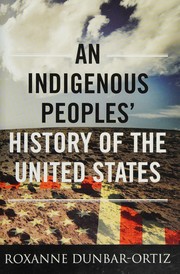
An Indigenous Peoples' History of the United States is a non-fiction book written by the historian Roxanne Dunbar-Ortiz and published by Beacon Press. It is the third of a series of six ReVisioning books which reconstruct and reinterpret U.S. history from marginalized peoples' perspectives. On July 23, 2019, the same press published An Indigenous Peoples' History of the United States for Young People, an adaptation by Jean Mendoza and Debbie Reese of Dunbar-Ortiz's original volume.
Synopsis
An Indigenous Peoples’ History of the United States describes and analyzes a four-hundred-year span of complex Indigenous struggles against the colonization of the Americas. The book highlights resultant conflicts, wars, and Indigenous strategies and sites of resistance.
The book's contents across many chronological chapters challenge what Dunbar-Ortiz articulates as the founding mythology of the burgeoning country, bolstered in the 19th century by the concept of Manifest Destiny and the Doctrine of Discovery. Dunbar-Ortiz seeks to show "how policy against the Indigenous peoples was colonialist and designed to seize the territories of the original inhabitants, displacing or eliminating them". The book details how this mythology rose out of the imperatives of settler colonialism. It graphically depicts the seizure of the original inhabitants' territories and subsequent displacement and elimination of them through genocidal practices such as the movement to Kill the Indian, Save the Man.
An Indigenous Peoples' History of the United States details how such policies, practices, and values were manifest through the ranks of the U.S. military to the highest offices of government. It also describes the predominance of anti-Indigenous practices and values celebrated in popular culture in the 19th and 20th centuries through writers like James Fenimore Cooper, especially in his novel Last of the Mohicans and its cinematic renditions; Henry David Thoreau; Walt Whitman; and in D.W. Griffith's enormously popular Birth of a Nation.
The book is dedicated to Jack D. Forbes, Vine Deloria Jr. and Howard Adams.
Chapter summaries
Introduction: This Land
In the introduction, Dunbar-Ortiz lays her task on the table:
"How might acknowledging the reality of US history work to transform society? That is the central question this book pursues."
"This book attempts to tell the story of the United States as a colonial settler-state, one that, like colonialist European states, crushed and subjugated the original civilizations in the territories it now rules. Indigenous peoples, now in a colonial relationship with the United States, inhabited and thrived for millennia before they were displaced to fragmented reservations and economically decimated."
Dunbar-Ortiz asserts that the reality of the history of US policies and actions toward Native peoples is a reality of settler-colonial imperialism, and that this reality is inherent in the national origin myth of the United States: Puritan settlers had a covenant with God to take the land, and the basis of the Columbus myth is in the discovery doctrine. She describes how the system of settler colonialism depends on force, violence, and genocide, and concludes that US history cannot be understood without addressing that fact.
In the introduction Dunbar-Ortiz also discusses the changing approaches taken by historical scholars in dealing with these facts, and concludes they have failed to understand that history because they have failed to apply a colonial framework in their approaches.
One: Follow the Corn
Dunbar-Ortiz supports her assertion that "North America in 1492 was not a virgin wilderness but a network of Indigenous nations ..." with her description of the agricultural and technological accomplishments, governance structures, trade networks, and practices of land stewardship of the Indigenous nations' civilizations for centuries before the arrival of Europeans.
Two: Culture of Conquest
Dunbar-Ortiz traces the development of the European culture of conquest and colonization during the centuries before the arrival of Europeans in the Americas. Key to her analysis are the Crusades; the papacy directing mercenaries to crush domestic pagans, women, witches, and heretics; the emergence of the concept of land as private property by enclosure of the commons and privatization of land; the use of displaced populations to settle the Thirteen Colonies with the promise of land; the emergence of white supremacist ideology from the Crusades and the Plantations of Ireland, and the use of that ideology to neutralize class conflict between the landed and landless by giving confiscated lands in the colonies to the landless. Other factors identified as contributing to the culture of conquest are the Protestant belief of being a chosen people founding a "New Jerusalem", and the transition from religious wars to genocidal wars. In this chapter she also challenges history scholars' consensus terminal narrative.
Three: Cult of the Covenant
Dunbar-Ortiz discusses the myth that North America was a primitive wilderness when Europeans arrived the role of covenant and exceptionalism ideologies in the British colonization of the Americas parallels between the Plantations of Ireland and the European colonization of the Americas the role of Scots-Irish colonists and their Calvinist covenant doctrines in the push of settler colonialism into the Ohio River valley region the transformation of sacred Indigenous land into commodified real estate
Four: Bloody Footprints
Dunbar-Ortiz describes how war was waged against Native peoples in North America by settler militias during the colonial era, beginning with the wars waged by the Colony of Virginia against the Powhatan during the 17th centuries. She includes descriptions of extreme violence inflicted on civilian communities, the use of mercenary military leaders who had fought in the European wars of religion, and the practice of bounties for scalps which had precedent during the Plantations of Ireland.
以上文字摘自英文维基百科「An Indigenous Peoples' History of the United States」(有删节,去掉了参考文献等尾部小节),按 CC BY-SA 4.0 使用,作者为维基百科的各位编者。
资料卡
- 原题
- An Indigenous Peoples' History of the United States
- 原作语言
- 英语
- 首次出版
- 2014 年
资料卡来自 Wikidata Q85741407(CC0),众包数据,个别字段可能不全。