书单
百科
这个词条暂时没有中文维基百科条目,下面是英文维基百科的内容(英文原文):
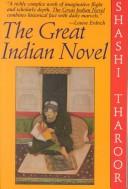
The Great Indian Novel is a satirical novel by Shashi Tharoor, first published by Viking Press in 1989. It is a fictional work that takes the story of the Mahabharata, the Indian epic, and recasts and resets it in the context of the Indian independence movement and the first three decades post-independence. Figures from Indian history are transformed into characters from mythology, and the mythical story of India is retold as a history of Indian independence and subsequent history, up through the 1970s. Some critics have identified an element of subversion in the novel. The work includes numerous puns and allusions to famous works about India, such as those by Rudyard Kipling, Paul Scott, and E. M. Forster.
The Mahabharata is an epic tale describing the historical dynastic struggle over the throne of the kingdom of Hastinapur between the Pandavas and the Kauravas, two branches of the heirs of the King Shantanu. In his novel, Tharoor recasts the story of the nascent Indian democracy as a struggle between groups and individuals closely related by their personal and political histories. Through his cantankerous narrator, Tharoor takes an irreverent tone towards figures such as Mohandas Gandhi and Jawaharlal Nehru, who are ordinarily treated with reverence by Indians.
The phrase "great Indian novel" is an allusion to the long-standing idea of the "Great American Novel" and is also a pun, roughly translating "Mahabharata" (maha "great"; Bharata "India"). The Mahabharata, which is not a novel but an epic poem, can be understood, according to Tharoor, to represent Hinduism's greatest literary achievement and thus serves as an appropriate paradigm in which to frame a retelling of recent Indian history.
A significant characteristic of Tharoor's version of the story is the emphasis on the older generations (e.g., Bhishma, Dhritarashtra, and Pandu) and the resulting de-emphasis on the actions of the Kauravas and the Pandavas.
Plot summary
The organisation of the sections and chapters of the novel mirrors the organisation of the Mahabharata and the themes and events addressed in each allude to themes and events of the mirrored sections of the epic. The novel has 18 "books," just as the Mahabharata has 18 books and the Battle of Kurukshetra lasted for 18 days.
The First Book:- The Twice-Born Tale
Up to some extent a counterpart to the Mahabharata's "Book of the Beginning."
In this section, Ved Vyas ("V.V."), the narrator, recounts his personal history; the seduction of Satyavati by the Brahmin Parashar and his own birth; the origin of Dev Datta from the union of Shantanu and the now absent Maharanee (whom he met on the banks of the Ganga (Ganges) and who had had seven suspicious miscarriages); the marriage of Shantanu and Satyavati and Dev Datta's vow of chastity; the birth of Chitrangada and Vichitravirya and the latter's marriage; Ved Vyas's insemination of Ambika and Ambalika; the vow of revenge against Dev Datta taken by Amba; the birth of Dhritarashtra and Pandu; and the assignment of Ganapathi by Brahm's Apsara Agency to transcribe Ved Vyas's memoir, which V.V. describes as the "Song of Modern India."
The Second Book:- The Duel With the Crown
Counterpart to the Mahabharata's "Book of the Assembly Hall." The title of this section alludes to Paul Scott's The Jewel in the Crown. Ved Vyas also compares his memoir to The Autobiography of an Unknown Indian by Nirad Chaudhuri. The British resident's equerry is named "Heaslop," an allusion to a character in A Passage to India.
Introduced is the character of Sir Richard, the British resident at Hastinapur, who is complaining about the increasing radicalisation of Ganga Datta, who is still serving as regent of Hastinapur. Ved Vyas discusses the upbringing of Dhritarashtra, Pandu, and Vidur Dharmaputra under the care of the regent, Ganga Datta.
Discovering the suffering of the people of Motihari, Ganga Datta embarks on his first protest campaign. Gangaji is arrested and he pleads guilty to defying a police order, but his action results in a victory for the peasants of Motihari.
The Third Book:- The Rains Came
Counterpart to the Mahabharata's "Book of the Forest." The title of this section alludes to Louis Bromfield's The Rains Came.
Sir Richard is furious about the events of Motihari and Heaslop notes that Gangaji had never formally resigned from the regency of Hastinapur. The regent having committed sedition, Hastinapur can now be annexed by British India.
Dhritarashtra and Gandhari's marriage is off to a good start. The devoted young bride has resolved to forever covering her eyes with a blindfold so that she is deprived of whatever her husband is deprived of. Pandu is also enjoying his two sexually expert wives. While enjoying sexual congress with both at once, he suffers a "massive coronary thrombosis" and is prohibited from ever again engaging in sexual intercourse. Pandu joins Gangaji's movement and instructs his wives to seek other sexual partners so that they may still bear him heirs. Kunti reveals that in her youth she bore Hyperion Helios's child but sent the baby boy down the river in a basket.
Gandhari the Grim gives birth not to a hundred sons, but to one daughter, Priya Duryodhani, who is to be the equivalent of a thousand sons.
The Fourth Book:- A Raj Quartet
Counterpart to the Mahabharata's "Book of Virata." The title of this section alludes to Paul Scott's Raj Quartet.
Hastinapur is annexed to the British Presidency of Marabar (an allusion to the "Marabar Caves," which figure prominently in A Passage to India). The people of Hastinapur are milling in the streets, threatening revolt. There is a rumour that Gangaji will address a rally at the Bibighar Gardens (an allusion to the "Bibighar," which figures prominently in A Jewel in the Crown). Heaslop counsels Sir Richard to let passions dissipate on their own, but Sir Richard instead calls in Colonel Rudyard and the Fifth Baluch, which starts firing on the unarmed gathering in the Bibighar Gardens. Almost 400 people are killed and more than a thousand are injured.
以上文字摘自英文维基百科「The Great Indian Novel」(有删节,去掉了参考文献等尾部小节),按 CC BY-SA 4.0 使用,作者为维基百科的各位编者。
资料卡
- 原题
- The Great Indian Novel
- 原作语言
- 英语
- 首次出版
- 1989 年 8 月 24 日
- 体裁
- 纪实小说、讽刺
- 首版出版社
- 维京出版社
- 续作
- Show Business
- 故事发生地
- 印度
资料卡来自 Wikidata Q7737811(CC0),众包数据,个别字段可能不全。