 书单
百科
这个词条暂时没有中文维基百科条目,下面是英文维基百科的内容(英文原文):
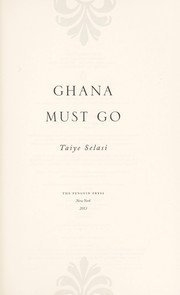
Ghana Must Go is the debut novel of Taiye Selasi. It was published in 2013, and nominated for an NAACP Image Award. The novel follows the Sai family as they come to terms with their father Kweku Sai's death, and as they work through family troubles. Multiple points of view give insight into the characters' emotions and the repercussions of Kweku’s choices. The Wall Street Journal praised it as "irresistible from the first line".
Ghana must go is also a renowned phrase in Ghana and Nigeria. It dates back to history where Ghanaians were deported from Nigeria following a presidential executive order in 1983. Some also believe that it was a retaliation to Ghana after Kofi Abrefa Busia (Prime Minister of Ghana from 1969 to 1972) had first deported a large number of Nigerian migrants from Ghana. This history is mentioned in the book, as well as the Ghana Must Go bag.
Plot
The death of Kweku Sai, a renowned surgeon, in Ghana launches a series of events in his family's life. Although he has left them behind, his wife Fola and their four children—Olu, Kehinde, Taiwo, and Sadie—are left to deal with the repercussions of his passing and reconcile the conflicts he created. In the moment of his death, Kweku takes the audience through the time he did share with his family. From his youngest daughter, Sadie's, birth to the doomed surgery that tanked his career, the first part of the book explores the events that pushed him to leave.
Fola is in Ghana when she learns of Kweku’s death, and asks their eldest son Olu to reunite his scattered siblings. Olu lives in Boston, Sadie is in school at Yale, Taiwo lives in New York City and the last they heard Kehinde was living in London. In coming together for the first time in years, they are forced to deal with the pain and obstacles that their father's abrupt desertion brought to their lives. For twins Kehinde and Taiwo, it is evident that they are no longer as close as they were as children and not even Fola knows why.
Back in Ghana and living under the same roof, the family is forced to confront the events that have divided their family, and begin to reconnect after years of misunderstanding and unspoken feelings. Olu overcomes his fear of commitment, Sadie finds herself, and Fola learns what happened to Taiwo and Kehinde. The novel ends with the family on the path to healing and forgiveness.
Characters
Kweku Sai: Leaves Ghana and becomes a renowned surgeon in the United States. He had dreams of returning to Ghana as the successful prodigal son, but his mother's untimely death and obstacles in his career made this dream unattainable. He is able to create what looks like the perfect life for his family. But when he is fired and blacklisted in the medical community, the shame is too much for him to handle and he leaves them behind. For the rest of his life
Folasadé Savage: She gives up law school to be with Kweku, and is happy to be a wife, mother and florist. When Kweku leaves her with their four children, she has to make difficult decisions to save their family. Her arc in the novel sees her coming to terms with a past that was largely ignored throughout her marriage to Kweku.
Olukayodé Sai: Kweku and Fola's son, who takes after his father in career and temperament, is wary of repeating his father's mistakes. His father's departure makes him deeply afraid of commitments, so although he has been in a serious relationship with Ling for years, he refuses to label it or even address his feelings head on. In Ghana with Ling, his siblings, and the looming memory of his father he has to come to terms with the fact that he needs to live his life fully, and without fear of becoming his father.
Kehinde and Taiwo Sai: Fola and Kweku's middle children are twins, and were exceptionally close as children. There is a running theme of their twin telepathy, but that connection is severed as a result of Kweku’s decision to leave. Kehinde is the only one who knows why their father left, and is traumatized by the choices he has had to make to protect Taiwo, so he retreats into his art. Taiwo resents her mother for sending her and Kehinde away after their father’s departure. She is deeply affected by experiences with her mother's family and embarks on a path of self-destruction. Kweku's death is the catalyst to repairing the relationships between Taiwo, Kehinde, and their mother.
Folasadé (Sadie) Sai: Accidentally named after her mother, and affectionately referred to as "the baby". Although her birth was a significant moment in Kweku's life, she feels the least connected to him because he left when she was a baby. She attempts to find a place for herself in relation to her siblings; the beautiful Taiwo, famous artist Kehinde, and perfect Olu. It is not until she returns to her father's village that she is able to feel as if she belongs in her family.
Themes
Family: The novel encompasses family at the center of the plot. Although the members of the Sai family move on and continue their lives without communicating with each other, they have an unspoken connection that keeps them tied together. At times the connections are so strong, familial ties are not enough to explain it. Fola’s connection to her children and the twins connection to each other suggest something mystical to their connection. While time and distance separates the family over the years since Kweku’s departure, his death transcends their estrangement and brings the family back together.
Migration: The impact of movement and migration is set by Kweku and Fola. War and expulsion are the driving factors that bring Fola and Kweku to the United States where they put down roots and start their family. Part of their identity is their habitual movement throughout the world that becomes a pattern in their lives. When situations become too much for them to handle, they flee. Fola and Kweku both move back home to Ghana after or in avoidance of serious confrontation.
以上文字摘自英文维基百科「Ghana Must Go (novel)」(有删节,去掉了参考文献等尾部小节),按 CC BY-SA 4.0 使用,作者为维基百科的各位编者。
资料卡
- 原题
- Ghana must go
- 原作语言
- 英语
- 首次出版
- 2013 年 3 月
- 作品形式
- 长篇小说
- 体裁
- 虚构作品
资料卡来自 Wikidata Q28223414(CC0),众包数据,个别字段可能不全。